By Daniel Lincoln, University of Alberta, The Conversation
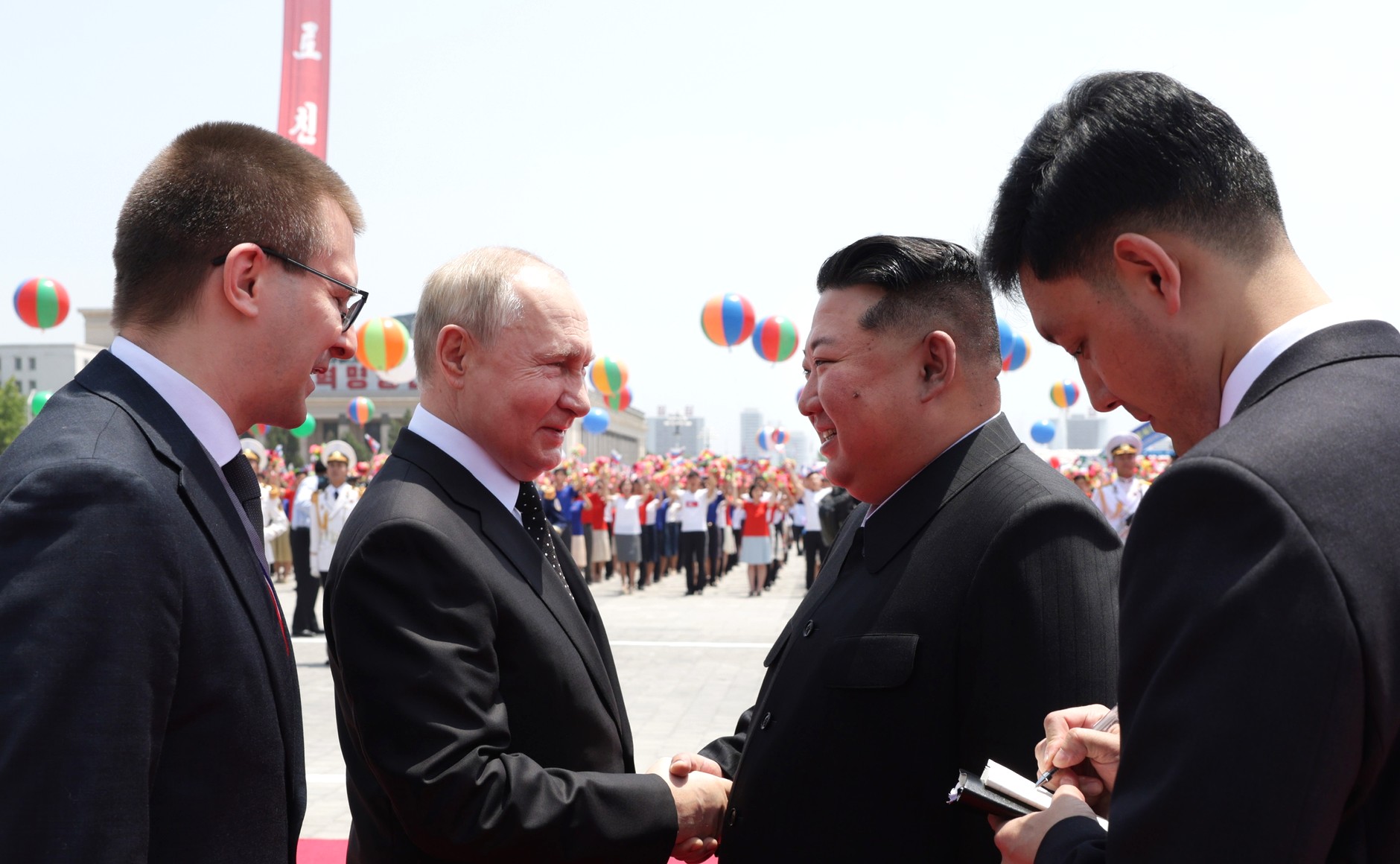
Russian President Vladimir Putin and North Korean leader Kim Jong-un recently held a historic meeting in Pyongyang that resulted in a mutual defence agreement that has alarmed many western analysts.
This alliance has sparked concerns about deteriorating security in northeast Asia and the invigoration of Russia’s campaign against Ukraine, as well as renewed fears of a unified anti-western bloc that could potentially precipitate a new Cold War.
A closer examination of global geopolitics and economics, however, suggests that instead of a second Cold War, the world is witnessing transient intersections of interests among some non-western powers.
The Russia-North Korea defence treaty highlights the complexities surrounding the rise of non-western nations, including those in the Global South. But instead of viewing the growing power of non-western states broadly as a threat, the West should recognize the opportunities this shift presents.
Partnerships of convenience
Western observers are justified in viewing the Russia-North Korea pact as worrisome. Russia could replenish its war machine in Ukraine with North Korean aid, and North Korea could develop more sophisticated weapons systems. And with Russia acting as a security guarantor, North Korea might act more provocatively on the Korean Peninsula.
However, this agreement lacks substantial long-term sustainability because it’s based solely on shared opposition to the western-led world order.
This is not unique to the rejuvenated Russia-North Korea relationship. Among many non-western powers seeking a heightened international profile, alliances of convenience are increasingly common.
The Iran-Russia partnership, for example, largely mirrors the Russian relationship with North Korea. Despite extensive economic and military co-operation, both states share little beyond their current animosity towards the West, and are, in fact, historic enemies.
Similarly, the “no-limits” partnership between China and Russia remains precarious due to China’s desire to remain integrated in the global economy while also wishing to avoid a significant inflammation of tensions with the West.
This geo-strategic dynamic is a far cry from the Cold War, where the Soviet-led bloc was ostensibly united by an ideological commitment to Marxism-Leninism. It also contrasts with enduring western security partnerships like the Five Eyes intelligence-sharing alliance that’s based on cultural, historic and linguistic closeness.
The dynamics of transient and pragmatic interests driving the Russia-North Korea defence treaty illustrate how the West can more astutely navigate the world’s changing economic and geopolitical landscapes.
Opportunities to co-operate with the West
In recent decades, the Global South has expanded its economic and strategic power, exemplified by BRICS — an intergovernmental organization comprising Brazil, Russia, India, China, South Africa, Iran, Egypt, Ethiopia and the United Arab Emirates. These countries are now experiencing faster economic growth than the G7 countries of the West.
As these countries grow richer and more powerful through their integration into the international economy, these emerging economies increasingly exercise more strategic autonomy than was possible in the 20th century. These countries now leverage more geo-strategic hedging between competing great powers to fulfil their unique interests.
China’s rise to the status of the world’s second-largest economy is a notable example of this. China seeks to reform international institutions and norms, efforts that have attracted support from the Global South. Generally, China and the Global South aspire towards a world that acknowledges their enhanced geo-economic stature.
This differs from Russia and North Korea, which largely aim to undo the post-Cold War international order.
China gained power and wealth through its concerted participation within the established world order and largely wishes to continue this historically fruitful engagement. Western perceptions of China as a threat have contributed to its brokering of partnerships of convenience with disruptive powers like Russia.
These relationships aren’t due to a deep-felt enmity towards the West in China. Rather, it is a reaction to geopolitical tensions with western countries and China’s resulting need to establish working relations with powers that it currently shares common ground with.
If the West works with these emergent powers to accomplish shared goals, it could maintain its global pre-eminence. Viewing the rise of developing economies as a threat, on the other hand, risks missing significant and potentially invaluable opportunities.
Double-edged sword
The Russian-North Korean pact and relations between North Korea, Iran and Russia are counterproductive to international stability and western global interests, but this troublesome dynamic does not extend to the Global South.
The strategic manoeuvring of the Global South — as exhibited by rising powers such as the Association of Southeast Asian Nations and Arab countries asserting their interests through skilful and astute relations with multiple great powers — underscores this.
By understanding these nuances and working strategically with the Global South, the West can navigate the complexities presented by the current geo-strategic landscape and mitigate potential security threats more effectively.
Working with a likely receptive China, for example, to manage the possible consequences of the Russia-North Korea military alliance could be beneficial to both parties.
These developments ultimately illustrate the double-edged sword of contemporary geopolitics, which simultaneously offer the West considerable advantages and daunting challenges.
Whether western countries are subjected to the favourable or hostile side of this proverbial sword depends on how successfully they can navigate the complex and changing dynamics of today’s global landscape.
Daniel Lincoln, Policy Research Analyst, Geopolitics, University of Alberta
This article is republished from The Conversation under a Creative Commons license. Read the original article.