Headline
DOH warns public vs heat stroke as El Niño strengthens

ASM, Philippine Canadian Inquirer
October 04, 2026
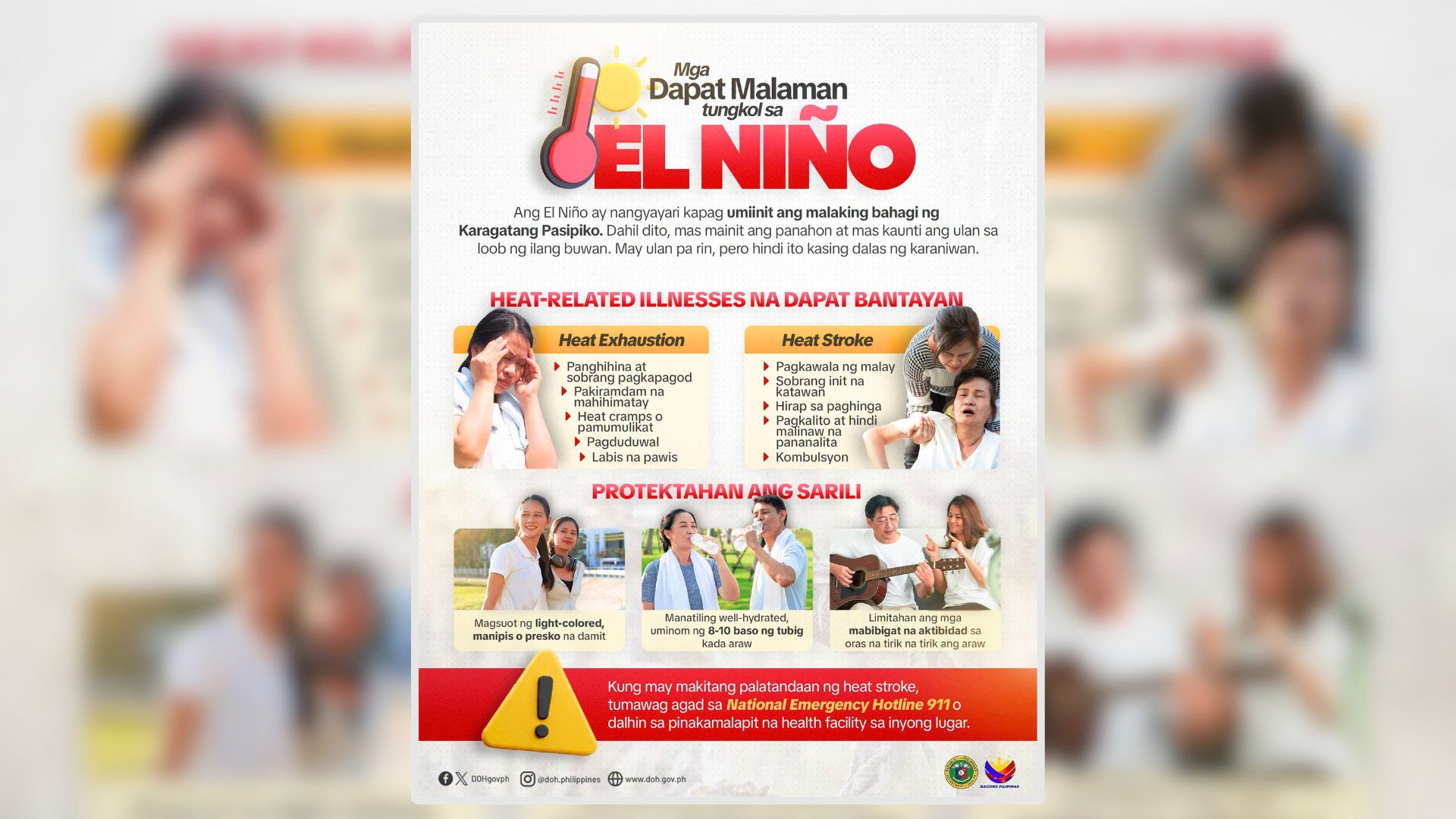
Photo courtesy: Philippine Information Agency
MANILA, Philippines – The Department of Health (DOH) is urging the public to watch for signs of heat-related illness as the country experiences the effects of an intensifying El Niño.
The DOH said heat stroke is a medical emergency and may involve loss of consciousness, extremely high body temperature, difficulty breathing, confusion, impaired speech and convulsions. Anyone showing these symptoms should be brought to the nearest health facility or assisted through the National Emergency Hotline 911.
The agency also warned against heat exhaustion, which can develop after prolonged exposure to high temperatures. Symptoms may include severe fatigue or weakness, dizziness, muscle cramps, nausea, heavy sweating and excessive thirst.
To reduce the risk of heat-related illness, the DOH advised the public to wear light-colored and breathable clothing, drink enough water throughout the day and avoid strenuous physical activity during the hottest hours. Its public advisory recommends about eight to 10 glasses of water daily.
The health warning comes as PAGASA reports that a strong El Niño is currently active in the tropical Pacific and could intensify into a very strong El Niño before the end of 2026. The weather bureau expects the phenomenon to persist through the first half of 2027.
El Niño typically increases the likelihood of below-normal rainfall in many parts of the Philippines, raising the risk of dry spells and drought. PAGASA also expects warmer-than-usual conditions in parts of the country as the event strengthens.
Health authorities have also cautioned that prolonged heat can worsen dehydration and increase the risk of heat cramps, heat exhaustion and heat stroke, especially among people exposed to direct sunlight for long periods.
PAGASA said it will continue monitoring El Niño conditions and advised the public and government agencies to remain prepared for possible health, water-supply and agricultural impacts in the coming months.