Business and Economy
October Market Update: Rates are holding steady — But the story is changing

Via Vincent Tong, Principal | Co-Founder of Clear Trust Signature Mortgages
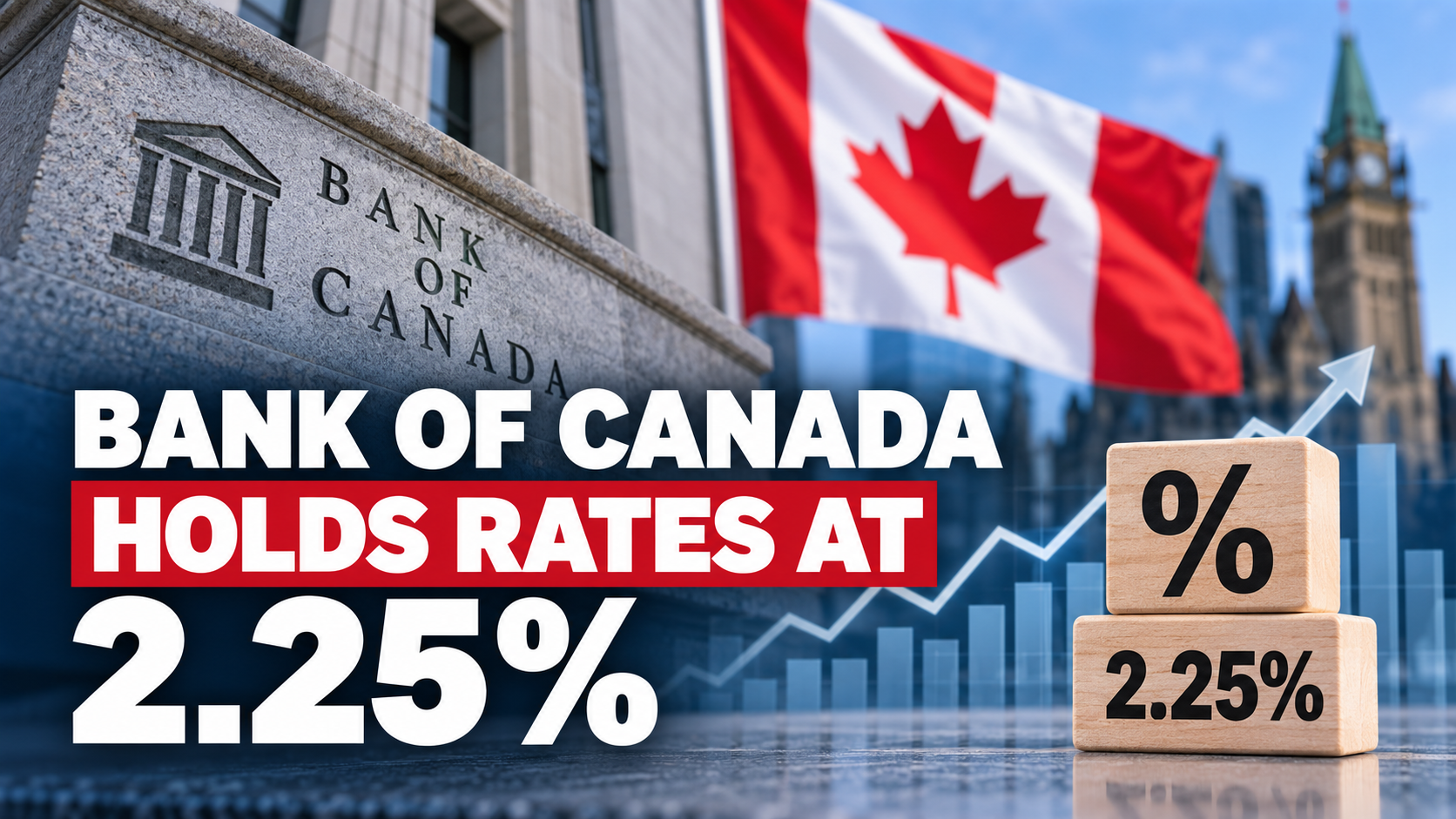
The Bank of Canada has once again held its policy rate at 2.25%, where it has remained since October 2025. This is at the bottom of the Bank’s estimated neutral range, where monetary policy is considered neither expansionary nor contractionary. The decision comes as Canada’s economy shows signs of improvement while continuing to face significant uncertainty from global events, energy prices and trade tensions. The global economy has remained resilient despite geopolitical challenges. However, inflation remains elevated in many countries, with oil prices and refined energy costs continuing to play an important role. Financial conditions have tightened since July, with long-term bond yields moving higher globally, including in Canada. The Canadian dollar has also appreciated slightly as the U.S. dollar has weakened.
Canadian Economy Shows Stronger Growth
Canada’s economy strengthened considerably in the second quarter, recording 3.3% growth. First-quarter growth was also revised upward to 0.3%, from the previously reported -0.1%. The improvement was broad-based. Consumer spending increased, housing activity rebounded after several weak quarters, and both exports and business investment rose sharply. Labour market conditions had also improved in recent months, with the unemployment rate edging down to 6.4% in July. However, the Bank continues to see subdued demand for labour and indicators of excess supply in the economy. The Bank describes the recent data as evidence of a broadening recovery, but uncertainty remains high. New U.S. tariffs and the possibility of further trade action continue to create risks for the sustainability of Canada’s economic recovery.
Inflation Remains a Key Focus
CPI inflation has been hovering around 3%, primarily because of persistently higher gasoline prices. There has so far been limited evidence that higher energy prices are spreading to other areas of inflation. Excluding gasoline, inflation was 2.2%, while core inflation measures remained close to 2% in July. However, the longer elevated oil prices and refinery margins remain in place, the greater the risk that higher energy costs could eventually spread to other goods and services. New U.S. tariffs and Canadian counter-tariffs could also increase costs for some businesses and potentially feed through to consumer prices over time. As Bank of Canada Governor Macklem stated, Canada’s economy has picked up after stalling over the past year, putting the country on a stronger footing. At the same time, uncertainty surrounding the sustainability of the recovery has increased because of new U.S. trade actions.
Source: Statistics Canada
August Jobs Report Shows Some Weakness
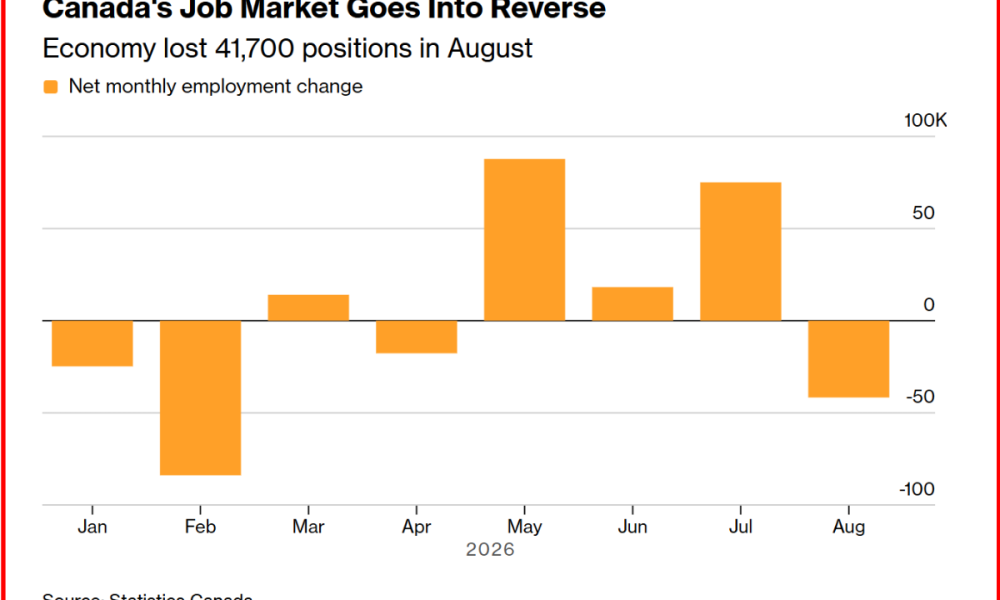
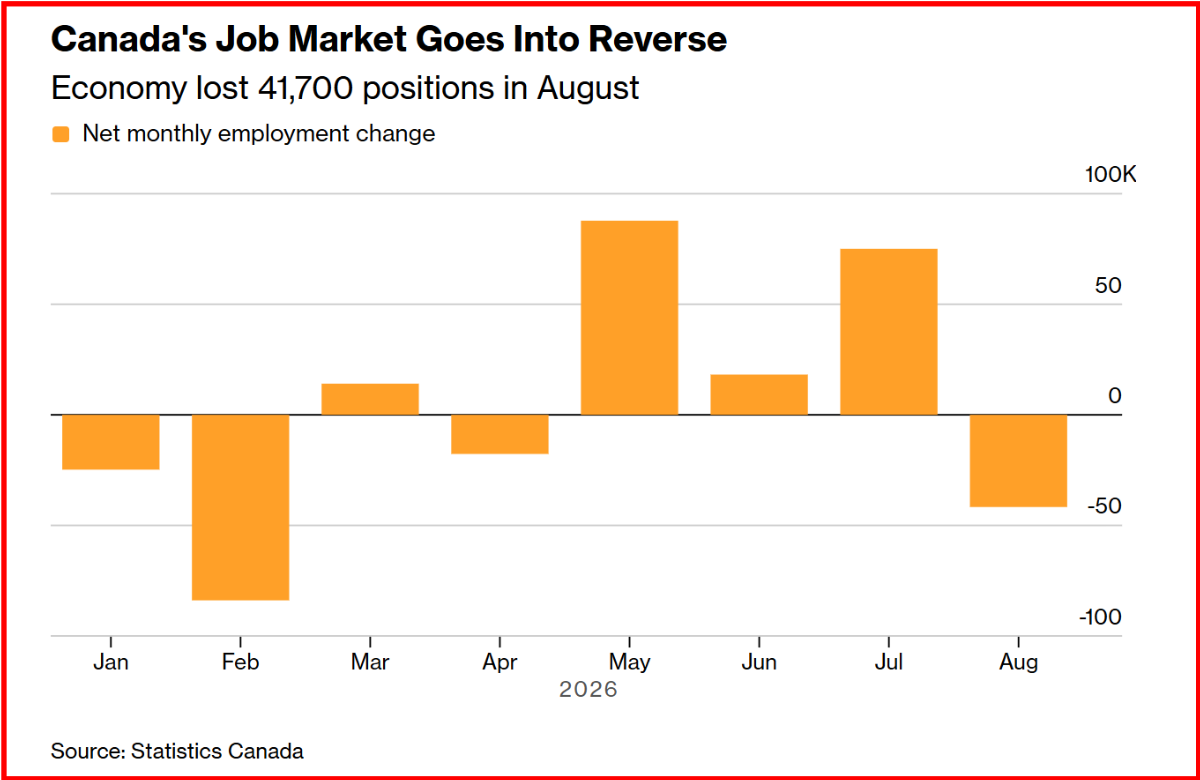
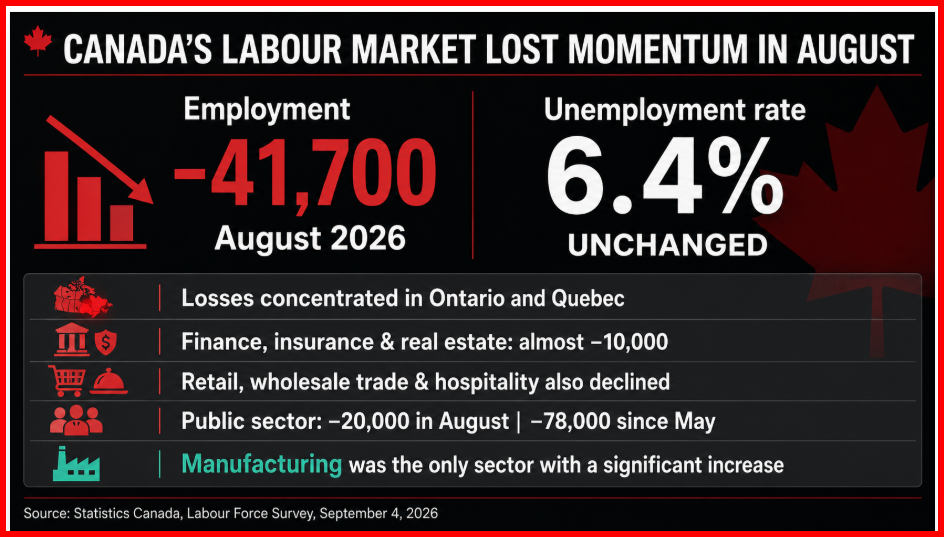
The Canadian labour market lost some momentum in August. Employment fell by 41,700, reversing some of the gains seen in recent months. The unemployment rate remained at 6.4%, following three consecutive monthly declines in May, June and July. Employment declined among youth aged 15 to 24 and among people aged 25 to 54. The largest employment declines occurred in business, building and other support services, public administration, natural resources and utilities. Manufacturing was the only sector to record a significant increase in employment during August, adding 22,000 jobs. Employment declined in Quebec and Ontario, the two provinces hardest hit by U.S. tariffs. Over the past year, employment growth has been concentrated in health care and social assistance, information, culture and recreation, and transportation and warehousing. Wholesale and retail trade recorded the largest decline over the same period.
Wage Growth Continues to Slow
Average hourly wages increased 2.0% year-over-year in August, reaching $37.02. This followed wage growth of 2.8% in July and 3.3% in June. The August increase represented the slowest year-over-year wage growth since November 2017, excluding the year 2021. Wage growth was slower among lower-paid employees, with wages increasing 1.1% for employees in the bottom 25% of the wage distribution and 1.3% for the second-lowest quartile.
What This Means for Interest Rates
With the Canadian economy and inflation evolving broadly as forecast in the July Monetary Policy Report, the Bank of Canada’s Governing Council agreed to leave the policy rate unchanged. However, the Bank continues to monitor the increased upside risks to inflation alongside the uncertainty created by new tariffs. The Bank has indicated that it will continue to assess the sustainability of the economic recovery and the inflation outlook and remains prepared to adjust monetary policy if necessary. The current outlook remains one of balancing economic support against the risk of renewed inflationary pressure. Housing activity has strengthened since May, although momentum remains muted, and improvements in affordability are expected to taper off in the coming months.
Canada and the United States Take Different Paths
The Canadian and U.S. economic pictures have recently shown some notable differences. Canada’s August employment report showed a decline of 41,700 jobs, while the U.S. nonfarm payrolls report showed 162,000 new jobs, approximately three times the consensus estimate. The U.S. report also included upward revisions to previous months. Wages increased, although they continued to trail annualized inflation. The U.S. unemployment rate remained at 4.1%, while labour force participation increased. The contrast between the two economies has contributed to differing expectations around monetary policy.
Bottom Line
The Bank of Canada continues to face a complicated economic environment. Canada’s economy has strengthened, but the labour market has shown some recent weakness. Inflation remains elevated, largely due to gasoline prices, while core inflation remains closer to the Bank’s target. At the same time, ongoing trade uncertainty and the possibility of additional U.S. tariffs create risks for both economic growth and inflation. The Bank of Canada is expected to remain cautious as it weighs these competing pressures. While further rate increases remain possible if inflation broadens and accelerates, the current view is that the Bank will keep rates steady this year.