Headline
DOJ denies Korean convict attempted drone escape from Bilibid, probes alleged special treatment

ASM, Philippine Canadian Inquirer
September 18, 2026
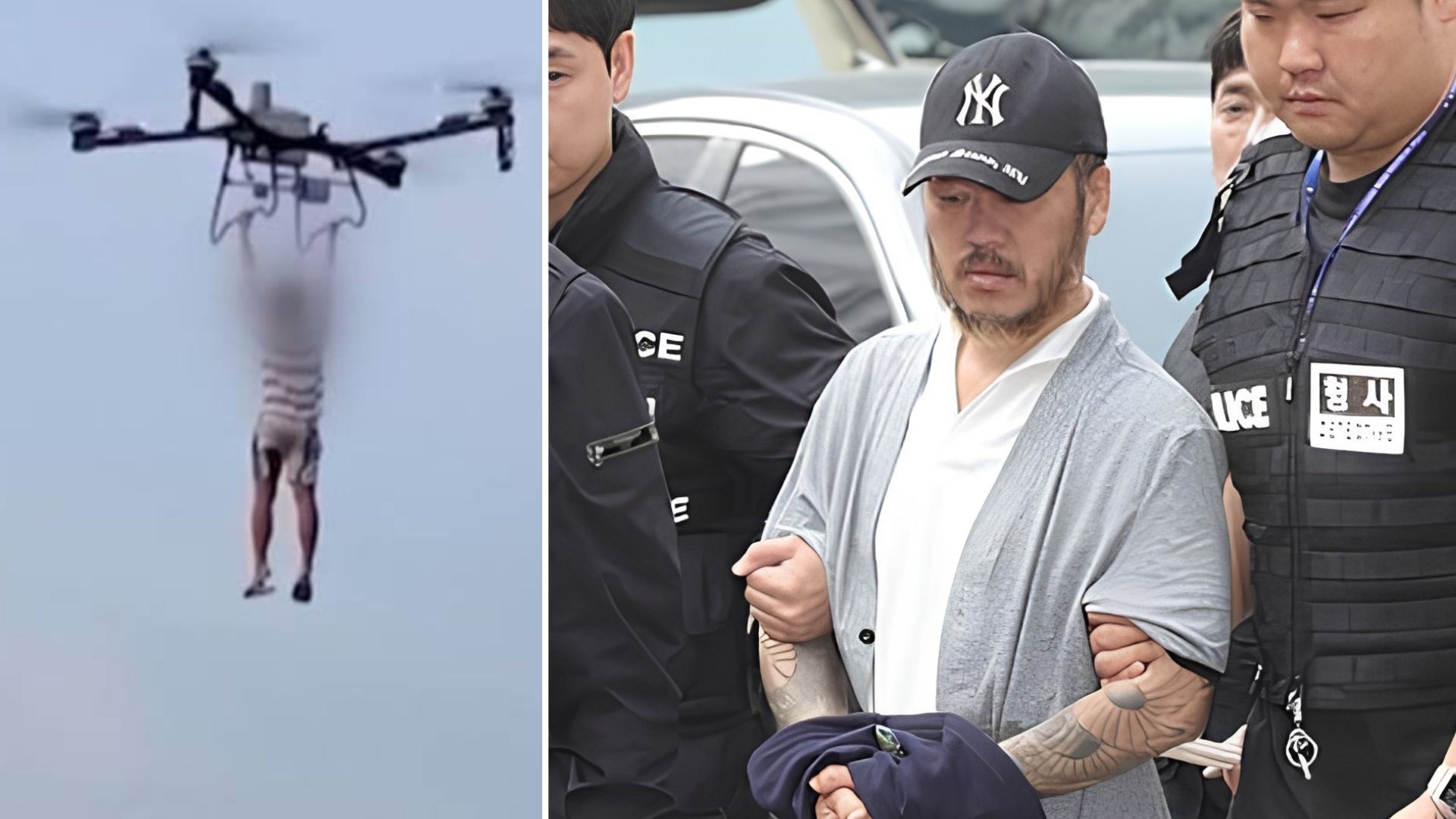
Photo courtesy: Crime Intel
The Department of Justice has denied that South Korean convict Park Wang-yeol made a confirmed attempt to escape from the New Bilibid Prison using a drone, following reports from South Korea that he had allegedly planned an unusual airborne jailbreak before his temporary transfer to Seoul.
Justice Undersecretary Ian Norman Dato said the Bureau of Corrections had found no evidence that an actual escape attempt took place while Park was under its custody.
“The Department of Justice is confident that our Bureau of Corrections is fully equipped and prepared to prevent any such eventuality,” Dato said.
Citing information from BuCor Director General Gregorio Pio Catapang Jr., Dato said there had been “no such attempt” discovered or carried out while Park was detained at the national penitentiary.
The clarification came after South Korean broadcaster JTBC and other Korean media reported that Park allegedly explored using a heavy-duty drone capable of carrying a person to fly him over prison walls.
Footage cited in the reports purportedly showed an associate testing a drone while suspended from it. The reports alleged that the preparations were made before Park was temporarily surrendered to South Korea earlier this year.
BuCor has questioned whether such a plan could realistically have succeeded.
Catapang said all prisons and penal farms under BuCor are designated no-fly zones, while watchtowers are manned around the clock. Correctional facilities are also monitored by closed-circuit television cameras, which authorities said could help detect suspicious drone activity.
Authorities also pointed out that a heavy-duty drone flying low enough to carry a person would generate considerable noise and would likely attract the attention of prison guards.
While denying that an actual drone escape attempt occurred, the DOJ is now looking into a separate set of allegations surrounding Park’s detention in the Philippines.
Reports from South Korea alleged that Park received special privileges while imprisoned, including access to an air-conditioned room, a television and a mobile phone in exchange for payments.
Dato said the DOJ would investigate the allegations. The claims have not been established as fact, and authorities have yet to publicly announce findings identifying any correctional personnel who may have facilitated such privileges.
The allegations are particularly significant because South Korean investigators have accused Park of continuing to direct drug-trafficking operations while incarcerated in the Philippines.
Park was temporarily surrendered to South Korean authorities on March 25, 2026 under an extradition arrangement between Manila and Seoul so he could face investigation and criminal proceedings over alleged cross-border drug trafficking. South Korean police have accused him of directing the smuggling and distribution of methamphetamine and other illegal drugs through accomplices while he was imprisoned in the Philippines.
His transfer to South Korea does not erase his Philippine conviction.
Park had been serving a 60-year prison sentence in the Philippines following his conviction in 2022 for the killings of three South Korean nationals in 2016. The victims were found dead with gunshot wounds in a sugarcane field in Pampanga.
Park also has a history of escaping custody in the Philippines.
In March 2017, Park and another South Korean detainee escaped from an immigration detention facility before authorities recaptured him. He escaped again in October 2019 while being escorted back to the Pampanga Provincial Jail following a scheduled court appearance in Tarlac.
During the 2019 incident, authorities said Park went into a restaurant restroom and escaped through a ventilation window while his escorts were outside. He remained at large until authorities arrested him in Calamba, Laguna in October 2020.
The history has added scrutiny to the latest reports about an alleged drone-assisted escape plan.
For now, however, Philippine authorities maintain that no actual or confirmed drone jailbreak attempt took place at the New Bilibid Prison.
The DOJ’s continuing inquiry will instead focus in part on whether Park was given unauthorized privileges or access to communication devices while incarcerated.