Headline
4Ps students now prioritized for tertiary education subsidies under new law

ASM, Philippine Canadian Inquirer
September 18, 2026
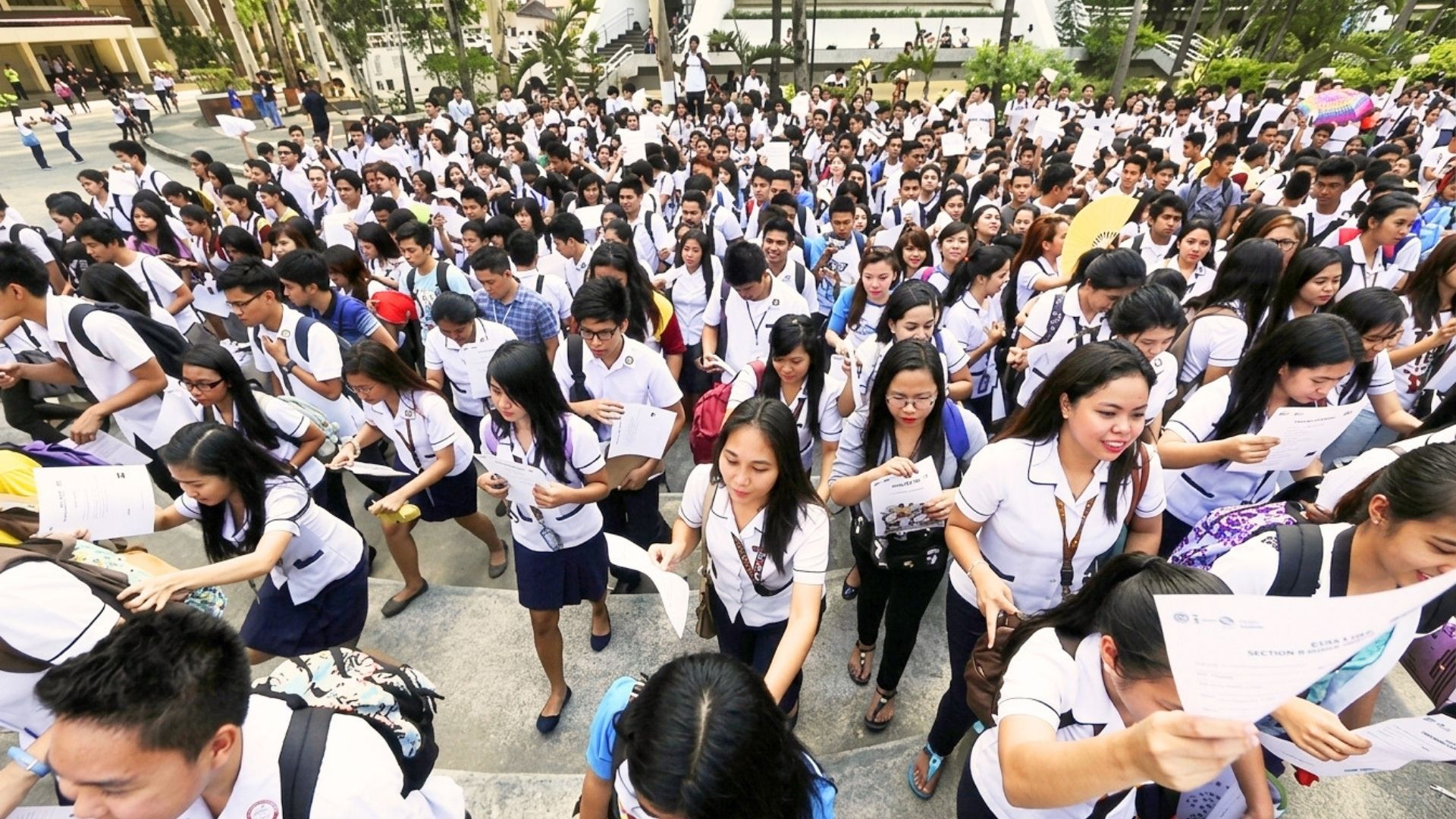
Photo courtesy: South China Morning Post
More students from Pantawid Pamilyang Pilipino Program households may receive financial assistance for college and technical-vocational education under a newly enacted law that strengthens government support for disadvantaged learners.
Republic Act No. 12325, or the Act Enhancing the Universal Access to Quality Tertiary Education Act, gives qualified students from 4Ps households top priority for slots under the Tertiary Education Subsidy, or TES. President Ferdinand Marcos Jr. signed the measure on September 4, 2026.
The change is significant for 4Ps families because the education cash grants directly provided under the conditional cash transfer program have traditionally focused on children in basic education. College assistance, meanwhile, has been administered separately through programs such as TES under CHED and UniFAST.
Under RA 12325, students from 4Ps households are now explicitly placed among the highest-priority groups for tertiary education assistance. Other priority sectors include persons with disabilities, indigenous peoples, solo parents and their dependents, first-generation tertiary learners and students from geographically isolated and disadvantaged areas.
The law does not mean, however, that every 4Ps student automatically receives a grant.
Applicants must still meet the eligibility and admission requirements of the program and their higher education or technical-vocational institution. Available TES slots also remain subject to government funding and the implementing guidelines of CHED, TESDA and the UniFAST Board.
DSWD Assistant Secretary Elaine Fallarcuna of the Conditional Cash Transfer Group said about 192,000 qualified students from 4Ps households have already applied for TES, with CHED-UniFAST continuing the assessment and validation of applications.
DSWD figures cited by Fallarcuna showed 81,342 applicants in their first year, 55,892 in their second year, 35,489 in their third year and 19,408 in their fourth year. Another 187 were in their fifth year and 17 were in their sixth year.
The figures total 192,335 applicants, or roughly 192,000 students.
The number is considerably higher than the roughly 89,000 continuing TES grantees from 4Ps families previously cited by the agency, according to Fallarcuna.
Current TES assistance is intended to help cover the cost of tertiary education beyond tuition alone. Existing CHED guidelines provide annual subsidies of up to ₱20,000 for eligible students in state universities and colleges or CHED-recognized local universities and colleges, and up to ₱27,000 for eligible students in private higher education institutions, subject to prioritization and availability of funds. Additional benefits are available for qualified students with disabilities and licensure examination takers.
RA 12325 also establishes a separate Private Education Assistance program for disadvantaged students who enroll in qualified priority programs offered by CHED-recognized private higher education institutions and TESDA-registered technical-vocational institutions.
The PEA program will first undergo a pilot implementation lasting no more than three years before full-scale rollout, subject to available funding. The UniFAST Board will also determine the appropriate level of assistance based on the average cost of tertiary education in participating private institutions.
Fallarcuna said assistance for tertiary students can help address costs such as books, boarding and lodging, while the expanded law also allows additional forms of support for qualified learners facing other education-related expenses.
The government has not designated one specific college course as the sole priority for TES. Eligibility and prioritization will instead depend on the rules governing the subsidy and the qualified institutions and programs covered by the implementing agencies.
The expansion comes as the DSWD also prepares changes in the overall coverage of the 4Ps program.
Under the proposed 2027 national budget, ₱99.1 billion has been allocated for 4Ps to cover around 3.5 million households, down from ₱112.9 billion for a target of 4.4 million households in 2026.
The DSWD has linked the adjustment in part to changes in the country’s poverty situation and continuing reassessment of beneficiary households. The Philippine Statistics Authority reported that poverty incidence among Filipinos fell to 9.7 percent in 2025 from 15.5 percent in 2023, while poverty incidence among families stood at 6.4 percent.
At the same time, not all families reaching the original seven-year maximum period under 4Ps will automatically leave the program.
Executive Order No. 120, signed in July, allows qualified families to remain in 4Ps beyond the seven-year limit if they are still classified as Level 1, or survival, or Level 2, or subsistence, under the DSWD’s Social Welfare and Development Indicator.
The extension is not automatic. DSWD said families covered by the policy will undergo annual reassessment, and those who reach Level 3 or self-sufficient status may be placed on a transition path toward exiting the program. About 1.38 million families were identified as qualified for possible extension based on the latest assessment.
Taken together, the changes mean government assistance for 4Ps families is increasingly being tied not only to keeping children in basic education, but also to helping qualified students continue into college or technical-vocational training and supporting vulnerable families until they are assessed as ready to leave the program.