Education
Blanket class suspensions: The growing cost to Filipino students’ learning

ASM, Philippine Canadian Inquirer
September 16, 2026
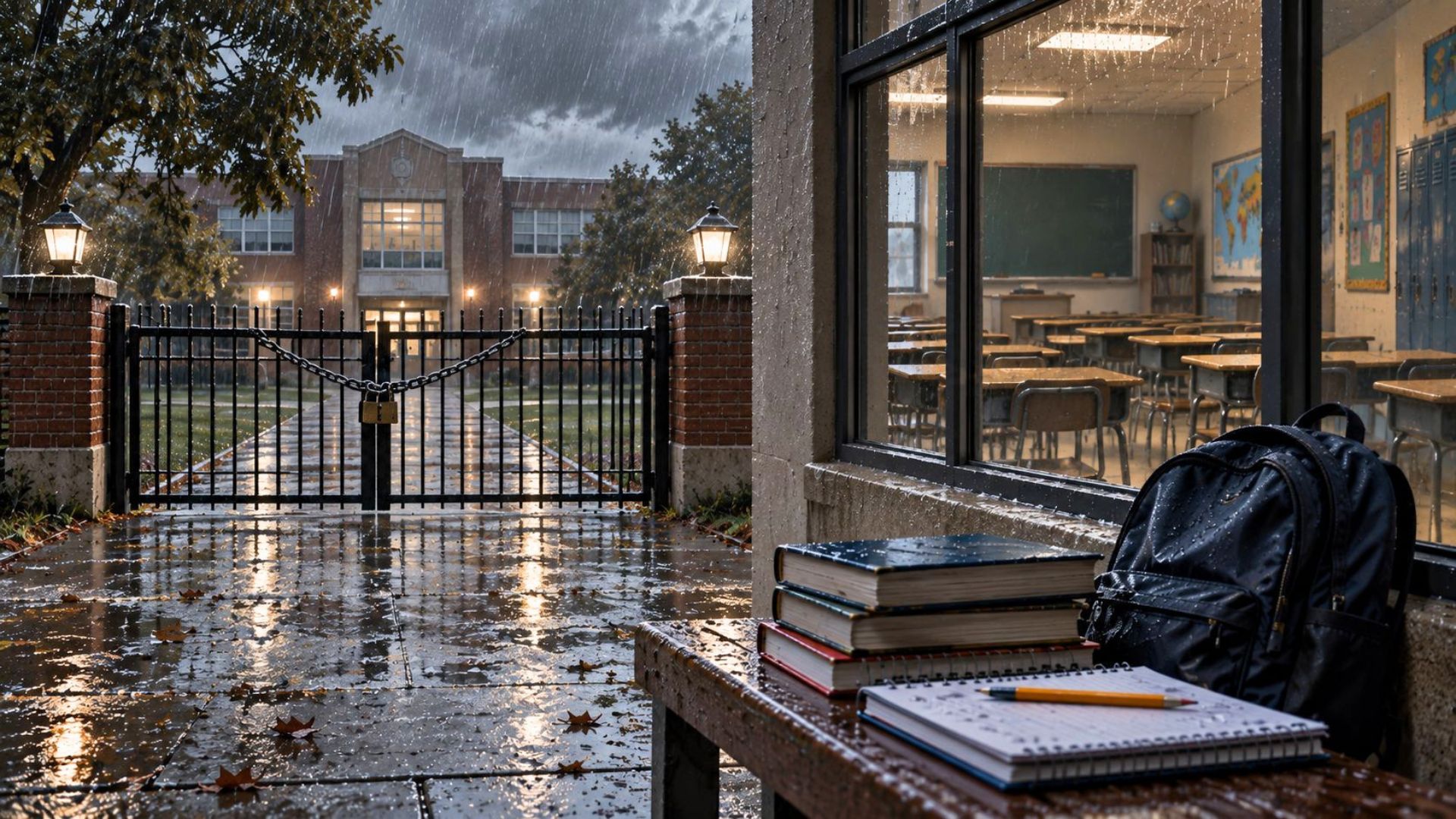
For students, “walang pasok” can sound like a welcome break. But when class suspensions pile up week after week, the lost hours eventually become lost lessons.
That concern is becoming harder to ignore as increasingly frequent typhoons, monsoon rains, flooding, extreme heat and other hazards repeatedly disrupt classes across the Philippines.
From August 1 to September 15 alone, 12 of 28 class days were canceled in Metro Manila and several provinces, according to a recent analysis cited by the Second Congressional Commission on Education (EDCOM 2). That represents around 43 percent of the class days during the period.
For School Year 2025-2026, EDCOM 2 found that a typical public elementary school lost about 20 teaching days to hazard-related suspensions– roughly one out of every 10 days in the official school calendar.
And the problem did not begin this year.
Earlier, EDCOM 2 data showed that schools lost an average of about 15 days per school year to calamity-related suspensions across SY 2024-2025 and SY 2025-2026, with some heavily affected divisions losing far more. In SY 2023-2024, disruptions from calamities, extreme heat, local holidays and other factors were estimated to have cost as many as 53 teaching days.
Safety comes first, but learning loss also adds up
Suspending classes when roads are flooded, winds are dangerous, or school buildings are unsafe is necessary to protect students, teachers, and school personnel.
DepEd itself maintains that learner and teacher safety must remain the primary consideration during emergencies.
But education officials and researchers are increasingly questioning whether an entire city or province always needs to stop classes when the actual danger may only affect certain communities.
A blanket suspension can mean that students in areas with no flooding, passable roads and safe school facilities lose the same instructional day as students in communities experiencing serious hazards.
EDCOM 2 has warned that such one-size-fits-all decisions can impose a learning cost on schools that are otherwise capable of safely continuing classes.
One lost day is not always just one lost lesson
A missed school day does not necessarily disappear from the curriculum.
Teachers still have competencies to cover. Exams, activities and deadlines may have to be moved. Lessons can become compressed into fewer classroom hours.
For students already struggling with reading, mathematics or other foundational skills, repeated interruptions may make catching up even harder.
EDCOM 2 has previously highlighted the country’s broader learning crisis, including significant numbers of students who remain below expected reading levels. Its analysis has linked repeated disruptions to concerns over whether students receive enough actual classroom instruction to master required competencies.
The disruption can also extend beyond academics.
A suspension changes family schedules, child-care arrangements, transportation plans and parents’ work routines. And when schools shift to online learning, not every student begins on equal footing.
EDCOM 2 cited DepEd data showing that only 17 percent of students had the gadgets needed for online learning, while only 37 percent of teachers had laptops, based on information submitted in 2024. That makes an automatic switch from classroom instruction to online classes difficult for many families.
For a student with a laptop, stable internet and a quiet room, an online school day may still work.
For another relying on one family cellphone, prepaid data or an unreliable connection, a “shift to online learning” can effectively become another lost school day.
From blanket suspension to granular decisions
The debate is now shifting toward granular class suspensions, decisions based on the actual conditions of individual communities, schools, grade levels, or even classrooms rather than immediately shutting down an entire jurisdiction.
DepEd Order No. 14, series of 2026, already allows school heads to coordinate with local governments and schools division officials in making more localized suspension decisions based on conditions on the ground.
The policy also introduced the 4H Learning Continuity Framework:
Hayo
continue regular in-person learning when conditions are safe;
Hinay
use flexible or structured distance learning during mild disruptions;
Hinga
prioritize check-ins and lighter learning activities; and
Hinto
suspend all learning when circumstances make continuing unsafe or unreasonable.
Schools and education groups have similarly called for decisions that consider actual flooding, accessibility, weather conditions, school infrastructure and risks to students and teachers instead of relying solely on broad geographic boundaries.
Protecting safety without losing education
There is no serious argument for sending children to school when doing so places them in danger.
The harder question is what happens when suspensions become so frequent that students repeatedly lose learning opportunities, even in places where conditions may already be safe.
The country’s education system is therefore facing two risks at the same time: the immediate danger posed by disasters and the quieter, cumulative damage caused by disrupted schooling.
A suspension may last only a day.
But when those days become weeks over the course of a school year, the effect on a child’s education can last much longer.
The challenge is no longer simply choosing between safety and learning. It is finding a system capable of protecting both.