American News
Trump threatens stronger retaliation as US-Iran hostilities flare again

Abi Sarabia M., Philippine Canadian Inquirer
September 02, 2026
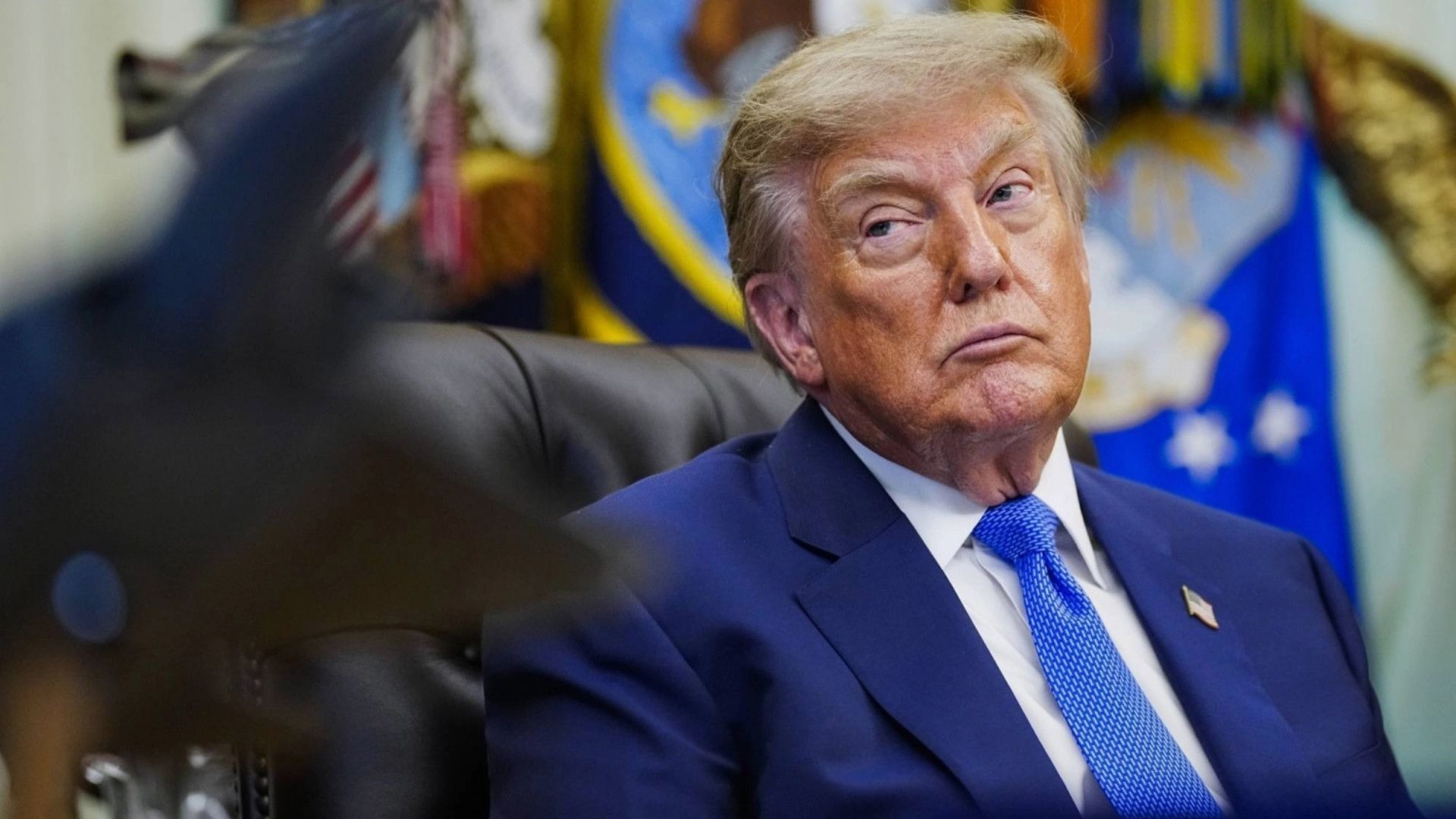
Photo courtesy: The Japan Times
Tensions between the United States and Iran have escalated again after the two sides exchanged direct attacks for the first time in more than a month, while strikes on oil tankers in the Strait of Hormuz renewed fears of a wider conflict and disruption to global energy supplies.
U.S. President Donald Trump warned Tehran of further military action after Iran retaliated against an American strike on Larak Island, a strategic Iranian island in the Strait of Hormuz.
U.S. forces struck two Iranian rocket launchers on Larak Island on Sunday. Iran responded by firing ballistic missiles at two U.S. military bases in Jordan, while an Iranian drone was intercepted near the United Arab Emirates.
Trump suggested Washington could respond forcefully if Iran continued its attacks.
“Their navy is gone. Their air force is gone… that doesn’t mean we won’t smack them. We’ll see what happens,” Trump said.
The renewed hostilities were followed by attacks on two supertankers carrying Saudi crude oil as they sailed out of the Strait of Hormuz late Monday.
The Saudi-flagged Sidr was struck by unidentified projectiles about 16.6 nautical miles northeast of Khasab, Oman. Minutes later, the Liberian-flagged Senegal Prosperity was hit by three unidentified projectiles roughly 17 nautical miles east of Khasab.
Both tankers had loaded about 2 million barrels of Saudi crude each, while all crew members were reported safe. No party immediately claimed responsibility for the attacks.
Iran keeps door open to diplomacy
Despite the renewed fighting, Iranian President Masoud Pezeshkian said Tehran remained prepared to reciprocate if Washington returned to commitments under an interim agreement reached in June.
Pezeshkian made the remarks ahead of a meeting with Russian President Vladimir Putin on the sidelines of the Shanghai Cooperation Organisation summit in Bishkek, Kyrgyzstan.
During their meeting, Pezeshkian thanked Moscow for supporting Iran during the war and under U.S. sanctions, including at the United Nations and other international organizations.
He described relations between Tehran and Moscow as “strategic,” while Putin pledged continued assistance to Iran amid the military and political tensions.
Putin also voiced solidarity with the Iranian people, saying Russia admired their “courage and fortitude” in defending what he described as their national interests.
Washington prepares new sanctions
Military pressure is being accompanied by a new U.S. economic campaign against Tehran.
U.S. Treasury Secretary Scott Bessent said Washington is likely to announce sanctions against an Iranian-linked bank this week, followed by another round the following week.
The U.S. is also considering sanctions against airline leasing firms and other companies doing business with Iran’s Islamic Revolutionary Guard Corps, or IRGC.
Bessent said U.S. authorities were tracing IRGC-linked assets overseas, including bank accounts held through trust companies and luxury properties, as Washington seeks to intensify economic pressure on Tehran.
Iran, however, has warned that further U.S. pressure on its oil exports could have consequences beyond the country.
Iranian Parliament Speaker Mohammad Bagher Ghalibaf warned that if Iran is prevented from exporting oil through the Persian Gulf, Tehran would seek to prevent others from doing so as well.
He also maintained that Iranian forces remain in control of the Strait of Hormuz and would resist U.S. efforts to fully reopen the strategic waterway.
Oil prices climb as escalation fears return
The latest confrontation quickly spilled into global energy markets.
Brent crude climbed above $92 per barrel, rising more than 2 percent as investors reacted to the renewed U.S.-Iran attacks and threats to shipping through the Strait of Hormuz. U.S. crude also climbed to around $88 before prices moved even higher as tensions developed during Tuesday’s trading.
The Strait of Hormuz is one of the world’s most important energy corridors, historically carrying about one-fifth of global oil supplies.
With military strikes resuming, commercial vessels again coming under attack and both Washington and Tehran refusing to concede control of the waterway, the latest escalation is raising fresh concerns that the conflict could further disrupt Gulf oil exports and push global energy prices higher.