Headline
NASA launches Roman telescope to uncover the universe’s biggest mysteries

Abi Sarabia M., Philippine Canadian Inquirer
August 31, 2026
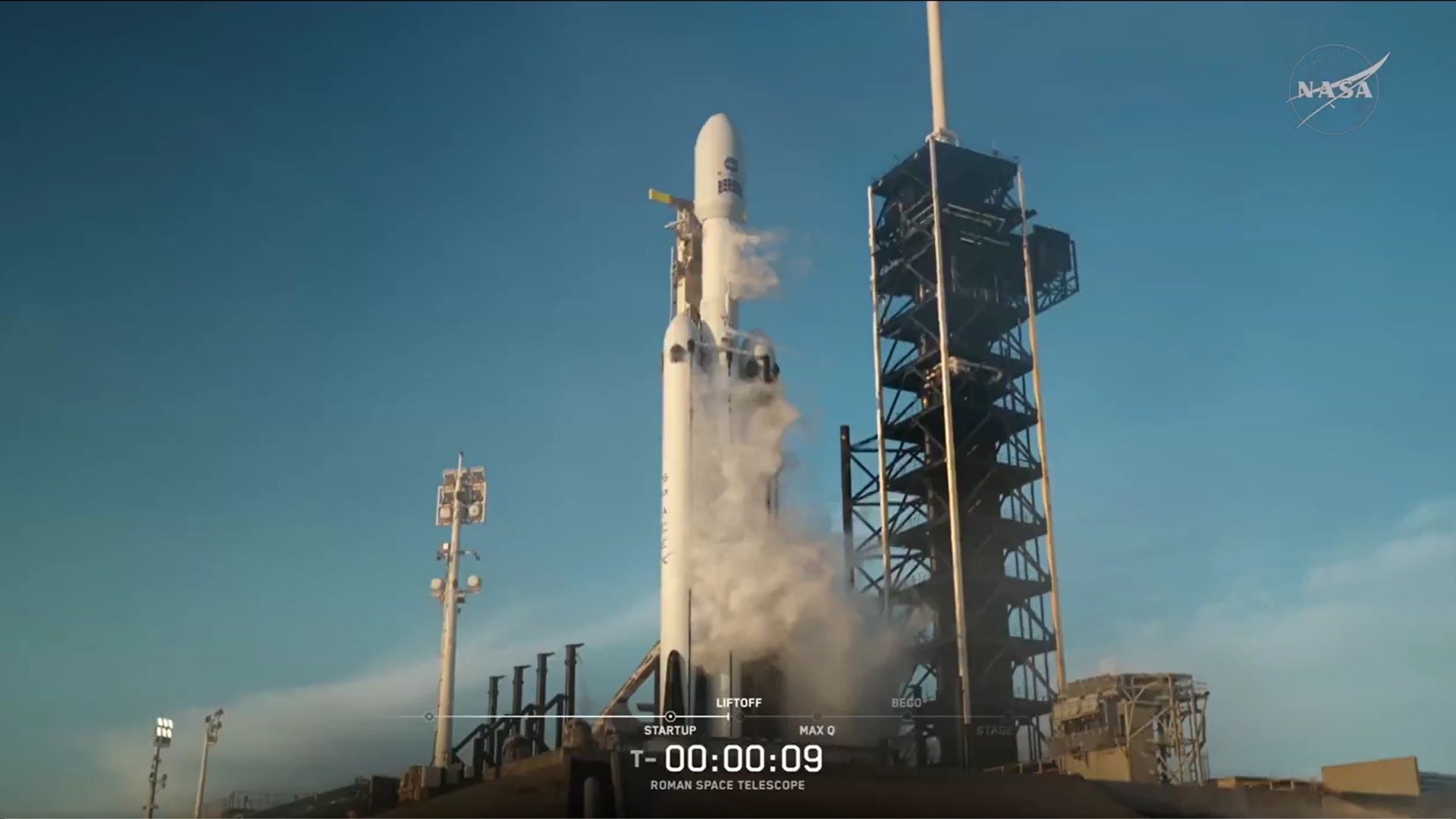
Photo courtesy: Nancy Grace Roman Space Telescope
NASA has launched the Nancy Grace Roman Space Telescope, a new observatory built to study the unseen forces shaping the universe and search for planets beyond our solar system.
Roman lifted off aboard a SpaceX Falcon Heavy rocket from Kennedy Space Center in Florida on Sunday, August 30.
The telescope is now travelling toward Lagrange Point 2, or L2, a stable observation location about 1.6 million kilometres from Earth. It will take around three months for the spacecraft to reach its destination and complete the necessary tests before beginning scientific operations.
Roman will primarily investigate dark matter and dark energy—two mysterious components believed to make up about 95 percent of the universe.
Dark matter cannot be seen, but scientists know it exists because of its gravitational effects on stars and galaxies. Dark energy is the term used for the unknown force believed to be causing the universe to expand at an accelerating rate.
To better understand them, Roman will study more than two billion galaxies and create a vast three-dimensional map showing how the universe has changed over time.
The telescope will also search for exoplanets, or planets located outside our solar system. NASA expects Roman to discover thousands of these worlds and help scientists understand how common planetary systems like ours may be.
Roman has image quality comparable to the Hubble Space Telescope but can observe a much wider area at once. NASA said it could survey the sky up to 1,000 times faster than Hubble.
Its wide view will also complement the James Webb Space Telescope. Webb is designed to examine smaller areas in great detail, while Roman will capture broad views containing millions of stars and galaxies.
The mission is expected to operate for at least five years, with enough fuel to potentially continue for another five. NASA plans to release Roman’s first images in early 2027.
Scientists also expect the observatory to make discoveries beyond its original objectives because of the enormous amount of space it will observe.