Headline
PH takes Abu Dhabi Dialogue chair, eyes stronger OFW protection

By Marita Moaje, Philippine News Agency
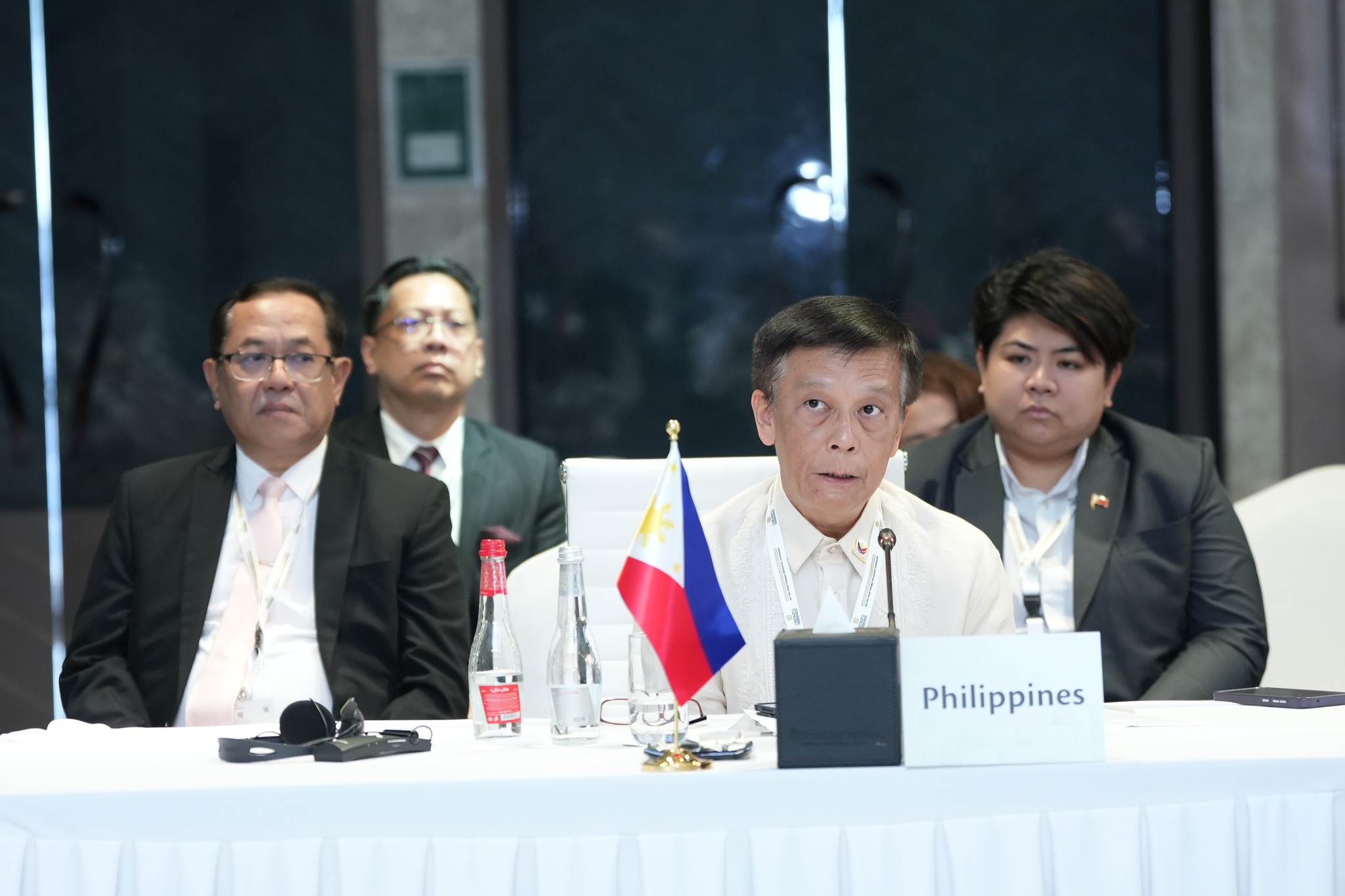
DIALOGUE CHAIR. Department of Migrant Workers Secretary Hans Leo Cadac during the Abu Dhabi Dialogue (ADD) held in the United Arab Emirates on Feb. 1. In a media briefing on Monday (Feb. 16, 2026), Cacdac said the Philippines, as the new chair of the Dialogue, will prioritize the welfare and protection of OFWs, while advancing safe, ethical and sustainable labor migration policies. (Photo: Department of Migrant Workers//Facebook)
MANILA – The Philippines has officially assumed the chairmanship of the Abu Dhabi Dialogue (ADD), a forum for dialogue and cooperation among Asian countries of labor origin and destination.
At a press briefing Monday, Migrant Workers Secretary Hans Leo Cacdac said the three-decade-old voluntary consultative forum connects labor-sending Asian countries with Gulf labor-receiving states.
Cacdac said the Philippines assumed the chairmanship, which will last for three years, after the 8th ministerial meeting of the Dialogue held on Feb. 1 at the United Arab Emirates, where 14 member states attended.
“The Philippines was elected as the chair of the 9th ministerial meeting to be held in 2028. We just assumed our role as the current chair, chairmanship of the Abu Dhabi Dialogue, the 9th, toward the 9th ministerial meeting,” he said.
“Slated to be taken up the three years of our chairmanship will be a host of what we call thematic areas. So welfare and protection obviously in the Philippine side would be on top of our agenda,” he added.
Cacdac said the ADD is a voluntary and non-binding inter-government consultative process with 20 member states and engaging seven Asian countries of labour destination that include Bahrain, Kuwait, Malaysia, Oman, Qatar, Saudi Arabia and the United Arab Emirates (UAE), and 11countries of origin including Afghanistan, Bangladesh, China, India, Indonesia, Nepal, Pakistan, the Philippines, Sri Lanka, Thailand and Vietnam.
Regular observers include the International Organization for Migration, International Labour Organization, private sector and civil society.
Under the Philippines’ leadership, the Dialogue will prioritize thematic areas such as the welfare and protection of overseas Filipino workers (OFWs), bridging education and employment through skills development, safe and ethical recruitment, social protection, and adaptation to the future of work, including digitalization and gig work.
Cacdac said he looks forward to a strong and active chairmanship of the ADD and that meetings on these thematic areas will be held, culminating in the 9th ministerial meeting in 2028.
“The Philippines will host the 9th ministerial meeting where all these thematic areas will be discussed, taken up and embodied in a declaration for the 9th ministerial meeting, which will set the tone for policies and programs and services within the member states of the Abu Dhabi Dialogue,” he said.
He said issues like domestic workers’ contracts, wages, and terms of employment will be actively discussed.
He said the dialogue will also serve as a venue to discuss emerging labor issues, including digitalization, social protection mechanisms, and safe deployment channels.
Cacdac highlighted the Philippines’ strong reputation in migration governance, which is recognized globally, tracing its system from the time of former President Ferdinand E. Marcos Sr., and continuing under President Ferdinand R. Marcos Jr.
“We are not a country where irregular or illegal migration thrives. We have very strong anti-illegal recruitment and anti-human trafficking policies,” he said, noting that the country has maintained Tier 1 status for 11 years in the U.S. State Department Trafficking in Persons Report.
“The key here for the Philippines is upholding welfare and protection of OFWs, and continually making ourselves known as foremost advocates and having a migration governance system on regular pathways to labor migration, safe and ethical, sustainable recruitment,” he added.