Abrar Ahmad Chughtai, UNSW Sydney; Holly Seale, UNSW Sydney, and Md Saiful Islam, UNSW Sydney
June 3, 2026

Abrar Ahmad Chughtai, UNSW Sydney; Holly Seale, UNSW Sydney, and Md Saiful Islam, UNSW Sydney
June 3, 2026
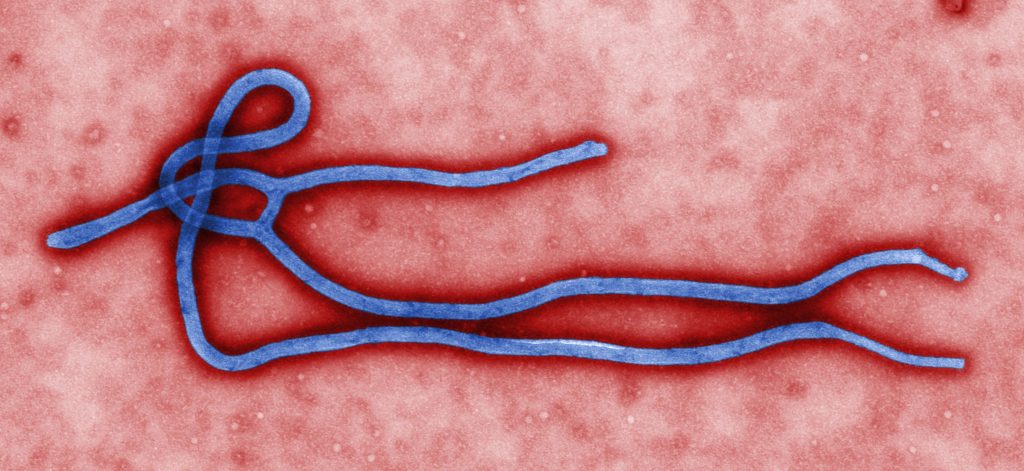
(Photo courtesy: By CDC/Cynthia Goldsmith – Public Health Image Library)
The latest Ebola outbreak is showing no signs of slowing.
On April 24, the first suspected case of the rare Bundibugyo strain of Ebola was detected in the Democratic Republic of the Congo (DRC). On May 17, the World Health Organisation declared the outbreak a “Public Health Emergency of International Concern”.
The current Ebola outbreak is the third-largest in world history, with 906 suspected cases and 223 deaths in the DRC alone as of 27 May.
And it may have spread to other continents. Health authorities are now investigating a suspected case in Italy, and two possible cases in Brazil. All three are believed to be travellers returning from either the DRC or Uganda. One American man who tested positive for Ebola is currently being treated in Germany.
As concerns grow, the Coalition for Epidemic Preparedness Innovations has committed more than A$86 million in funding to fast-track the development of three potential vaccines, targeting the Bundibugyo strain.
But in the meantime, could this outbreak spread further? And how concerned should we be?
Ebola is a rare but potentially fatal virus that mainly spreads through direct contact with the bodily fluids – such as blood, faeces and vomit – of an infected person.
Early symptoms of Ebola include sore throat, headaches, fever, fatigue and body pain. Severe Ebola cases can cause skin rashes, shortness of breath, vomiting, diarrhoea, abdominal pain and seizures.
Ebola was first identified in humans in 1976. Since then, there have been more than 40 outbreaks around the world, with the majority occurring in African countries.
The current outbreak is the third ever to be caused by the rare Bundibugyo strain. The majority of past outbreaks were driven by the more deadly Zaire strain, which kills up to 90% of people compared to up to 34% for Bundibugyo.
The factors driving this latest outbreak also contributed to the devastating West African outbreak of 2014-16, where more than 11,000 people died.
In both outbreaks, the virus had been circulating for months before an outbreak was declared, and initial cases had non-specific symptoms.
Both outbreaks also rapidly spread in urban areas. Transmission in health-care settings is another common factor.
Political instability and social unrest also contributed to both outbreaks. Most recently in the DRC, crowds have set fire to hospital tents, prompting some patients to flee isolation wards.
And certain cultural practices – including traditional burial rituals that often involve handling dead bodies – may have accelerated the spread of both outbreaks.
Similar to the West African outbreak, this latest Ebola outbreak has spread to other continents through travel.
Nine cases and one death have already been reported in Uganda, which shares a border with the DRC.
An American man who tested positive for Ebola while working in the DRC, is in a stable condition after being treated in Germany.
In Italy, authorities are monitoring a traveller who recently returned from the DRC to the city of Cagliari.
According to some reports, Brazilian authorities are investigating two suspected Ebola cases. They are believed to be two travellers, one who returned from the DRC to São Paulo and the other from Uganda to Rio de Janeiro.
Importantly, both suspected cases have been diagnosed with other illnesses. The São Paulo patient presented with fever and was later diagnosed with severe meningitis. The Rio de Janeiro patient tested positive for malaria after developing a cough, chills and diarrhoea, but has since tested negative for Ebola.
So for now, no Ebola cases have been confirmed in Brazil. But these suspected cases have prompted the country to activate its Ebola safety protocols, including patient isolation, laboratory testing, and epidemiological investigations.
Meanwhile, several countries have imposed travel restrictions to prevent Ebola from reaching their shores.
Both the United States and Canada are temporarily restricting entry for travellers from the DRC, Uganda and South Sudan. The US and other countries such as India and Mexico are also strengthening public health screening and disease monitoring measures, particularly at airports. Some countries have mandated a 21-day quarantine period for their citizens returning from the DRC.
At this stage, the risk of Ebola reaching Australia is very low.
Australia has not put in place any travel or quarantine requirements for affected countries, but federal health minister Mark Butler says authorities are still monitoring the outbreak “very closely”.
Based on lessons from past outbreaks, there are three main ways the current Central African outbreak could play out.
Without effective control measures, cases may surge in the coming months. Some models suggest that by mid-May, up to 1,000 cases had already occurred in the DRC, compared to official figures of about 900 cases. So the actual number of Ebola cases may be much higher than authorities realise.
In a more favorable scenario, a strengthened public health response could bring this latest outbreak under control. This would be possible with continued support from the international community, the rapid development of vaccines and community engagement.
However, the most realistic outcome is cases will continue to rise before authorities successfully contain the current outbreak.
Nevertheless, the international community responded much more swiftly to this outbreak, particularly compared to the devastating 2014-16 West African outbreak. That alone may protect us from an outbreak of the same catastrophic scale and cost.
This article is republished from The Conversation under a Creative Commons license. Read the original article.


There was a time when the idea of becoming estranged from your own family seemed almost unthinkable. Family was family....


There was a time when I thought a fulfilling life had to be busy to be meaningful. Now, I think...


There is a particular kind of heartbreak that comes with watching your child grow up. It isn’t the heartbreak of...


There are illnesses we can see, and then there are the ones we learn to hide. Anxiety is often one...


We live in a world that glorifies being busy. Some people wear exhaustion like a badge of honour. Calendars are...


Every wedding anniversary takes me back to one of the most magical days of our lives and reminds me why...


Birthdays have a way of making us pause—not to count the years we’ve lived, but to appreciate the countless blessings...


Recently, I experienced the painful reality of losing someone through others. One friend lost her fiancé to death, while another...


Growing old brings a sobering reality: time is finite. You watch your body slow down, see your parents age, and...


Celebrating Dr. David Suzuki’s 90th birthday on Friday, May 22 was a true privilege and a great pleasure! My husband,...