Canada News
Canada marks 5th annual National Day for Truth and Reconciliation, but ’much work remains’ says GG

By Darren Major, CBC News, RCI
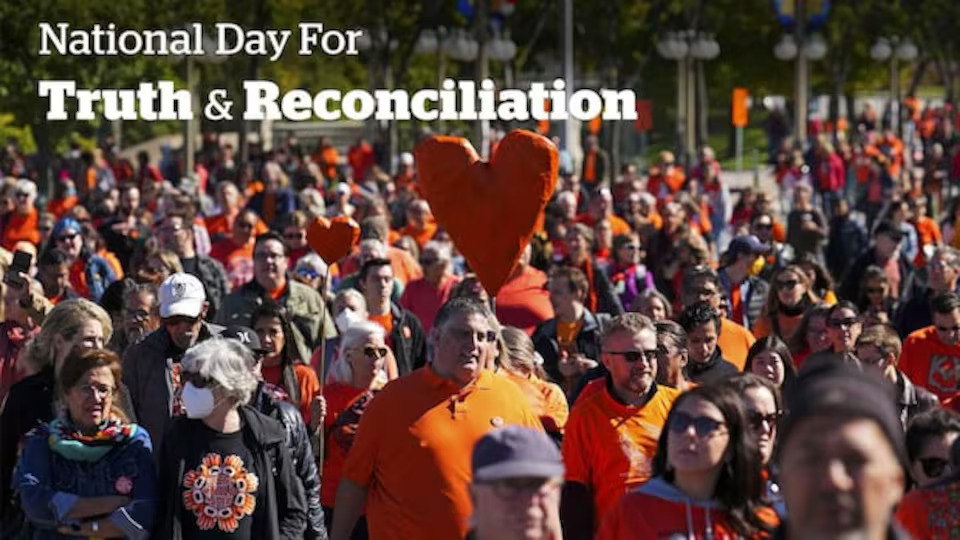
National Day For Truth and Reconciliation. Photo: CBC
2025 also marks 10 years since since the release of the Truth and Reconciliation Commission final report.
Canadians are gathering for ceremonies and reflecting on the tragic legacy of residential schools — and honouring the children who never came home — as the country marks the fifth annual National Day for Truth and Reconciliation.
This year also marks 10 years since the final report from the Truth and Reconciliation Commission (TRC) was released.
The commission, which conducted an exhaustive, years-long study of residential schools, has documented just how destructive residential schools were with widespread abuse and neglect — and as many as 6,000 deaths, most from malnutrition or disease.
The schools, which were designed to assimilate Indigenous children into the dominant Euro-Canadian culture, caused untold intergenerational trauma and harm, the TRC found.
In a statement Tuesday morning, Prime Minister Mark Carney said reconciliation is a generational task, lived and practised every day.
As a government and as a people, we match remembrance with responsibility,
Carney said in his statement.
Of the 94 calls to action put forward by the TRC, just over a dozen have been completed.
WATCH | Where’s Canada at with the Truth and Reconciliation Commission’s 94 calls to action?:
Why several TRC Calls to Action are still unanswered
CBC chief correspondent Adrienne Arsenault asks Toronto Metropolitan University professor Eva Jewell to help explain why several Truth and Reconciliation Calls to Action remain unanswered a decade later — and what it will take to make more progress.
But Gov. Gen Mary Simon, the first Indigenous person to serve in that role, said the country is making meaningful progress
on the path to reconciliation.
Many schools are embracing inclusive history.
More and more initiatives across Canada are making space for Indigenous children to learn and speak their ancestral languages. Governments are working with Indigenous communities to address systemic issues and bolster self-sufficiency. Relationships are being renewed, grounded in respect and dialogue, Simon said in a statement.
But much work remains. Denialism and discrimination persist. Many Indigenous communities are striving to heal from generational trauma while struggling to meet basic needs,
she said, calling on Canadians to mark the day by renewing their commitment to reconciliation.
Both Carney and Simon will speak at a ceremony in Ottawa on Tuesday afternoon.
A national Indian Residential School Crisis Line is available to provide support for survivors and those affected. People can access emotional and crisis referral services by calling the 24-hour service at 1-866-925-4419.
Mental health counselling and crisis support is also available 24 hours a day, seven days a week, through the Hope for Wellness hotline at 1-855-242-3310 or by online chat.
This article is republished from RCI.