Canada News
How cold case DNA technique came to Ottawa from California — and where it’s headed next

By Kristy Nease, CBC News, RCI
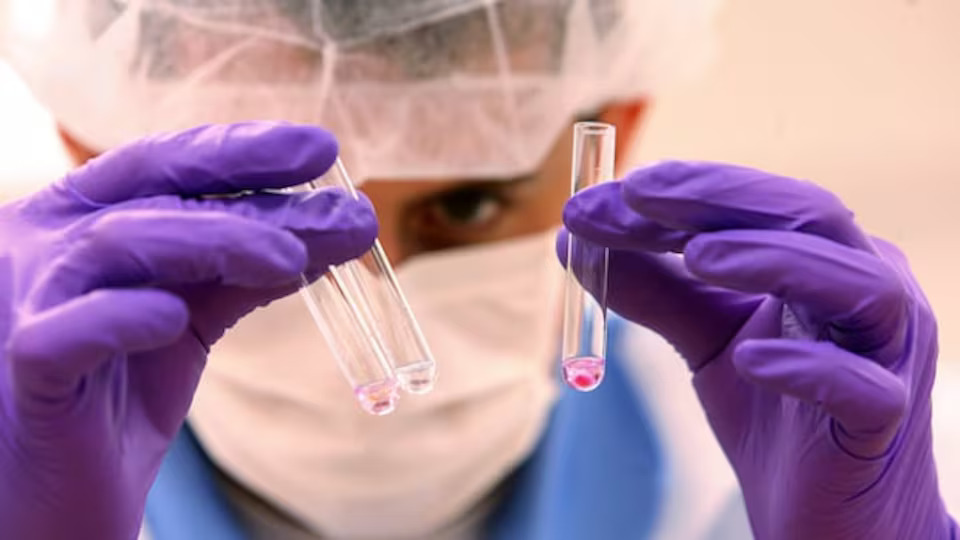
For the first time in Ottawa, an online DNA family tree search has helped police solve a decades-old homicide. The technique was first used eight years ago to find the notorious Golden State Killer. Photo: CBC
‘It’s the most revolutionary thing we’ve seen in our lifetimes,’ says Golden State Killer prosecution alumnus
Family tree enthusiasts and the websites that cater to them are helping police solve decades-old homicides, including here in Ottawa. And the former California district attorney who helped bring the technique to the world with the prosecution of the Golden State Killer back in 2018 (new window) says it has the potential to solve many more — as long as it’s managed appropriately.
Investigative genetic genealogy — the process of using DNA to find relatives of unidentified suspects and victims of crime — burst into the consciousness in eastern Ontario last year when Ontario Provincial Police used it to help identify the Nation River Lady (new window).
She was found dead nearly 50 years ago, floating in the Nation River after being dropped from a bridge on Highway 417 between Montreal and Ottawa. She wasn’t identified as Jewell Parchman Langford until decades later, and her alleged killer remains before the courts on a charge of murder (new window).
Now, investigative genetic genealogy has been used for the first time by Ottawa police to help identify a suspect in the stabbing death of a man on the Portage Bridge back in 1996.
Twenty-nine years later, Lawrence Diehl, who is now 73 (new window), is facing a charge of second-degree murder in Christopher Smith’s killing, and remains in custody as his case begins to make its way through the courts. The allegations against him have not been proven.
Ottawa police make arrest in 1996 cold case
Ottawa police say they arrested a 73-year-old man after advances in DNA technology helped them find, arrest and charge him in a 1996 stabbing death on the Portage Bridge.
‘Long, gruelling, painstaking’
It’s taken four years for Ottawa police to get to this point.
In 2020, as genetic genealogy started making more and more headlines in old police investigations, Ottawa police put Sgt. Chris O’Brien in charge of figuring out which cases might benefit from the new technique.
He put out a call to the rest of the homicide unit to go through dozens of cold cases (new window) and find any containing a DNA profile they know belongs to a suspect, but which didn’t yield results in traditional DNA databank searches.
Sgt. Mahad Hassan suggested the Smith case and they both agreed it met the bar, O’Brien said. From there, they had to bring the 1996 investigation up to code, so to speak.
With a lot of these old cases, it’s about bringing a lot of what was done 30 years ago into the modern standard that’s accepted for prosecutions in court today,
O’Brien said.
It’s a long, gruelling, painstaking process to go through all that work.
Family tree sleuths provide DNA for comparison
To find out more about their heritage, people use companies like 23andMe, Ancestry and others to upload their DNA and trace family links through the generations.
But many of those companies don’t allow law enforcement to upload DNA profiles of unidentified suspects and victims of crime to compare with their users.
GEDmatch and FamilyTreeDNA do, however — for users who have specifically opted in.
For the Smith case, Ottawa police uploaded their unknown suspect’s DNA profile to those two sites. With help from the Toronto police cold case unit, which has genetic genealogists on staff thanks to provincial funding, they started building out family trees to find relatives of their suspect.
It almost works like a tip. It helps focus your investigation into potential suspects or a potential suspect, as the case may be. And then once you have that, then we switch to more traditional old-fashioned police work,
O’Brien said.
He declined to talk about what happened next in the Smith case because it’s still before the courts.
But speaking generally, O’Brien said the old-fashioned police work involves getting a DNA sample from the suspect, either with a warrant or surreptitiously within the bounds of the law — picking up abandoned trash like a cigarette butt, or getting a sample from a vehicle the suspect is using while they’re in a store shopping, as just two examples.
‘We’ve got to do it right’
There’s a tremendous need
and tremendous potential
for investigative genetic genealogy in solving violent crimes, according to Anne Marie Schubert, who speaks at conferences and training sessions on the subject for the International Homicide Investigators Association.
The association held a summit in Ottawa earlier this fall (new window) where the Nation River Lady investigation was one of the case studies.
Schubert knows quite a bit about investigative genetic genealogy: She was the district attorney for Sacramento County, Calif., during the investigation and prosecution of the Golden State Killer in 2018 — one of the earliest cases in which the technique was used to identify a suspect.
Since then it’s helped solve many cases in the U.S., Canada and abroad — Schubert estimated about 1,000.
No Canadian laws govern its use
But she said the technique still has a long way to go in terms of funding, equipment, training and public policy.
It can cost anywhere from $1,500 to $10,000 to do, she said, depending on the quality of the sample and the facts of the case. And moral and ethical concerns are still being hashed out.
Canada has no laws regulating investigative genetic genealogy, or the technology and consumer services that make it possible. Last year, the Canadian Journal of Bioethics published a study saying the lack of legislation (new window) leaves Canadians at risk of privacy violations, arbitrary search, loss of presumption of innocence and non-consensual use of biometric information.
Schubert said investigators don’t end up with anyone else’s DNA; they see a list of relatives like any other member of the public. She thinks it’s an invaluable tool, as long as it’s being used appropriately.
In my opinion, it’s the most revolutionary thing we’ve seen in our lifetimes in terms of crime solving…. But we’ve got to do it right. We don’t ever want to get it taken away from us,
she said.
Obviously genetic privacy is important…. There’s an important balance you must achieve between the rights of individuals, privacy rights and public safety.
This article is republished from RCI.