Business and Economy
As another cannabis retailer tries to save itself, is the industry going up in smoke?

By Jenna Benchetrit, CBC News, RCI
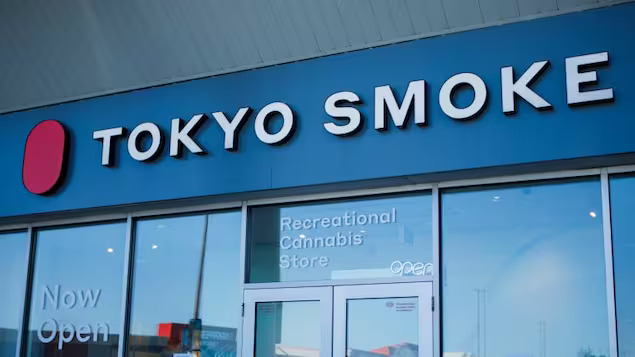
A Tokyo Smoke store is pictured in Toronto on Aug. 29. Tokyo Smoke is the latest Canadian cannabis retailer to close some of its locations and seek creditor protection in an unpredictable industry grappling with too many stores, high overhead costs and ultra-low retail prices. Photo: (Showwei Chu/CBC)
Tokyo Smoke shutters 29 stores, seeks credit protection in latest cannabis shakeup
Got a light? Canada’s weed industry could probably use it.
Tokyo Smoke is the latest Canadian cannabis retailer to close some of its locations and seek creditor protection in an unpredictable industry grappling with too many stores, high overhead costs and ultra-low retail prices.
One of the earliest brands to form in Ontario after the federal legalization of pot in 2018, Tokyo Smoke is shuttering 29 stores and restructuring its business under the Companies’ Creditors Arrangement Act, it announced Thursday. It will still have 167 locations open across four provinces.
It’s surprising and it’s not surprising at the same time. I think probably people are surprised to see such a prominent name file for [creditor] protection,
said Matt Maurer, a partner and chair of the Cannabis Law Group at Torkin Manes LLP in Toronto.
But at the same time, it’s no surprise to people in the industry, and I think people in general, that the cannabis industry is going through a little bit of turmoil.
Canada has seen a slew of cannabis retailers (new window) and producers (new window) file for creditor protection or close stores in the last several years, with many falling behind on their tax obligations (new window), as well.
Maurer notes that the range of chains — big brands, mom-and-pop stores, people who own one or two stores versus those that own 10 or 15, some of which are franchised — makes the market a mixed bag.
In Ontario, Canada’s largest regulated weed market, ahead of Alberta and B.C., a lot of these companies wanted to expand quickly when retail was allowed to grab a good size of the market share. And that was a very logical strategy,
said Maurer.
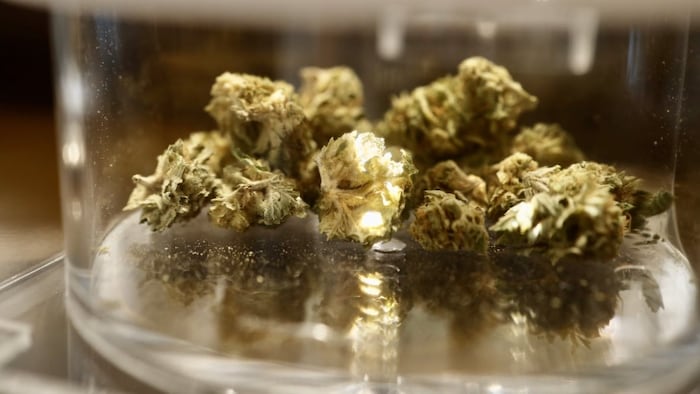
Cannabis buds are displayed at a Spiritleaf store in Ottawa. Canada has seen a slew of cannabis retailers and producers file for creditor protection or close stores in the last several years, with many falling behind on their tax obligations. (Andrew Lee/CBC)
Photo: (Andrew Lee/CBC)
A black market that just won’t quit
But those stores have had to compete with a still-thriving black market. Bloomberg analyst Duncan Fox recently wrote that the illegal pot industry would remain a significant barrier
to producers’ ability to raise prices, because of intense competition.
That was one of the challenges outlined in Tokyo Smoke’s filing: It cited a thriving grey market
as having impacted its revenues, and that it disproportionately
impacts licensed retailers, diverting money from them into an illicit market estimated to be worth between $2 billion to $4 billion.
When you put it all together, you’ve got a lot of competition, your prices are going down and your overhead is probably a little bit more than you’d like it to be,
said Maurer. And that’s putting a lot of pressure on a lot of different stores.
Fox estimated in his June report that the Canadian cannabis market could grow about four per cent to a value of $4.8 billion in 2024, even with lower retail sales — mostly due to new products like vapes, edibles and beverages.
He wrote that retail prices for regulated weed products are down almost 30 per cent from 2018, thanks to an oversaturated market that’s straining producers trying to grow sales and turn a profit.
Monthly recreational weed sales peaked in August 2023 at $469 million, though that growth has slowed in the last year, with June 2024 sales coming in at $405 million, according to (new window) monthly data from Statistics Canada.
More pot stores, more problems
Ontario introduced a lottery system for weed retailers in 2018, allowing a select number of retailers to operate while Canada’s weed supply stabilized. It then switched to an open-market system in 2020.
Tokyo Smoke said the switch led to an influx of cannabis retailers crowding the market. Businesses scrambled to get up and running as quickly as they could — some of them overpaying on their leases, Maurer said.
And business owners were kept in the dark for part of the licensing process about where their competitors were setting up shop.
So … you’ve got a huge influx of stores and businesses coming online more or less within the same year to two-year time period,
said Maurer. And [you] can’t tell if someone’s opening across the street from you.
WATCH | Is Vancouver’s green rush over?:
Has the ‘green rush’ of Vancouver’s cannabis industry gone up in smoke?
The first legal pot shops opened in the City of Vancouver five years ago. But business isn’t booming for some independent stores.
Neev Tapiero, a longtime cannabis legalization advocate, said he’s still bullish on the future of the cannabis industry, both in Canada and internationally.
The health [of the industry] is OK,
said Tapiero. The dysfunctional legal system for cannabis is still better than the dysfunctional illegal system for cannabis, so there’s progress there.
But Canada might still be a model — for better or for worse — for other countries seeking full legalization of cannabis at the federal level, with powers to each of the provinces.
An industry study released (new window) by Statistics Canada in April found that out of all Canadian consumers who’d used cannabis in the last 12 months, more than two-thirds had bought it legally.
They’re going to look to Canada to see what works and what doesn’t work,
he said, noting differences between provinces: For example, Ontario has a central buyer system for cannabis, whereas Manitoba and Saskatchewan do not.
There was a boom a few years ago, now it’s a bust,
said Tapiero. But the future is promising, he added, with cheap prices appealing to consumers and alcohol consumption down among young people, who are choosing alternate vices.
There [will] probably be another boom in the cannabis industry once the U.S. legalizes,
said Tapiero, who suspects a major brand like Budweiser or Marlboro will cash in.
These mega-billion-dollar corporations will start getting involved, and then the dust will have to settle again.
This article is republished from RCI.