By Donald Nieman, Binghamton University, State University of New York; The Conversation
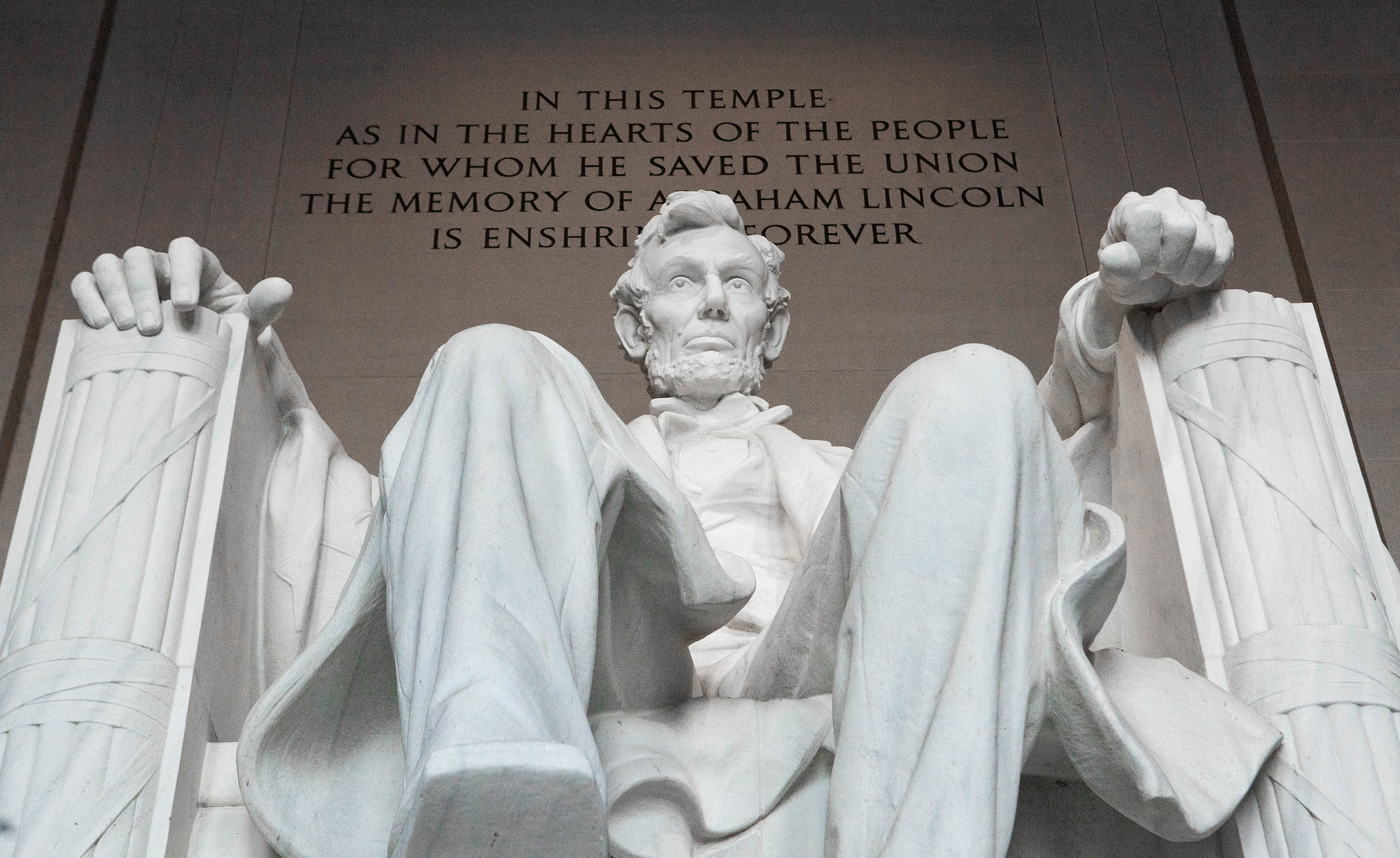
Lincoln Memorial Washington D.C. (Photo: Anthony Quintano/Flickr, CC BY 2.0)
Following the attempted assassination of Donald Trump, community leaders, clergy and politicians including President Joe Biden have called on Americans to tone down white-hot political rhetoric. Some have invoked the words of one figure in particular: Abraham Lincoln.
As a scholar who has written about how American politics became so deeply polarized and teaches a course on Lincoln, I’m not surprised.
Lincoln eluded an assassination plot as he traveled to Washington to assume the presidency in 1861, and he took the oath of office when the nation was even more deeply divided than today. As president, he brought a bitterly divided North together to wage a protracted, costly war that saved the Union. What’s more, his ability to make prose poetic resonates across the centuries – making him the obvious source for politicians and pundits looking for emotive language in times of crisis.
Few of Lincoln’s aphorisms have been quoted more than his appeal to “the better angels of our nature” in his 1861 inaugural address. Liberals, conservatives and those in between have invoked the phrase to decry the intractable partisan warfare that has escalated over the past decade and call for a return to civility.
Edits for the ages
Lincoln didn’t coin the phrase, as noted by David Blankenhorn, a political activist who founded “Braver Angels,” a nonprofit aimed at overcoming polarization. It appeared in Shakespeare’s “Othello,” and Charles Dickens observed that “our own desires stand between us and our better angels” in his 1841 novel “Barnaby Rudge.”
Although Shakespeare was a favorite of Lincoln’s, the president took the phrase from another politician, William Henry Seward. The former New York governor and U.S. senator was far better known than Lincoln and had been his chief rival for the Republican nomination in 1860.
Lincoln realized that in order to govern, he needed to calm factional conflict within his own party. So, he brought his principal rivals into his cabinet, appointing Seward secretary of state. When the New Yorker suggested extensive revisions to Lincoln’s inaugural address, the president-elect took note.
Lincoln believed that the speech was perhaps the last hope of averting civil war. By the time he took the oath of office on March 4, 1861, seven states that permitted human bondage had seceded from the Union. Secessionist forces were at work in eight others.
Seward’s influence was most notable in the critical closing paragraph. Lincoln had ended his draft by explaining that he hoped to avoid war, but the ball was in the Confederacy’s court. The secessionists had no binding obligation to destroy the government, Lincoln asserted, while he had taken the constitutional oath to “preserve, protect and defend” it. While his language was temperate, logical and lawyerly, it was abrupt. There was no olive branch held out to southerners who feared his leadership, no appeal to shared history and values.
Seward urged Lincoln to appeal to Americans’ “bonds of affection” that grew from “so many patriot graves.” The “mystic chords” reverberating in all Americans’ “hearts and hearths” would “again harmonize” when touched “by the better angel … of the nation.”
Lincoln took Seward’s advice but gave his language a poetic turn that has echoed across the centuries:
I am loath to close. We are not enemies, but friends. We must not be enemies. Though passion may have strained, it must not break our bonds of affection. The mystic chords of memory, stretching from every battle-field, and patriot grave, to every living heart and hearth-stone, all over this broad land, will yet swell the chorus of the Union, when again touched, as surely they will be, by the better angels of our nature.
More than words
It was graceful and moving, but it didn’t bring the Union back together. Nor did it prevent four other states from joining the Confederacy, or a civil war that took almost three-quarters of a million lives.
Yet the address spoke volumes about Lincoln’s qualities as a leader. He was open to advice, even from those who had been rivals. Though he took decisive and divisive actions when necessary, he tried to be a unifier.
The Emancipation Proclamation that declared slaves in Confederate-controlled territory free, for example, was highly controversial. By framing it as a measure necessary to defeat the Confederacy, Lincoln appealed to abolitionists and radical Republicans on the left, as well as conservatives who cared little about slavery but were committed to preserving the Union.
To defeat a determined South, Lincoln first had to unify a fractured North. That began with calming divisions in his own party and ensuring that critical border states such as Kentucky and Missouri, where secessionist sentiment was rife, stood with the Union. It also meant outreach to members of the Union’s Democratic opposition who supported strong measures to win the war. In 1864, for example, he appointed a Tennessee Democrat, Andrew Johnson, as his running mate.
Today, the U.S. is bitterly polarized, only four years removed from an insurrection to stop the peaceful transfer of power. It may seem naive to hope leaders will do more than appeal to “better angels” – to hope they’ll walk the walk.
Lincoln sought to unify in part because more division would make victory impossible. If voters punish appeals to hate and division, politicians may be forced to discover their better angels, rather than merely talk about them.
Donald Nieman, Professor of History and Provost Emeritus, Binghamton University, State University of New York
This article is republished from The Conversation under a Creative Commons license. Read the original article.