By Paul T. Mitchell, Canadian Forces College, The Conversation
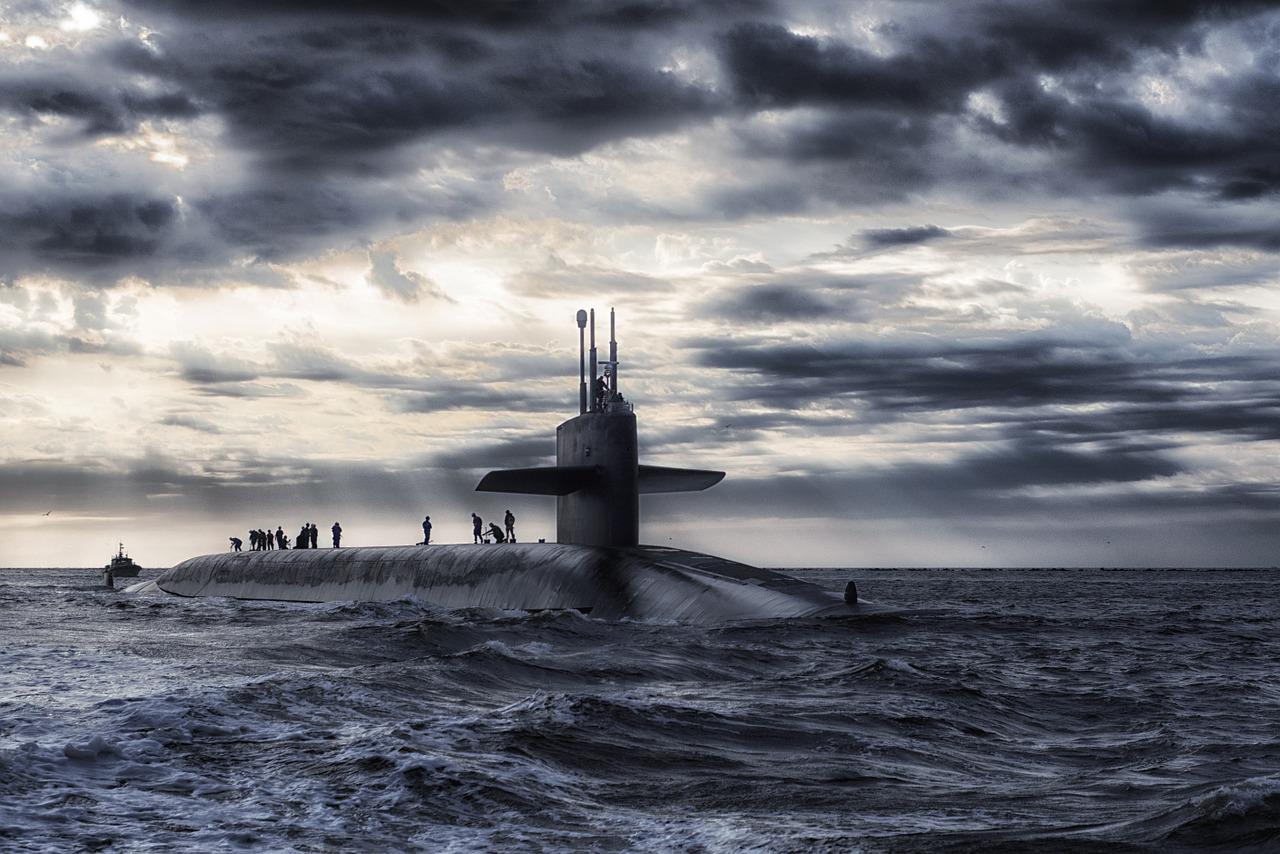
Canadian Defence Minister Bill Blair announced at the recent NATO summit that Canada would be purchasing up to 12 conventionally powered submarines.
This would seem to be an acknowledgement by the government on its need to take Canada’s defence more seriously.
But take a closer look and it’s clear this announcement is “business as usual.”
Canada has refrained from creating a large and capable military for strategic reasons. Military spending only tends to increase in the midst of a crisis or under pressure from allies. The submarine announcement is in keeping with this tradition.
Weak defence spending
Just three months ago, to great fanfare, Justin Trudeau’s Liberal government announced a Defence Policy Update focused on Arctic defence and signalling that the purchase of new submarines would be “explored.”
Since then, Canada has been called out for its weak defence spending plans and its failure to live up to the commitment it made to NATO in 2014 to spend two per cent of its GDP on defence.
The new submarines would boost spending well above that figure. However, the short period of time between May’s policy exploration and the submarine announcement raises suspicions that the subs are simply a get-out-of-jail-free card rather than a carefully considered strategic policy response.
In terms of warfare, Canada has historically played a contributing role rather than serving as a central protagonist. Simply showing up fulfils Canada’s strategic objectives of participating with its allies. How the war is conducted and won rarely figures into the government’s deliberations.
The same is true of the subs announcement. While Royal Canadian Navy staff will work diligently to determine which submarine system Canada will ultimately purchase, the government has no real interest in the matter besides potential local economic benefits. The announcement itself is the strategic objective, which is merely to reassure allies while doing as little as possible on defence.
Simply put, Canada’s bare minimum approach is at odds with the requirements of complex weapon systems like submarines.
‘Harbour queens,’ personnel problems
The Victoria-class submarines have been a considerable disappointment for Canada since they were purchased from the United Kingdom in 1998.
This is not because, as many have alleged, we were fooled by cagey Brits seeking to unload second-rate submarines on us. Indeed, the Victorias sport some of the most advanced systems on board any sub.
Instead, a failure to properly invest in what would make the submarines work — sufficient numbers of project management staff and spare parts, and tighter control over service support with industrial partners — have been the primary problems affecting the success of the Victoria-class vessels.
These deficiencies have made “harbour queens” of our submarines, which in turn have meant few days at sea to train the submariners necessary to operate and manage them.
At the moment, Canada has only five naval officers who are qualified as submarine commanders. One of them is a rear admiral, and two are captains: submarines are typically commanded by lieutenant commanders, two ranks below captain.
Arctic operations
The announcement at the NATO summit makes much of the potential for submarines to contribute to Arctic security. The next generation of submarines is likely to sport “Air Independent Propulsion” (AIP) technology that will enable under-ice operations.
But the biggest naval problem in the Arctic won’t be ice, but distance. There is considerable distance from naval bases in Halifax and Esquimalt, on Vancouver Island in B.C., to the entry points of the Northwest Passage or the sea lines of communication running along the northeast Arctic Ocean areas between Banks and Ellesmere islands. A potential ice-free future will drive up maritime and naval traffic across the top of the globe.
Conventional submarines travel very slowly underwater in order to preserve their battery charge. If Canada hopes to keep a continuous undersea watch on these areas, the proposed 12 submarines will only barely be able to do so.
It make take a month or more for a conventional submarine to get to its patrol destination. And unless it has considerable endurance, the lack of support facilities in the Arctic may mean the sub spends very little time there.
Operational readiness
In the last 20 years, the Royal Canadian Navy has historically managed to keep only one of four boats ready for operations, which would translate into only three of the new 12-boat fleet being ready to use if the current low rates of preparedness persist.
Buying submarines is not like buying a car. Rather, you have to buy the gas station, the service centre, mechanics, and industrial design/engineering facilities to operate them. Canada’s approach with the Victoria-class subs has been to neglect these enabling components, resulting in idle boats in harbour.
An Arctic base for operations, including maintenance and other support functions, would extend patrol time, but would be extraordinarily expensive to build and far beyond what the existing Nanisivik refuelling base on Baffin Island can handle. It would also be difficult to persuade large numbers of naval and fleet maintenance personnel, and their families, to live in such remote and hostile conditions.
Buying new submarines might address Canada’s NATO embarrassments. But given Canada’s historic proclivity to pay little attention to the details of defence planning and administration, 12 submarines may become a gigantic white elephant for a navy already struggling with a personnel crisis and the need to modernize its entire fleet structure.
Beyond the costs for each submarine, significant investment is required in terms of personnel growth, fleet maintenance facilities, logistical infrastructure and project management staff. Absent these investments, we can expect more harbour queens and less Arctic security — in other words, business as usual.
Paul T. Mitchell, Professor of Defence Studies, Canadian Forces College
This article is republished from The Conversation under a Creative Commons license. Read the original article.