
Canada News
Why Trudeau’s self-serving prorogation of Parliament should be Canada’s last

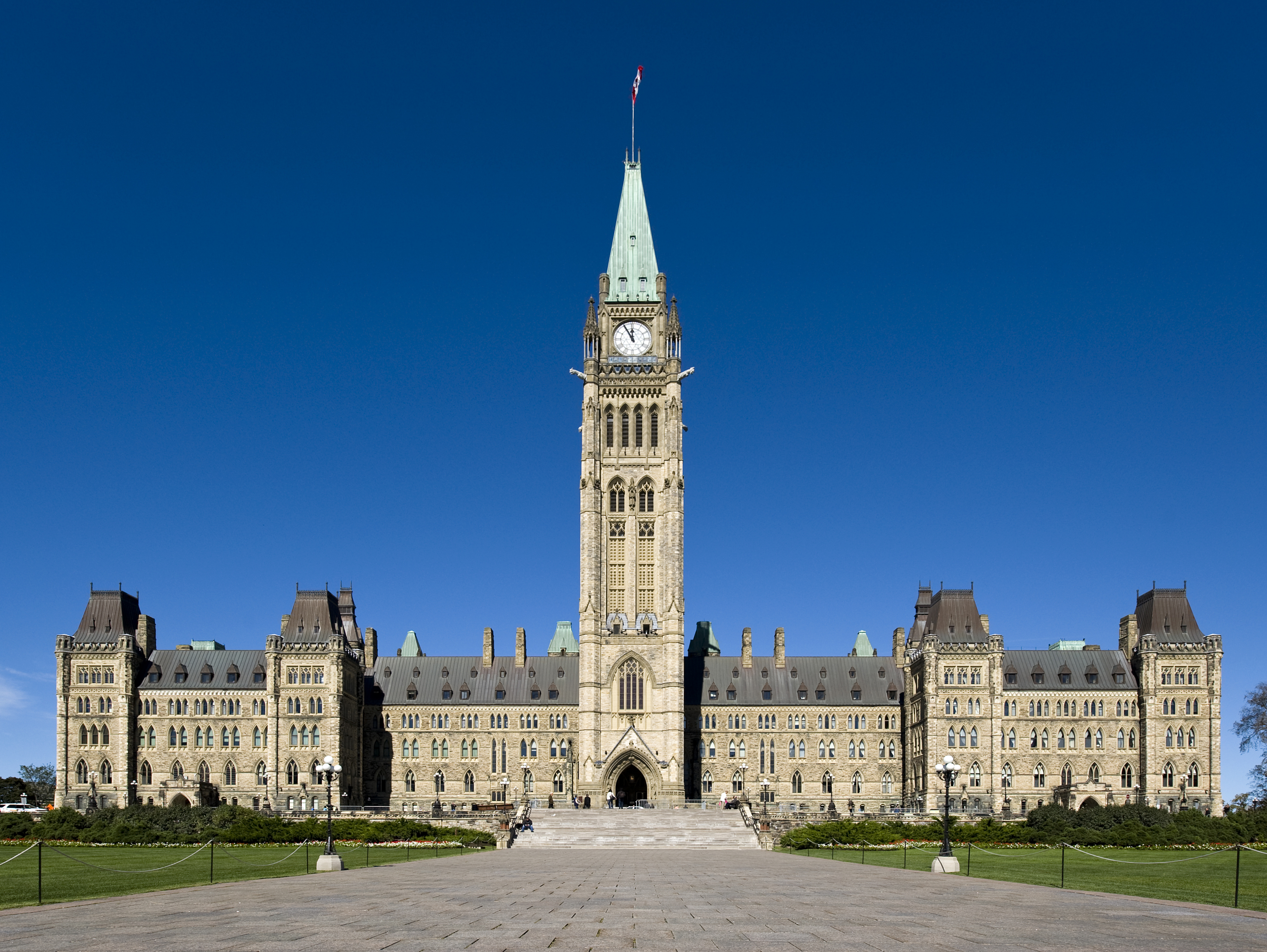
FILE: The Peace Tower dominates the Centre Block structure of the Canadian Parliament buildings. (Photo by Saffron Blaze/Wikimedia Commons, CC BY-SA 3.0)
Prime Minister Justin Trudeau’s decision to shut down Parliament was a controversial one, since it shuttered committee inquiries into the WE Charity affair that have already embarrassed the government.
The contentious move, which schedules the return of Parliament on Sept. 23 with a speech from the throne, will inevitably lead to calls to establish rules for prorogation. But a better question is why Canadian legislatures need prorogation at all.
Prorogation is a longstanding feature of Canadian parliamentary government. Often called a “reset” or “reboot” of Parliament, it shuts down all parliamentary business. Bills that aren’t passed die (though they can be resumed). Committee activities collapse.
Parliament then resumes, presumably refreshed from its hibernation. A new speech from the throne is delivered, laying out the government’s agenda, and everything starts anew.
Most Canadian federal and provincial governments prorogue at least once between elections. Trudeau was exceptional in not proroguing at all in his first term from 2015-19.
This time around, the prime minister has given a plausible explanation why he now wants a reset. He said that “the throne speech we delivered eight months ago made no mention of COVID-19.… We need to reset the approach of this government for a recovery to build back better.”
But there is another reason governments turn to prorogation: to escape sticky situations. And indeed, Trudeau’s prorogation shuts down the parliamentary committee inquiries into the WE affair that have ruined his summer.
A cover up?
The opposition Conservatives have been quick to call this a “cover up.” But the Conservatives cannot be too loud here. The most famous prorogation in Canadian history was in 2008 by their former leader Stephen Harper.
In that minority government situation, the three opposition parties publicly agreed to defeat Harper in an upcoming vote of non-confidence. But Harper went to the governor general of the day, Michaëlle Jean, and requested a prorogation. Jean granted it, and Harper escaped destruction. A year later Harper again asked for prorogation, shutting down a committee inquiry on Afghan detainees.
But using prorogation to escape inconveniences is not just a Conservative thing. In 2003, Liberal prime minister Jean Chrétien suddenly prorogued Parliament as his government sank deep into the sponsorship scandal.
A self-serving move
Prorogation is also manipulated in Canada as a pre-election tactic. Provincial governments have prorogued the legislature shortly before an election. They then return with a throne speech that serves as the election platform, as happened in Ontario in 2018.
Compared to the above cases, Trudeau’s move is not particularly egregious. But we should not leave him off the hook. This is clearly a self-serving move, by someone whose 2015 platform pledged to not “use prorogation to avoid difficult political circumstances.” And it reminds us that prorogation is a tool regularly abused by Canadian governments.
The 2008 showdown led to much discussion about prorogation and proposals for reform, such as requiring a majority of MPs to give consent for prorogation. But nothing took hold.
A better question is whether we need prorogation in Canada at all. Other similar parliaments do not. New Zealand hasn’t bothered with prorogation since 1991. Australia has seen it once since 1977, in 2016 as a pre-election move, to much kerfuffle.
Read more:
The UK Supreme Court ruling on suspending parliament is a warning for Australian politicians
In the United Kingdom, prorogation is typically an annual and predictable event. Last September, the British Supreme Court blocked a request by Boris Johnson for a sudden prorogation amid the Brexit mess, ruling it “unlawful.” But while outrageous by British norms, Johnson’s plan was not unfamiliar in Canada.
Furthermore, prorogation in Canada exclusively serves government interests. In contrast, as political scientist Paul Thomas has pointed out, in Britain prorogation works for the opposition too, allowing it to bargain with the government to save legislation. British prorogations are also short — an average of eight days. In Canada they typically last a month or more, leaving Parliament frozen.
In need of a reset
So does Canada need prorogation at all? There is no compelling reason why Parliament needs a full “reset.”
Even when it’s not abused, prorogation wreaks havoc with bills and committee inquiries. And its rampant self-serving use puts governors general in an awkward position, drawing them into the political rescue of governments with requests that they cannot constitutionally refuse without an even greater blowup.
The new speech from the throne does help consolidate and drive the government’s agenda. But other options are available, such as the annual prime minister’s statement in New Zealand.
Most of all, unlike a wonky computer, the reboot often makes things worse, because the prorogation itself may be controversial.
Like the blowup of 2008, Trudeau’s controversial use of prorogation will again focus attention on how to regulate this familiar feature of Canadian legislative business. But an easier solution might be to discontinue its use entirely.
Jonathan Malloy, Professor of Political Science, Carleton University
This article is republished from The Conversation under a Creative Commons license. Read the original article.




















