
Canada News
Why Jason Kenney’s ‘common sense’ education platform gets it wrong

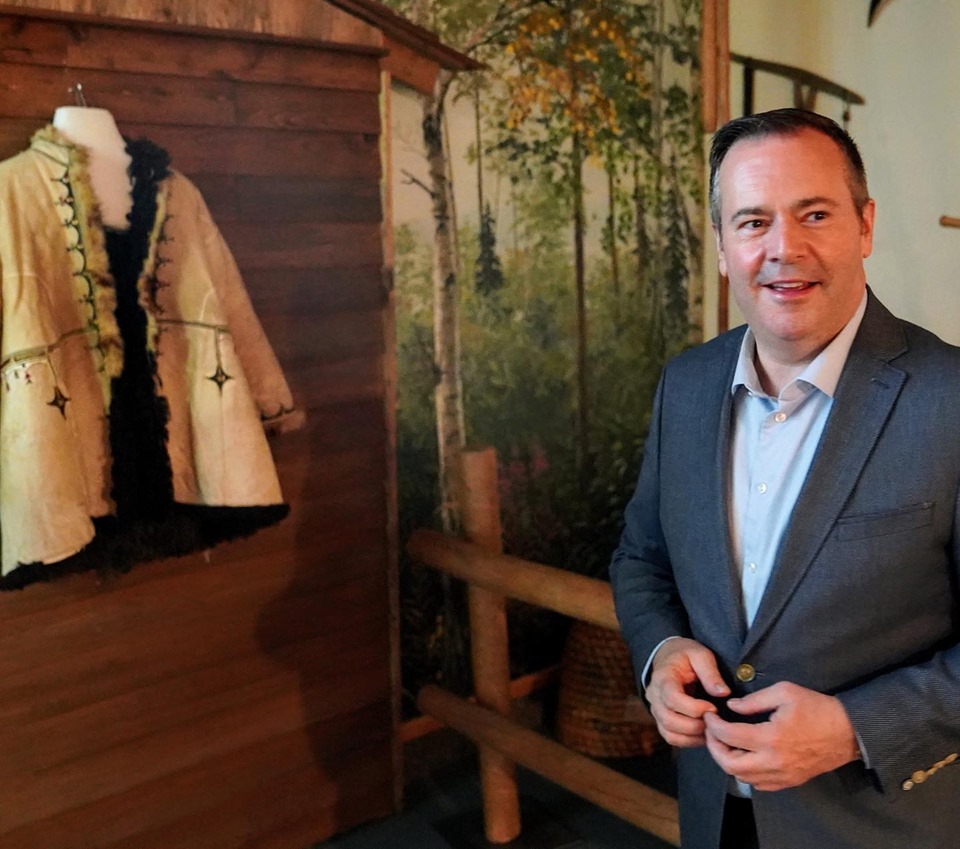
Both Kenney’s diagnosis and his prescriptions are misguided, even harmful: the main problems plaguing Alberta students’ performance isn’t the way math is taught but inequality and huge classes. (File Photo: Jason Kenney/Facebook)
Alberta Premier Jason Kenney wants to “bring common sense to education.” He has insinuated teachers are not already accountable
to their students and suggested that “failed teaching fads” including “inquiry learning” are responsible for the decline in student scores measured by the Program for International Student Assessment, better known as PISA.
Both Kenney’s diagnosis and his prescriptions are misguided, even harmful: the main problems plaguing Alberta students’ performance isn’t the way math is taught but inequality and huge classes.
I am an associate professor of education at St. Mary’s University specializing in curriculum and instruction, and a Calgarian with kids of my own. I help educate future elementary teachers, and I’ve taught in California when the use of standardized testing was accelerated. I also research economic inequality and its implications for democracy and education.
Source of decline?
Kenney told Albertans that the province has seen a “devastating reduction” and “disturbing decline in math proficiency,” which jeopardizes the province’s future. Currently, Alberta’s PISA ranking falls just above average in Canada, behind Quebec and B.C.; internationally, Alberta’s ranking is above average.
Scholars point out that it’s problematic to take PISA results at face value because there are issues having to do with translation and reporting of error rates, with methods, sampling and response rates and with unequal application of standards in all countries.
Kenney has criticized the way math is taught. But he might be surprised to learn that the biggest drop in Alberta’s PISA math achievement occurred between 2003 and 2006. The rollout of the 2007 math curriculum, which he has deemed responsible, took four years to implement. If test scores were falling before and after the curriculum changes, then the math curriculum is not the likeliest culprit.
More testing not the answer
Kenney has suggested that Alberta not only return to testing Grade 3, but doing so for Grades 1 and 2 as well. The idea that more testing will improve achievement is, however, contradicted by evidence.
In the United States, the vast increase in testing seen since 2002’s federal No Child Left Behind Act increased scores on state tests (though not on PISA), but at the cost of diminishing the quality of education as a whole. Since 2000, the global standing of the U.S. in education plummeted from 18th to to 38th.
More high-stakes testing doesn’t improve the quality of education; it often narrows the curriculum and inhibits the development of essential thinking skills required of today’s graduates. Put simply, you don’t fatten a pig by weighing it.
Growing economic inequality
Epidemiologists Richard G. Wilkinson and Kate Pickett synthesized global education data from the OECD, UNICEF, the World Health Organization and the World Bank. They found that for children aged 15 years and younger, math achievement scores are inversely correlated to economic inequality: as inequality increases, test scores decline. Scholars have studied this phenomenon since at least the 1960s.
Between the years 2000-2015, provincial tax policy helped Alberta become the most unequal province in Canada — a situation that likely impacts the health and wellness of Albertans.
Not surprisingly, economic inequality within a population is a significant indicator of student performance. The performance gap related to inequality widens in adolescence, and Canadian performance deterioration occurred in the context of increasing socioeconomic inequality.
Teacher-student ratios burden achievement
Meanwhile, Alberta class sizes have soared. Since Alberta’s Commission on Learning in 2003 called for class-size caps, the number of core classes (math, English language arts, social studies and science) that have more than 40 kids crammed into them has grown by nearly 600 per cent.
The OECD’s own analysis reveals that when teacher-student ratios increase above 25 “there is a continuous decline in school performance in all PISA subject domains.”
This year, some Alberta schools plan to reduce teaching staff, which will further increase class sizes. The province already needs as many as 3,000 teachers across the province.
According to a 2014 report, Alberta’s poorest students outperform their peers worldwide. Canadian education has among the lowest socioeconomic gaps in the world, which suggests that teachers and the existing system are acting as life preservers to buoy educational achievement in an inequitable context.
While Kenney has highighted declining math scores in Alberta, their problem-solving success is conveniently ignored. Between (2003 and 2012), Alberta students’ performance in problem solving as measured on PISA has steadily improved: Alberta now ranks behind only Singapore, British Columbia and Japan in this PISA testing domain. Problem solving is the first stated goal of the Alberta K-9 math curriculum.
Savings and investment
The Kenney government is investing heavily in corporate tax cuts. There is ample evidence to suggest that these cuts do not lead to job growth and may even lead to job losses. Across Canada, tax cuts have cost provinces $12 billion annually since 2000, and have rapidly accelerated inequality.
It is important to highlight that inequality destroys economic growth in the long term. Improvements in educational achievement, however, are strongly tied to long-term economic growth, as is investment in teachers and schools.
The Conference Board of Canada reports that the long-term return for every dollar spent on early childhood education (ages two to four) is $6 in terms of reduced costs on social spending (for example, on prisons, social services and health care, etc.) and improved tax revenues.
Likewise, dollars spent on education from kindergarten to Grade 12 translate to roughly $2 per dollar invested. The Conference Board of Canada concludes “every dollar spent on post-secondary education creates $1.36 for the Canadian economy.” Education spending is a substantial net-growth investment vehicle, one that is being driven off the road by careless and ignorant policy.
There’s no quick or cheap fix to the mess created by decades of Conservative neglect of investment in future needs.
Alberta can improve achievement by cultivating conditions for growth: reduce class sizes to allow more attention from teachers, provide teachers with time and opportunities for professional development and collaboration and implement a progressive system of taxation that helps create a society in which children have adequate resources to thrive.
——
This article is republished from The Conversation under a Creative Commons license. Disclosure information is available on the original site. Read the original article:
https://theconversation.com/why-jason-kenneys-common-sense-education




















