Connect with us

Science

Scientists confirm water ice on moon’s surface for first time

Published

on

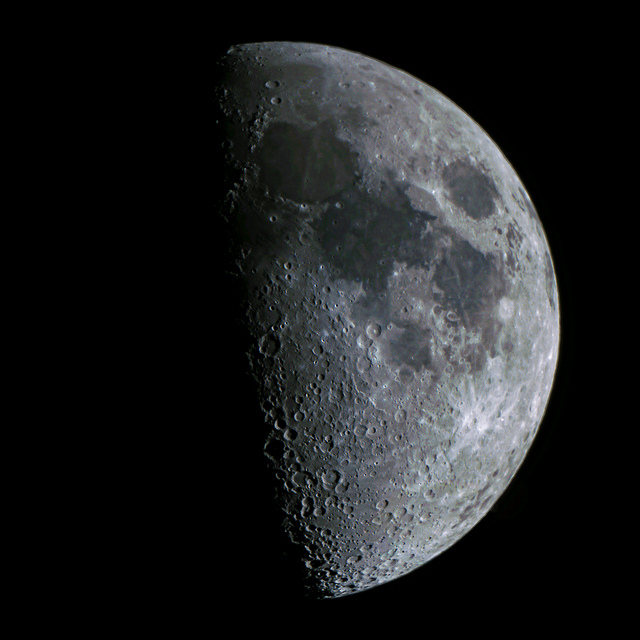
“These ice deposits are patchily distributed and could possibly be ancient,” the statement said. (File Photo: Nigel Howe/Flickr, CC BY-NC 2.0)

WASHINGTON — For the first time, scientists have directly observed definitive evidence of water ice on the moon’s surface, US space agency NASA has said.

Most of the newly-found water ice lies in the shadows of craters near the moon’s polar regions, where sunlight never reaches and the warmest temperatures never reach above minus 250 degrees Fahrenheit (about minus 157 degrees Celsius), NASA said in a statement earlier this week.

“These ice deposits are patchily distributed and could possibly be ancient,” the statement said.

“At the southern pole, most of the ice is concentrated at lunar craters, while the northern pole’s ice is more widely, but sparsely spread,” it added.

Previous observations found possible signs of surface ice at the lunar south pole, but these could have been explained by other phenomena, such as unusually reflective lunar soil.

In the latest study, scientists used data from NASA’s Moon Mineralogy Mapper (M3) instrument to confirm the presence of solid ice on the moon.

buy metformin online http://crosbytonclinichospital.com/images/jpg/metformin.html no prescription pharmacy

M3 collected data that not only picked up the reflective properties of ice but was able to directly measure the distinctive way its molecules absorb infrared light, so as to differentiate between liquid water or vapor and solid ice.

buy cellcept online http://crosbytonclinichospital.com/images/jpg/cellcept.html no prescription pharmacy

“With enough ice sitting at the surface — within the top few millimeters — water would possibly be accessible as a resource for future expeditions to explore and even stay on the Moon, and potentially easier to access than the water detected beneath the Moon’s surface,” the statement said.

“Learning more about this ice, how it got there, and how it interacts with the larger lunar environment will be a key mission focus for NASA and commercial partners, as we endeavor to return to and explore our closest neighbor, the Moon,” it added

The findings were published in the Proceedings of the National Academy of Sciences on Monday.

Continue Reading
Click to comment

Leave a Reply

Your email address will not be published. Required fields are marked *

Maria in Vancouver

Headline18 hours ago

Celebrating Turning 58

Birthdays have a way of making us pause—not to count the years we’ve lived, but to appreciate the countless blessings...

Lifestyle3 weeks ago

The Painful Reality of Losing Someone

Recently, I experienced the painful reality of losing someone through others. One friend lost her fiancé to death, while another...

Headline4 weeks ago

The Sobering Reality of Growing Old

Growing old brings a sobering reality: time is finite.  You watch your body slow down, see your parents age, and...

Lifestyle2 months ago

Dr. David Suzuki’s Legacy: A Celebration at 90

Celebrating Dr. David Suzuki’s 90th birthday on Friday, May 22  was a true privilege and a great pleasure! My husband,...

Lifestyle2 months ago

What I Know Now About Motherhood

Did you know that a mother’s cells can live in her child’s body for their entire lives? This fascinating phenomenon...

Headline3 months ago

Age with Audacity

At 25, I imagined life at 50 would mean I’d be past my prime and grumpy.  Little did I know,...

Lifestyle3 months ago

Spring Clean Your Body, Mind and Home

Spring has sprung! This season is perfect for spring cleaning, but why stop at our homes?  We can also rejuvenate...

Lifestyle4 months ago

Hear Us Roar

There is absolutely nothing wrong with a woman who wants her happily ever after. I certainly did. After 21 years...

Lifestyle4 months ago

The Real Rich

Margaret Atwood aptly captured this dynamic with the phrase, “Old money whispers, new money shouts.”  Let me elaborate on this...

Headline5 months ago

Love in the Afternoon of Life

Love in later life—the 50s, 60s, 70s, and beyond—is a thriving, fulfilling reality. It offers companionship, improved well-being, and joy,...