American News
Trump threatens heavy tariffs on Europe over proposed Canada-EU ‘associate membership’

ASM, Philippine Canadian Inquirer
September 18, 2026
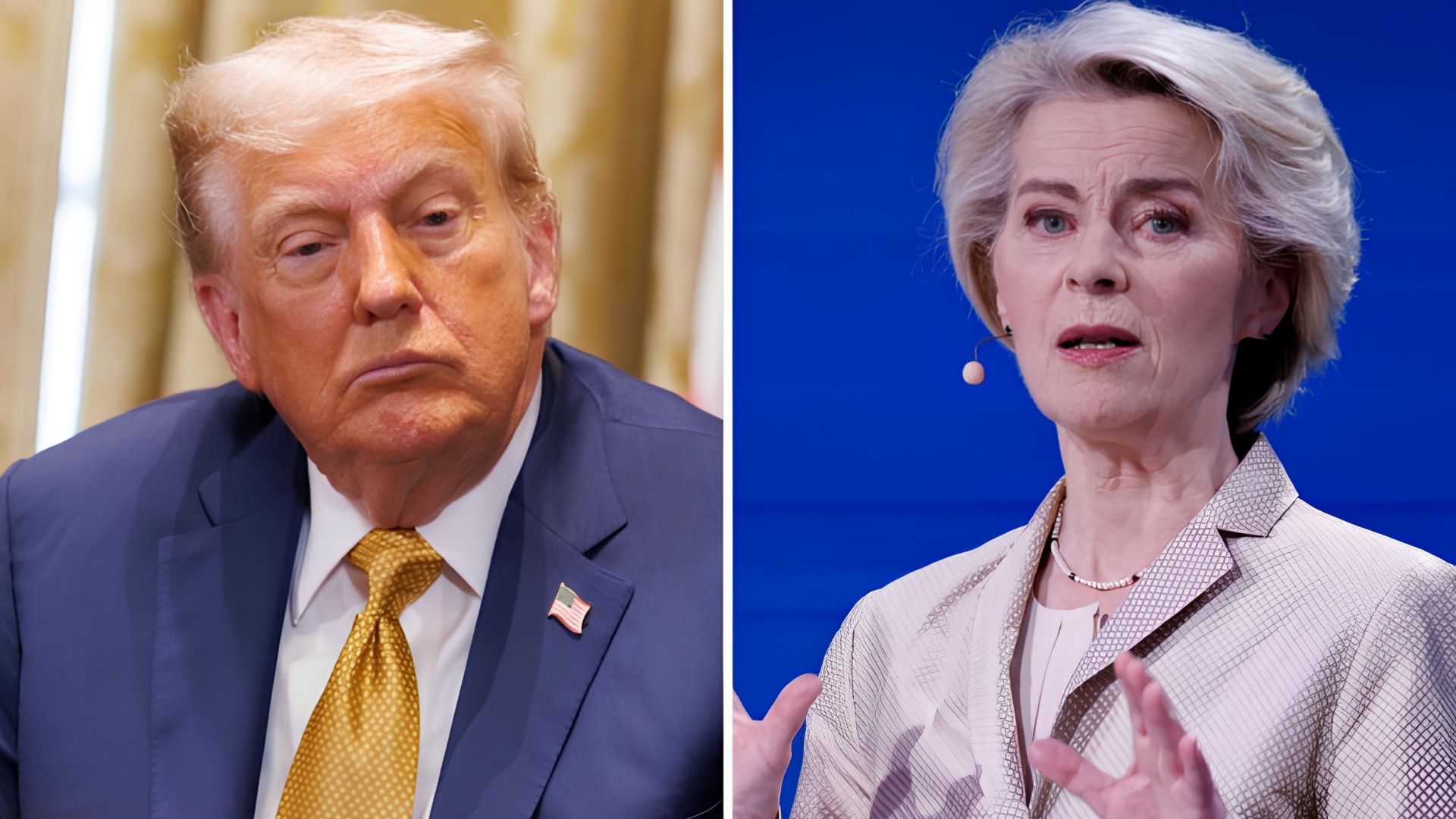
Photo courtesy: Corriere
U.S. President Donald Trump has threatened to impose heavy tariffs on Europe or restrict trade in some areas if he determines that a European Union proposal for a deeper relationship with Canada is intended as a hostile move against the United States.
The warning came after European Commission President Ursula von der Leyen proposed opening the door for Canada to become the European Union’s first “associate member,” an unprecedented status that is not currently defined under existing EU treaties.
Von der Leyen unveiled the proposal during her State of the European Union address in Strasbourg on September 16, with Canadian Prime Minister Mark Carney in attendance.
She said Europe and Canada should move beyond their existing Comprehensive Economic and Trade Agreement, or CETA, and develop what she described as an “Alliance for the Future.” The envisioned partnership would expand cooperation in areas including trade, technology, defence, energy, critical minerals, artificial intelligence, cybersecurity and the Arctic.
Von der Leyen stressed that closer ties with Canada were not intended to target another country, describing the proposed partnership as one aimed at strengthening the two sides’ economic security and strategic capabilities.
Trump, however, reacted sharply when asked about the proposal on September 16.
He called the idea “laughable” and said Washington could respond with “very serious tariffs” or stop trading with Europe in some areas if he considered the move hostile. Trump added that he would not object if the proposal were made with what he considered good intentions, but warned of “very heavy tariffs” if he concluded otherwise.
The European Commission subsequently rejected the suggestion that the proposed Canada partnership was directed against the United States, reiterating that the initiative was intended to strengthen Canada and Europe rather than confront another country.
Carney, meanwhile, pushed back against outside pressure over Canada’s choice of international partners.
Speaking to reporters at the European Parliament on September 17, he said Canadians would not allow another country to dictate their culture or determine “with whom we can strike agreements internationally.”
In his address to European lawmakers, Carney welcomed the ambition behind von der Leyen’s proposal but focused more broadly on building a new Canada-EU partnership rather than defining the country as an EU member.
He proposed deeper cooperation in critical minerals, defence industrial capacity, artificial intelligence and computing, energy security, space and payment systems. Carney also called for closer digital trade links, expanded research cooperation and greater opportunities for young Canadians and Europeans to study and work across the Atlantic.
Carney said the objective was not to create another geopolitical bloc designed to compete with the United States, China or other major powers. Instead, he framed the partnership as a way for Canada and Europe to reduce vulnerabilities and strengthen their ability to protect their economies, sovereignty and democratic institutions.
“We do not seek power to dominate others,” Carney told the European Parliament, arguing that stronger resilience would help prevent outside actors from controlling markets or undermining sovereignty and the rule of law.
Canada and the EU already have extensive economic ties through CETA, which has been provisionally in force since September 2017. The agreement eliminated 98% of tariff lines when it began applying, with 99% eliminated by 2024, according to the European Commission.
Their relationship has also expanded into security and defence. Carney noted that Canada has become the first non-European participant in the EU’s Security Action for Europe, or SAFE, initiative, further integrating Canada with European defence cooperation.
Despite von der Leyen’s use of the term “associate member,” no such membership category currently exists under EU treaties, and the eventual structure of the proposed arrangement remains to be negotiated. Canada and the EU have described it as a unique partnership that they would define together.
The discussions come as Canada seeks to diversify its economic and strategic relationships amid heightened trade tensions with the United States.
Further talks on the proposed Canada-EU partnership are expected ahead of the EU-Canada summit scheduled in Montreal on October 29 and 30, 2026.