Canada News
Canada moves closer to EU as trade tensions with U.S. escalate

ASM, Philippine Canadian Inquirer
September 15, 2026
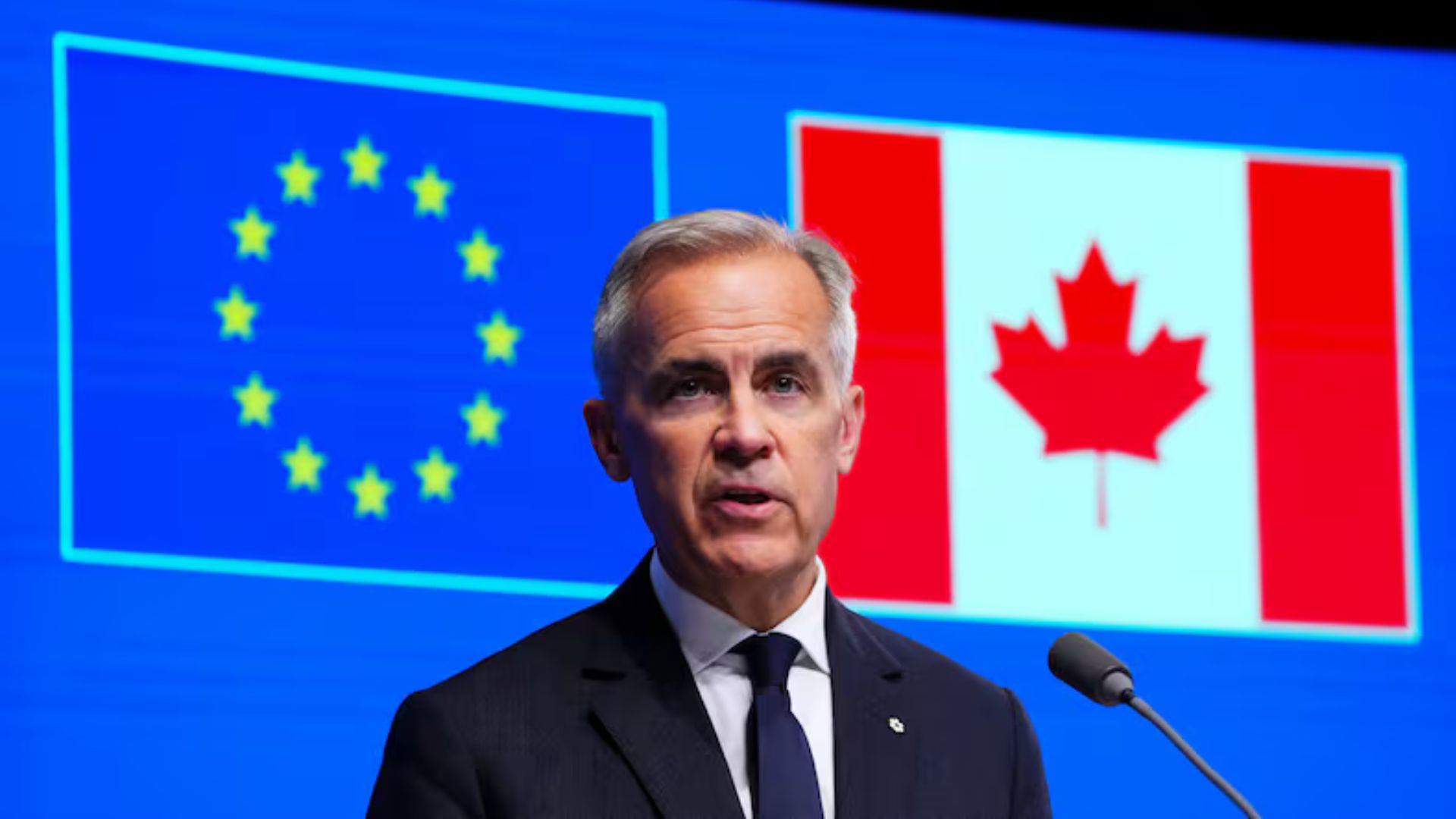
Photo courtesy: CTV News
OTTAWA, Canada — Canada is moving to deepen its economic, security and defence ties with the European Union as Ottawa pushes to diversify its international partnerships amid an escalating trade dispute with the United States.
Prime Minister Mark Carney, however, stressed that Canada is not seeking membership in the European Union, following reports that Ottawa had explored the possibility of an “associate member” relationship with the bloc.
“We’re not looking to become a member of the European Union,” Carney said, adding that Canada instead intends to begin discussions toward what he described as a “unique alliance” built on shared values, priorities and complementary strengths.
The push comes as Canada seeks to reduce its heavy economic dependence on the United States following months of tariff tensions.
The U.S. imposed a 50% tariff on $27.6 billion worth of Canadian goods beginning Aug. 22, prompting Canada to introduce matching counter-tariffs of 15%, 25% and 50% on selected American products effective Sept. 8.
Carney has repeatedly said Canada must diversify its export markets and strengthen partnerships beyond its traditional relationship with Washington.
Europe has emerged as a central part of that strategy.
Canada became the first non-European country to join the European Union’s Security Action for Europe, or SAFE, defence procurement initiative earlier this year. The arrangement gives Canadian defence companies greater access to European procurement opportunities and strengthens defence-industrial cooperation between the two sides.
Canada and the EU already have a broader strategic partnership covering areas including trade, energy, climate, technology, security and defence.
Carney is scheduled to travel to Strasbourg, France, from Sept. 15 to 17, where he will attend European Commission President Ursula von der Leyen’s State of the European Union address and meet European lawmakers. He is also scheduled to formally address the European Parliament on Sept. 17.
Carney said the coming months will be used to explore deeper cooperation between Canada and Europe across commercial ties, research, defence and other areas.
The discussions are expected to advance further when Canada hosts the next EU-Canada Summit in Montreal on Oct. 29 and 30.
Despite Ottawa’s diversification drive, the United States remains by far Canada’s largest export market.
Statistics Canada data showed that Canada exported about $50.5 billion in goods to the U.S. in July, accounting for roughly two-thirds of the country’s $76.1 billion in total merchandise exports that month. Canadian goods exports to the EU reached about $4.3 billion, or roughly 5.7% of the total.
Still, signs of diversification are emerging. Goods exports to countries outside the United States rose 7.4% in July to a record $25.6 billion, while exports to the EU jumped 31.3% from the previous month.
The figures underline the scale of Canada’s challenge: while deeper ties with Europe could open new markets and strengthen cooperation in defence and investment, the Canadian economy remains closely integrated with its much larger U.S. neighbour.