Headline
2026 unprogrammed funds lowest since 2019 after P92.5-B items vetoed

By Darryl John Esguerra, Philippine News Agency
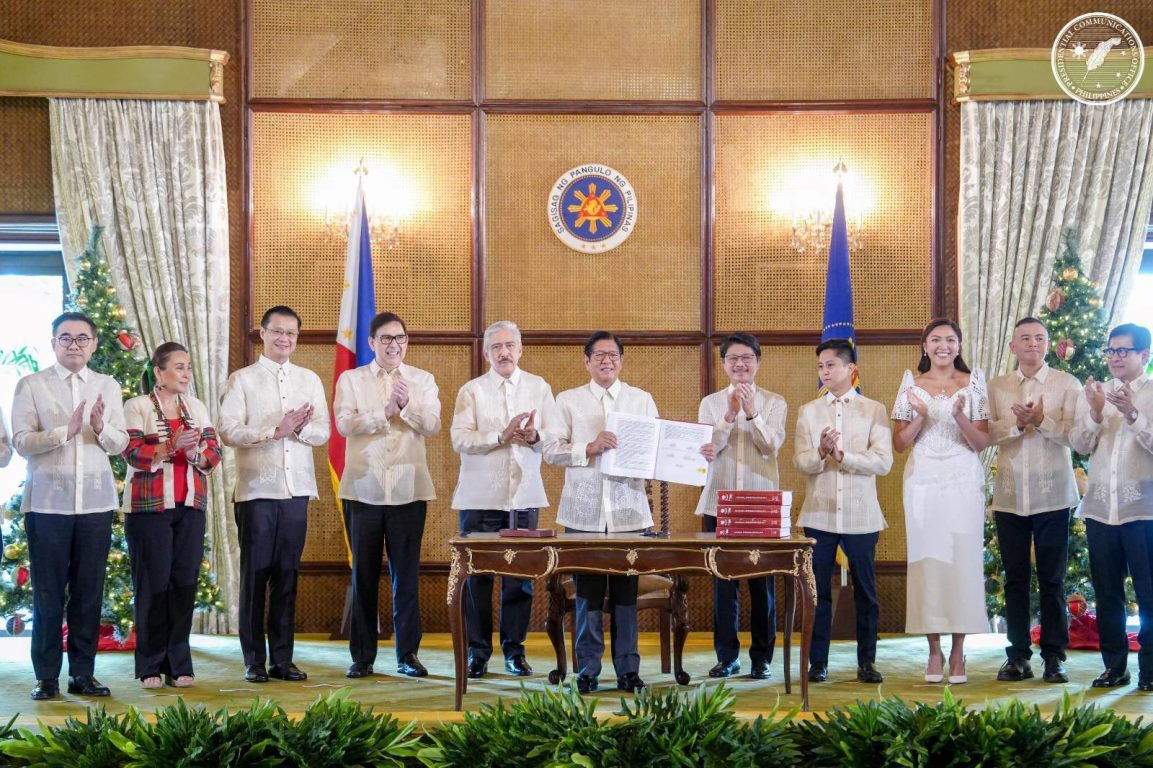
ISCAL DISCIPLINE. President Ferdinand R. Marcos Jr. signs the PHP6.793-trillion 2026 national budget into law on Monday (Jan. 5, 2026), vetoing several unprogrammed items to tighten fiscal discipline. Under Republic Act 12314 or the General Appropriations Act of 2026, education gets the biggest share at PHP1.345 trillion. (PCO photo)
MANILA – President Ferdinand R. Marcos Jr. has slashed the Unprogrammed Appropriations (UA) in the 2026 national budget to its lowest level since 2019 after vetoing nearly PHP92.5 billion worth of proposed items to reinforce fiscal discipline, transparency and accountability.
In his veto message to Congress accompanying the signing of the PHP6.793-trillion General Appropriations Act for 2026 on Monday, Marcos said the UA was reduced to the “bare minimum,” stressing that standby funds must only be tapped when “absolutely necessary and strictly in accordance with conditions set in this Act.”
“I acknowledge the support of the Congress in limiting the coverage of the Unprogrammed Appropriations (UA), heeding the public’s call for transparency and accountability. However, I push further and reduce the same to the bare minimum, at a level that is the lowest since FY 2019,” the President said.
Data from the Department of Budget and Management showed UA allocations have been steadily tightened, falling to PHP150.9 billion in 2026 from PHP363.4 billion in 2025, and far below the PHP731.4 billion in 2024 and PHP807.2 billion in 2023.
Marcos emphasized that UA “are not blank checks” and warned against treating them as a “backdoor for discretionary spending” that could widen the fiscal deficit beyond projections.
“We will not allow the UA to be misused or treated as a backdoor for discretionary spending that will exceed our fiscal program and widen our deficit from our original projection,” he said.
“Its utilization is provided with safeguards, with the UA only available when clearly defined triggers are met and released only after careful validation.”
Among the items vetoed were proposed UA allocations for budgetary support to government-owned and -controlled corporations, prior years’ local government unit shares, personnel services requirements, insurance of government assets, and industry support programs, including the Comprehensive Automotive Resurgence Strategy and Revitalizing the Automotive Industry for Competitiveness Enhancement.
Marcos said the veto was a “measured exercise of Executive authority to rebuild public trust in the budget process,” directing all agencies to exercise prudent fiscal management to ensure uninterrupted public service.
The President clarified that the vetoes will not affect scheduled salary and benefit increases for civilian government workers and military and uniformed personnel, nor disrupt funding for ongoing foreign-assisted and flagship infrastructure projects, which are already covered by programmed appropriations.