Headline
Release of Alberto Fujimori in Peru rekindles fears of backsliding on human rights

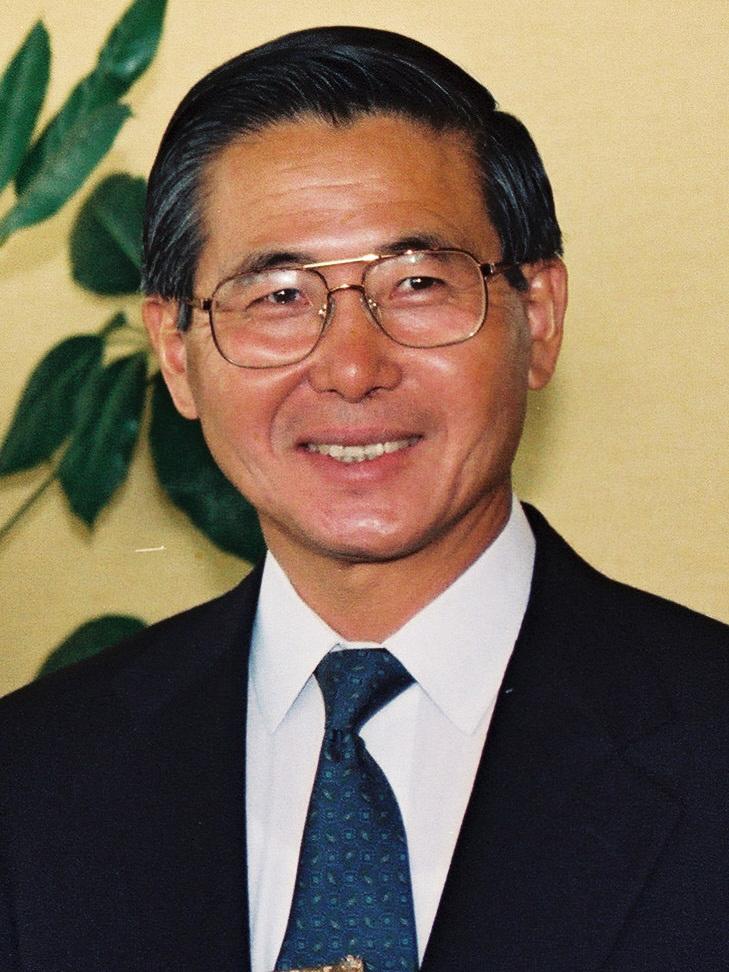
FILE: Visit of Alberto Fujimori, President of Peru, to the CEC. (Photo By By Christian Lambiotte / European Communities, 1991 / EC – Audiovisual Service/Wikimedia Commons)
The release from prison of former Peruvian president Alberto Fujimori on Dec. 6, 2023, has sparked concern over Peru’s commitment to human rights.
The move came a a day after the Constitutional Tribunal of Peru ruled that the 85-year-old, who was serving a 25-year sentence for crimes against humanity, be freed on humanitarian and health grounds.
Images of the frail-looking Fujimori being driven away from his jail in Lima were celebrated by his supporters. But others expressed concern. The United Nations’ human rights office described the release as a “concerning setback for accountability.”
As a scholar writing a book about the violation of human rights in Peru under Fujimori, I understand the concerns. The release of the deeply divisive former president suggests the rehabilitation of “Fujimorism” at a time when Peru’s current right-wing government is being accused of authoritarianism and human rights violations. The pardoning of Fujimori also reflects the growing divide between Peru and the decades-old inter-American system to promote and protect human rights in the region. In addition, Fujimori’s presence out of prison is an affront to the victims and survivors of his regime’s human rights abuses.
Resurgence of Fujimorism
The early release of Fujimori, who ruled Peru from 1990 to 2000, comes despite his crimes being well documented. In 2009 he was sentenced to 25 years behind bars for ordering a death squad to carry out the extrajudicial killings of civilians. He also presided over the coercive sterilizations of thousands of Indigenous women under the guise of a family planning program.
Research shows that when former leaders held responsible for human rights violations continue to wield power in politics, it is harder for subsequent governments of a country to adequately respect or uphold human rights.
This is why Fujimori’s release poses a problem. Although the former dictator may be too old and frail to directly influence Peruvian politics, the country is experiencing a resurgence of Fujimorism.
Keiko Fujimori, the daughter of Alberto Fujimori, has been a strong contender in presidential elections since 2016 and heads the right-wing Fuerza Popular party. In 2021, she lost the presidential vote to left-wing candidate Pedro Castillo by just 0.252% – or 44,263 votes. Fuerza Popular currently holds 22 of the 130 seats in Congress – the largest number held by a single political party.
Meanwhile, former personnel from Alberto Fujimori’s government continue to wield considerable power. Alejandro Aguinaga, a former minister of health during Fujimori’s tenure, was elected to Congress in 2021 and is the current president of the Congressional Committee on Foreign Relations. Aguinaga is among those accused over the forced sterilization of thousands of Indigenous women. Earlier this year, the Inter-American Court of Human Rights took up the case of Celia Edith Ramos Durand, who died after a nonconsensual sterilization as part of a campaign overseen by Aguinaga’s health ministry. It marked the first forced sterilization case to come before the regional body.
Fighting regional oversight
The Inter-American Court of Human Rights was set up in 1979, as an autonomous legal body of the Organization of American States. Along with the Inter-American Commission on Human Rights, its purpose is to monitor, interpret and apply the American Convention on Human Rights and other inter-American human rights treaties, which includes issuing judgments on cases and advisory opinions.
Aguinaga is among those who have questioned the power of the Inter-American Court of Human Rights, noting that Peru needs to “start the paperwork to disaffiliate ourselves” from the court.
Indeed, the wider context of Fujimori’s release is a long-running dispute between Peru’s Fujimorists and the Inter-American Court of Human Rights. The court ruled in 2001 and 2006 that the Peruvian state was responsible for grave human rights violations, leading to the 2009 conviction of Fujimori.
Since then, Peru has sought to push back against the court. Fujimori was pardoned on humanitarian grounds in 2017 by then-President Pedro Pablo Kuczynski, resulting in the intervention of the court. In agreement with the Inter-American Court of Human Rights, the Supreme Court of Peru nullified the pardon, and Fujimori was ordered back to prison to serve his remaining sentence.
Tensions between Peru and the inter-American system have grown under the government of Dina Boluarte. Since taking office in December 2022, Boluarte and her government have been accused of human rights abuses, including violations of the right to peaceful protest, excessive use of force by security forces and the extrajudicial execution of protesters.
Boluarte’s minister of foreign affairs, Javier González-Olaechea, has openly questioned a report from the Inter-American Commission of Human Rights about alleged human rights violations against peaceful protesters by the Boluarte government.
Some political analysts in Peru saw the appointment of González-Olaechea in November 2023 as a move toward Peru’s withdrawal from the jurisdiction of the Inter-American Court of Human Rights.
Such a move would be welcomed by some in Peru’s Congress, members of which have put forward three bills on the withdrawal of the state from the Inter-American system. The latest such bill urges withdrawal to protect Peru from being “jurisdictionally pushed around by a foreign organization.”
Political interests over rights
This is not the first time that Peru has threatened to withdraw from the Inter-American system. Toward the end of the internal armed conflict period of 1980 to 2000, the Fujimori administration similarly voiced a desire to withdraw. However, a political scandal involving Fujimori’s intelligence chief in 2000 and accusations of fraud led to the end of his presidency, halting discussions about withdrawing from the Inter-American system.
Nonetheless, the release of Fujimori represents a further deterioration of Peru and Inter-American system relations. And without the oversight and jurisprudence of the Inter-American system, the well-being of Peruvian citizens will be jeopardized by a government seemingly willing to prioritize political interests over the rights of its citizens.
Ñusta Carranza Ko, Assistant Professor, School of Public and International Affairs, University of Baltimore
This article is republished from The Conversation under a Creative Commons license. Read the original article.