
Canada News
A local food diet can make you and your community healthier during COVID-19

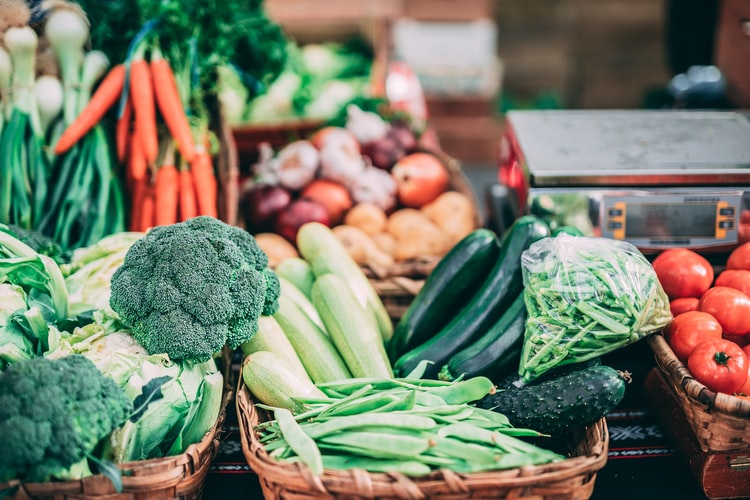
It recommended daily foods comprising half vegetables and fruit, and in the protein section there was reference to alternative protein sources such as beans, nuts, legumes and tofu. (File photo: @idelamaza/Unsplash)
This past summer, many students were not able to fill the suggested 700 farming jobs funded by the federal government due to geographical or transportation barriers, limited positions or career irrelevance. At the same time, there was a larger demand for food grown locally in response to initial concerns about international imports during the ongoing coronavirus pandemic.
News stories from earlier this year covered farm problems such as milk dumping, produce dumping, an anticipated rise in meat prices and concern about a lack of agricultural production to feed the country.
Read more:
100 days of coronavirus has sent shock waves through the food system
Since March, farmers have continued selling at farmers markets, have sold out of community-supported agriculture (CSA) shares and responded to an increased demand as more people have taken up homesteading activities such as home cooking, gardening and canning.
This turn to local food, a more plant-based diet and home-based food production has been recommended by health professionals, climate scientists and community resilience builders alike. As graduate and medical student researchers, we see that the potential silver lining of COVID-19 health measures may be the fostering of a healthier lifestyle and building community resilience.
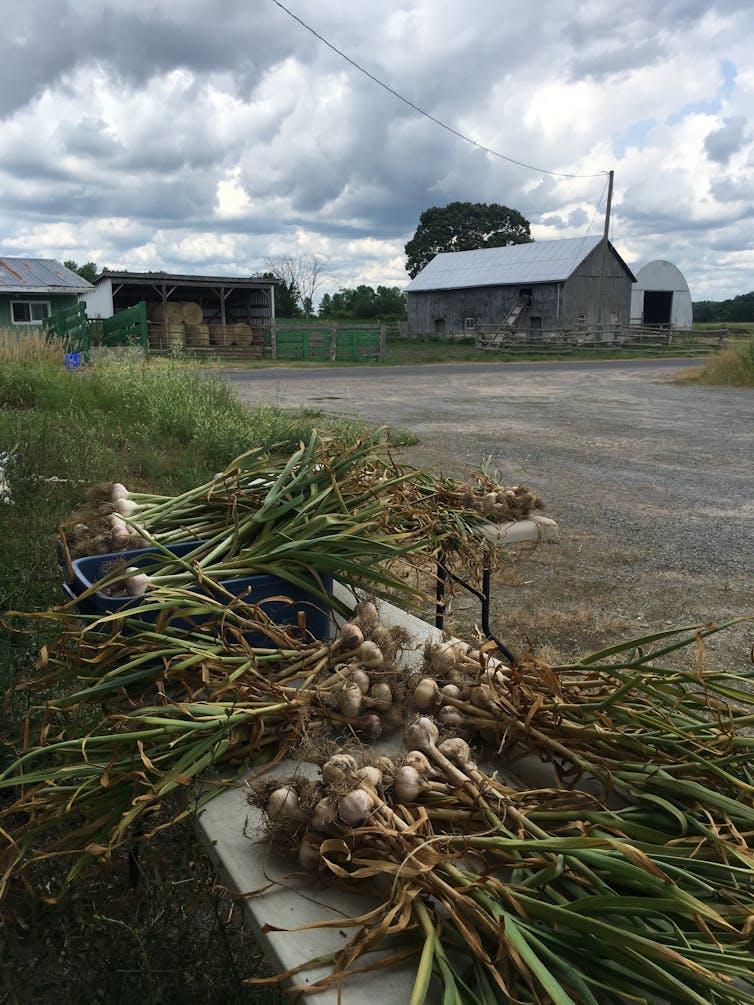
(Kimberly Hill-Tout), Author provided
Health benefits
The most recent version of Canada’s Food Guide was released in March 2020. There was a stark contrast — the new guide was a move away from its lobbyist-informed predecessor. It recommended daily foods comprising half vegetables and fruit, and in the protein section there was reference to alternative protein sources such as beans, nuts, legumes and tofu.
Plant-based diets have for years now been the recommendation for maintaining a healthy body weight, reducing one’s risk of heart disease, stroke, diabetes and cancer. These diets can also lower cholesterol, slow the progression of Alzheimer’s, help with digestion by increasing fibre intake and reduce the risk of developing hypertension .
Eating locally also means that there are fewer chances for food-borne contamination, and better contact tracing within local systems. For example, red onions imported from the United States were the cause of a salmonella outbreak in Canada, infecting 457 people.
Community benefits
Community resilience is the ability of a community to survive and recover from adverse situations and events. Essentially, the resources that a community has — like food — can be affected by an event, and then adapt and grow in a way that will be more effective to withstanding future adverse events.
Social networks can be a crucial part of building community resiliency. The growing interest in local food as a reaction to COVID-19 can ultimately build social networks through farmer and non-farmer interactions as people seek out local farms and attend farmers markets.
An additional factor that builds community resilience is the increased interest in home skills. During quarantine, there was a surge of people taking up home cooking both as a necessary action as well as for stress relief. People also took up baking, preserving foods, gardening and crafting.
Read more:
Before DIY sourdough starters became popular, there was home economics
This skill building creates community resilience because people learn to manipulate their resources. Whether it be in the form of stress relief or becoming less dependent on outsourced labour, people “bounced forward,” developing and adapting new methods and skills to mitigate future adversities.
Barriers to access
There are also limitations to the surge of interest in local food and skill-based activities. Similar to the inaccessibility of organic foods to households without disposable income, the affordability of local foods and access to farmers markets during COVID-19 can be a challenge to individuals without transportation or financial means.
An example is Knuckle Down Farm in Stirling, Ont. A small share costs $20 per week, while a large share costs $35 per week, which works out to be between $400 and $700 for a 20-week commitment. These need to be picked up weekly at the farm itself, which is inaccessible by transit. The price increases by $5 per week for delivery to the Toronto region, where it would still need to be picked up from an east-end address.
Encouraging healthy diets during a pandemic
The federal government needs to consider both larger social factors involved in overcoming adverse conditions and support communities that are in need of assistance. CERB financial relief can help cover a few monthly costs, but may not help everyone in taking up healthier diets or fostering community resilience.
To increase access and participation in local food markets, governments need to subsidise local food and deter the dumping of agricultural goods. Community resilience can also be encouraged by offering courses in skills-based activities like food prep and preserving.
COVID-19 has disrupted and changed the way we live our lives. Food can provide a means to encourage healthy diets, improve community relationships and address social inequalities as a way to enhance community resilience.
Kimberly Hill-Tout, Ph.D. Student, Geography and Planning, Queen’s University, Ontario and William Tyler Hartwig, M.D. Student, University of Toronto
This article is republished from The Conversation under a Creative Commons license. Read the original article.




















