Puppies & burnout: The impact of the coronavirus on veterinarians

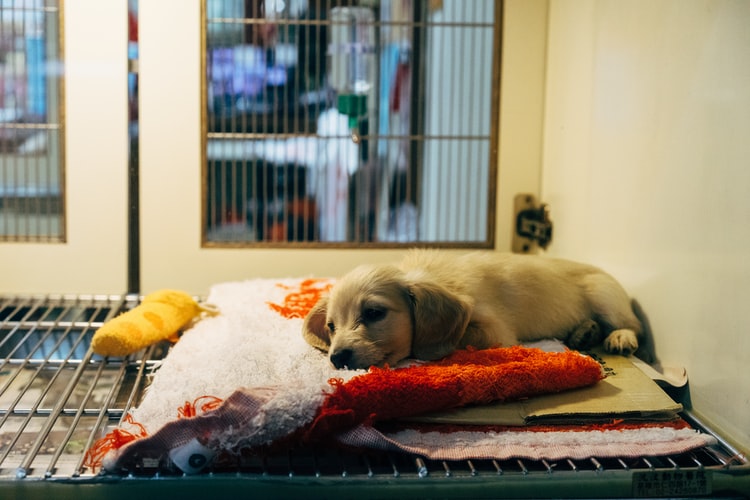
COVID-19 is having a further impact on vets. Earning a living as a veterinarian is directly tied to the financial success of a business, and the disruption from the pandemic has had a big impact on small businesses, including veterinary practices. (File Photo: Markus Winkler/Unsplash)
At a superficial glance, becoming a veterinarian seems like the realization of an animal lover’s childhood dream — devoting a career to the care of animals.
What many don’t realize is the level of mental health distress associated with the profession in terms of work-life balance, emotional stress and financial health. Research has shown that veterinary professionals are already at high risk of suicide due to occupational stress, depression and burnout.
COVID-19 is having a further impact on vets. Earning a living as a veterinarian is directly tied to the financial success of a business, and the disruption from the pandemic has had a big impact on small businesses, including veterinary practices.
The owner of one successful mixed-animal veterinary practice in Alberta was willing to share with me his practice’s pandemic experiences and the impact of economic policies during this critical time.
One vital theme emerged from the conversation: any financial strain has been eclipsed by the emotional toll of the pandemic and the need to plan for the unknown.
Puppies: The new toilet paper?
As stewards of animal and public health, veterinarians have been authorized to provide services during the pandemic. The most visible impact on small animal veterinary services has been the influx of newly acquired puppies to the clinic.Despite financial uncertainty facing many families, pet adoption and fostering has increased in Calgary as people found themselves with extra time at home and sought to fill a need for companionship.Noting 50-person wait lists for dog adoptions and empty animal shelters, the Alberta veterinarian — I’ll call him Dr. Brian Jones because he asked that his real name not be used — muses that “puppies are like Toilet Paper 2.0.”
As puppies grow older in their new homes, hopefully a short-term decrease in demand for vet services due to the pandemic will translate to a permanent increase in demand as veterinary practices gain new canine patients for life.
By contrast, large animal clientele have taken a financial hit from the pandemic, and this has had an impact on large animal veterinary services.
For Jones’ bovine clients, the closure of processing plants has been devastating, with the backlog of cattle hurting the calf market.
The vet explains that cattle ranchers and others in agriculture are “price takers,” meaning they input the costs of vaccinations, feeding and medications, with no knowledge of their ultimate price at market and return on investment. The uncertainty posed by the pandemic has placed a great deal of stress on his cattle-ranching clientele.
The different experiences of his practice’s small and large animal clientele have demonstrated the differences between demand for small animals — pets are usually adopted to become longtime family members — and large farm animals. The large losses suffered by the agricultural market as a result of the COVID-19 pandemic highlight a more volatile demand for large animal veterinary services.
Vets freed up supplies during pandemic
Veterinarians play an important role as stewards of food safety, public health and animal health.
When veterinary services received essential status at the onset of the pandemic, the industry pledged to limit non-essential procedures so that ventilators, surgical masks and other critical supplies could be conserved for use in human hospitals.
Jones explains: “We weren’t sure how many gloves we would have and how much oxygen we would have,” and therefore vets made a conscientious effort to voluntarily reduce the supply of veterinary procedures and services in order to reduce consumption of medical supplies.
But according to the vet, the reduction in the number of staff working each shift as well as long hours has resulted in high emotional wear and tear, to the point that he’s worried about worker burnout.
Furthermore, curbside dropoffs of pets to fulfil social distancing requirements have removed the face-to-face interaction between animal owner and veterinarian.
Not only is the added layer of phone calls with each client time-consuming, it also adds to the challenge of using non-verbal cues in conversation in order to have meaningful discussions that result in shared decision-making in health care.
Stress of applying for government help
Although government assistance programs are well-intentioned, Jones’ veterinary practice discovered first-hand how such programs can fail small businesses.
Without access to experts to help them navigate the eligibility requirements of each program and the paperwork to apply, his practice did not ultimately qualify for the Canada Emergency Wage Subsidy, while it may have qualified for the work-sharing program.
Jones acknowledged that the stress and time spent applying for the programs added to the emotional toll on his staff, with only disappointing results when they were unable to take advantage of any of them.
Although veterinarians were granted essential service status and some have been financially stable through the crisis due to consistent consumer demand for vet services, the pandemic’s emotional toll has been severe.
With veterinary professionals already stressed out emotionally, it’s more important than ever to evaluate how these essential workers can be supported during the COVID-19 pandemic and beyond.
Jean-Yin Tan, Senior Instructor in Veterinary Medicine, University of Calgary
This article is republished from The Conversation under a Creative Commons license. Read the original article.