Canada News
Who should bear the financial risk of flooding? Report lays out three options

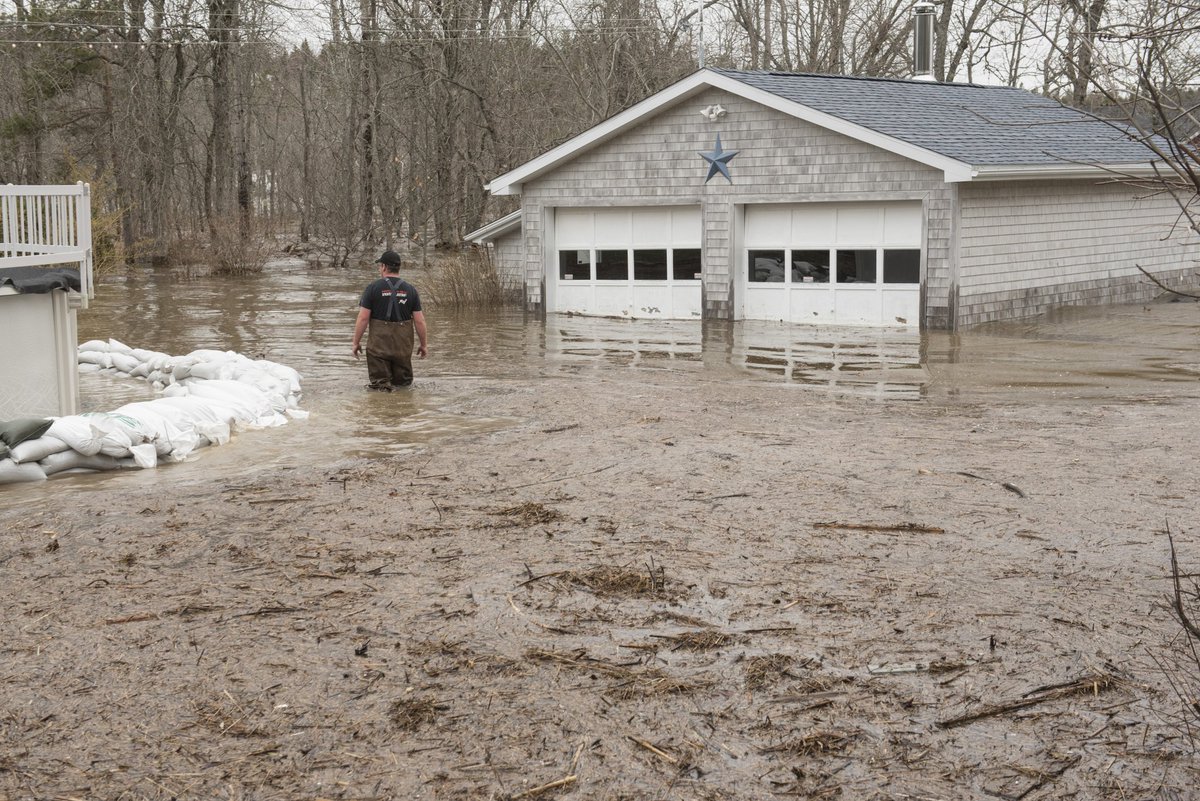
About one-fifth of homes in Canada are at risk of overland flooding, while insurance payouts have surged to about $1 billion per year over the past six years, the report estimates. Federal government transfer payments for all forms of flood damage, meanwhile, have quadrupled over the last four decades, reaching about $3.7 billion during the first four years of this decade, compared with just $300 million during the 1970s. (File Photo: @NBEMO_OMUNB/Twitter)
OTTAWA — Federal, provincial and municipal governments can do a better job of protecting homeowners from the escalating financial risks of flooding, says a new report released Tuesday by the Insurance Bureau of Canada.
The report, the product of work by a national working group co-chaired by the bureau and the federal Public Safety Department, says the worsening threat means the country has to change how it covers the resulting cost of such disasters.
“Taxpayers cannot continue bailing out people who live on floodplains,” said Craig Stewart, a vice president at IBC and co-chair of the working group.
“We need an alternative, and this report presents three viable options drawing upon international experience.”
About one-fifth of homes in Canada are at risk of overland flooding, while insurance payouts have surged to about $1 billion per year over the past six years, the report estimates. Federal government transfer payments for all forms of flood damage, meanwhile, have quadrupled over the last four decades, reaching about $3.7 billion during the first four years of this decade, compared with just $300 million during the 1970s.
The three options laid out in the report include a pure market approach where risk is borne by homeowners; one in which government is more involved, and finally the creation of a high-risk pool of funds to help manage the financial risk.
All three options are viable, the report says, though its analysis suggests the high-risk scheme fares better than others at meeting certain core principles like affordability, efficiency and financial sustainability. But the report stops short of making a firm recommendation on any of the options.
The advantage of the high-risk scheme is that it allows insurers to pass on some risks to a larger pool of available money. Homeowners would pay premiums for flood insurance, which insurers would then feed into the pool. If a homeowner makes a claim, the insurance company would pay out to the customer and then claim their own reimbursement from the pool.
Homeowners might not even know they’re in the high-risk pool, Stewart said, but it allows insurance companies to avoid some of the risk involved with insuring people whose homes may be flooded.
The cost of the premiums feeding into the pool should be based on the risk of flooding, Stewart said, and if subsidies are capped, the pool will need a source of money to make up the loss.
As for the source of money to get the pool off the ground and keep it sustainable, “It could be anything,” he said, including property taxes or insurance premium levies.
Ideally, Steward said, the scheme would help lower the risk enough so the high-risk pool wouldn’t be necessary. A similar model was implemented in 2016 in the United Kingdom, and has a projected lifespan of 25 years.
“For that to happen,” Stewart cautioned, “you need to have significant government investment in mitigation over those 25 years.”
While the federal government has promised $2 billion for disaster preparedness, the report notes “ongoing funding” is needed.
Stewart said the IBC is currently working with the Federation of Canadian Municipalities to figure out how much money it will cost to make Canada resilient to flooding, as well as other natural disasters.
More money from government is one of several key factors that the report says are needed to address flood risk in addition to an insurance system.
Another is making sure individuals have an incentive to take action on their own, Stewart said. That means increasing public awareness of risks so homeowners will make their properties more resilient and react to the price of insurance premiums.
Meanwhile, improving the quality of data, like mapping flood risk zones, is “the single greatest thing the federal government can do in the near term,” Stewart said.
Moving people away from high-risk flood zones should be a part of the government’s response as well, he added. Paying people to relocate might be the best way to do that, the report suggests.