Health
Canadian medical aid group sets up solar powered hospital after years of work

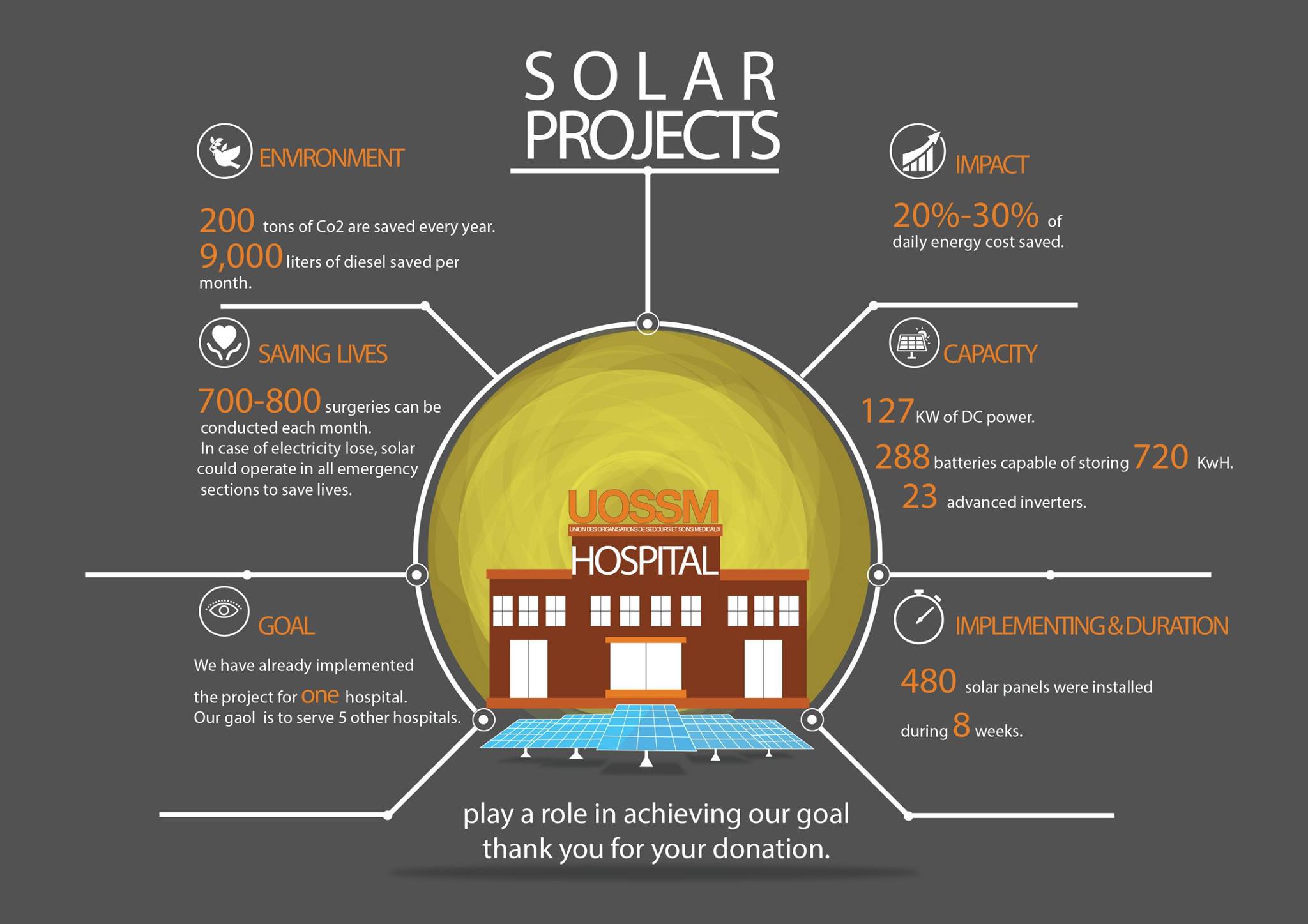
The Canadian branch of an international humanitarian organization is celebrating the success of a multi-year effort to set up a solar powered hospital in Syria, and is now setting its sights on other conflicts where it can help people. (Photo: UOSSM Suisse/Facebook)
TORONTO—The Canadian branch of an international humanitarian organization is celebrating the success of a multi-year effort to set up a solar powered hospital in Syria, and is now setting its sights on other conflicts where it can help people.
The Union of Medical Care and Relief Organizations (UOSSM) is an international medical aid organization that was set up in 2012 to provide medical care for the Syrian crisis, and currently has 2,000 people working in the country.
In 2013, Talal Al Do, an engineer who had just graduated from the University of Toronto, started working with UOSSM to introduce solar energy to the country’s hospitals after Syria’s crippled electricity system started causing problems with aid efforts.
Parts of Syria that the government doesn’t control relied entirely on diesel generators to keep their hospitals running. But Al Do says using diesel was troubling because armed groups like ISIL had seized the pipelines and were profiting from the sales of diesel.
“It created a very vicious cycle of the war economy,” said Al Do. “Where you actually procure diesel to sustain service, but at the same time you empower the forces that are sustaining the war.”
The use of diesel also presented problems because the fuel was not always available, and it also added a financial burden to hospital operations.
Al Do, who migrated from Syria and is of Palestinian descent, started working in 2013 to make the hospitals entirely run on solar energy. He worked nights and evenings on the project alongside his day job in the solar energy industry.
“It was an opportunity to contribute,” said Al Do, who went into engineering as a practical way of helping spark change after he originally wasn’t accepted to study in a political science program.
“There’s a degree of responsibility that comes with the opportunities that you have here, with resources, know how, and skill that can be applicable there.”
In March this year the Bab Al Hawa hospital, which serves over 70,000 people per year, started to operate on solar energy thanks to Al Do and UOSSM’s efforts.
Work is still underway to convert another five hospitals in the region to work solely under solar power, and Al Do says the model can be applicable in other regions.
While the conflict in Syria still rages on, the situation has eased somewhat in recent months, and UOSSM is starting to look at other regions of the world where it can help out with medical aid.
At the organizations annual meeting, humanitarian worker Nabiha Islam shared her experiences working with another aid group in Bangladesh, where the Rohingya people – an ethnic minority in neighbouring Myanmar – are finding refuge after fleeing persecution in their country.
UOSSM has already run preliminary medical missions in Bangladesh, and Islam says that UOSSM’s experience in Syria could prove to be valuable in Bangladesh.
“It is absolutely necessary that you understand the cultural context of a conflict,” said Islam, who said that experience of dealing with cases of rape and other crimes against women in one majority Muslim area could be used in other Muslim areas.
“That’s one of the strengths of a group like UOSSM, who’s done this type of work, and who has many of their members who are Muslim.”
The group is looking ahead now to further missions in the Rohingya crisis, and is looking at Yemen as another potential hotspot where they can assist.