Canada News
Softwood exports to U.S. down but it’s not causing big financial pinch

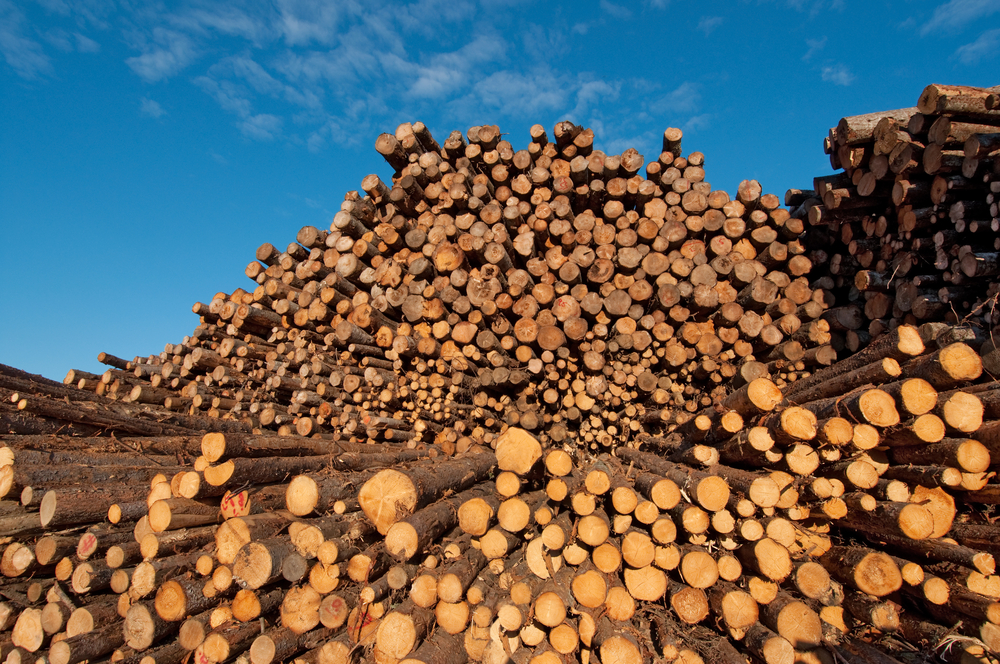
Canada’s softwood lumber exports to the U.S. have fallen since the Americans imposed new duties earlier this year, but thanks to near-record wood prices the industry isn’t suffering much from the political trade fight. (Shutterstock)
OTTAWA—Canada’s softwood lumber exports to the U.S. have fallen since the Americans imposed new duties earlier this year, but thanks to near-record wood prices the industry isn’t suffering much from the political trade fight.
As the clock inches towards the end of 2017, it seems unlikely a new softwood agreement will be inked between Canada and the U.S. this year, but even the industry association representing most softwood producers in Canada isn’t that concerned about it.
Joel Neuheimer, vice-president of international trade and transportation for the Forest Products Association of Canada, said the higher price of wood and the insatiable demand from U.S. builders, is helping keep the duties from pushing companies to lay off staff, cut production or even close down.
“If we were not seeing the same kind of demand and the same kind of high prices we’re seeing then we might be in an entirely different type of situation,” said Neuheimer.
Trade data from the United States Department of Agriculture shows the amount of Canadian softwood imported was down eight per cent for first nine months of 2017, compared with the same period in 2016.
However the value of those imports went up very slightly — 0.15 per cent — because even though less wood was shipped, each piece of lumber was worth more.
Trade data from Statistics Canada shows British Columbia producers are bearing the brunt of the drop, with softwood exports to the U.S. down about 33 per cent. The value of those exports was down 28 per cent.
British Columbia’s wild fires last summer had a big impact on the province’s forestry industry, with softwood exports in July and August only about half what they were a year earlier.
Quebec exports to the U.S. actually went up three per cent and Ontario exports are up 11 per cent so far this year.
Quebec and Ontario rely almost exclusively on U.S. markets for their wood, with 99 per cent of Ontario shipments of softwood and 98 per cent of Quebec’s going to the United States.
In 2016, about 81 per cent of B.C. softwood was exported to the United States, while in 2017 that fell to 63 per cent. B.C. producers saw their exports to the rest of the world jump 67 per cent this year.
Between 2001 and 2006, when the last softwood lumber dispute took place, it’s believed about 15,000 jobs disappeared in the softwood industry.
This year Neuheimer said there haven’t been any reported layoffs as a result of the dispute.
Canada and the U.S. continue to negotiate a new softwood trade agreement, but in the meantime the U.S. Lumber Coalition complaint stands that Canada unfairly subsidizes its producers with low stumpage fees for harvesting trees on government land and that Canadian producers are selling wood into the U.S. at lower prices than they sell it at home.
The complaints led to the current duties imposed by the U.S. Department of Commerce last spring and verified in November. Canadian producers paid about $500 million in deposits for the duties thus far, with more to come in 2018 if there is no settlement.
Canada is challenging the duties under both the North American Free Trade Agreement and at the World Trade Organization. The NAFTA dispute panel has to make a ruling by next fall. The WTO process could take years.
Neuheimer said there is a desire to reach an agreement since the industry’s position is not guaranteed, because prices could change. That lack of certainty means the industry is not investing in itself much while it awaits an outcome to the dispute.
However he acknowledged the pressure that existed to settle the last time is much lower when the producers are not feeling the financial hit as deeply.
“It does make it easier to perhaps be more patient,” he said.