Headline
Singapore pushes back against proposed 20% US tariffs, defends national savings scheme

ASM, Philippine Canadian Inquirer
November 27, 2026
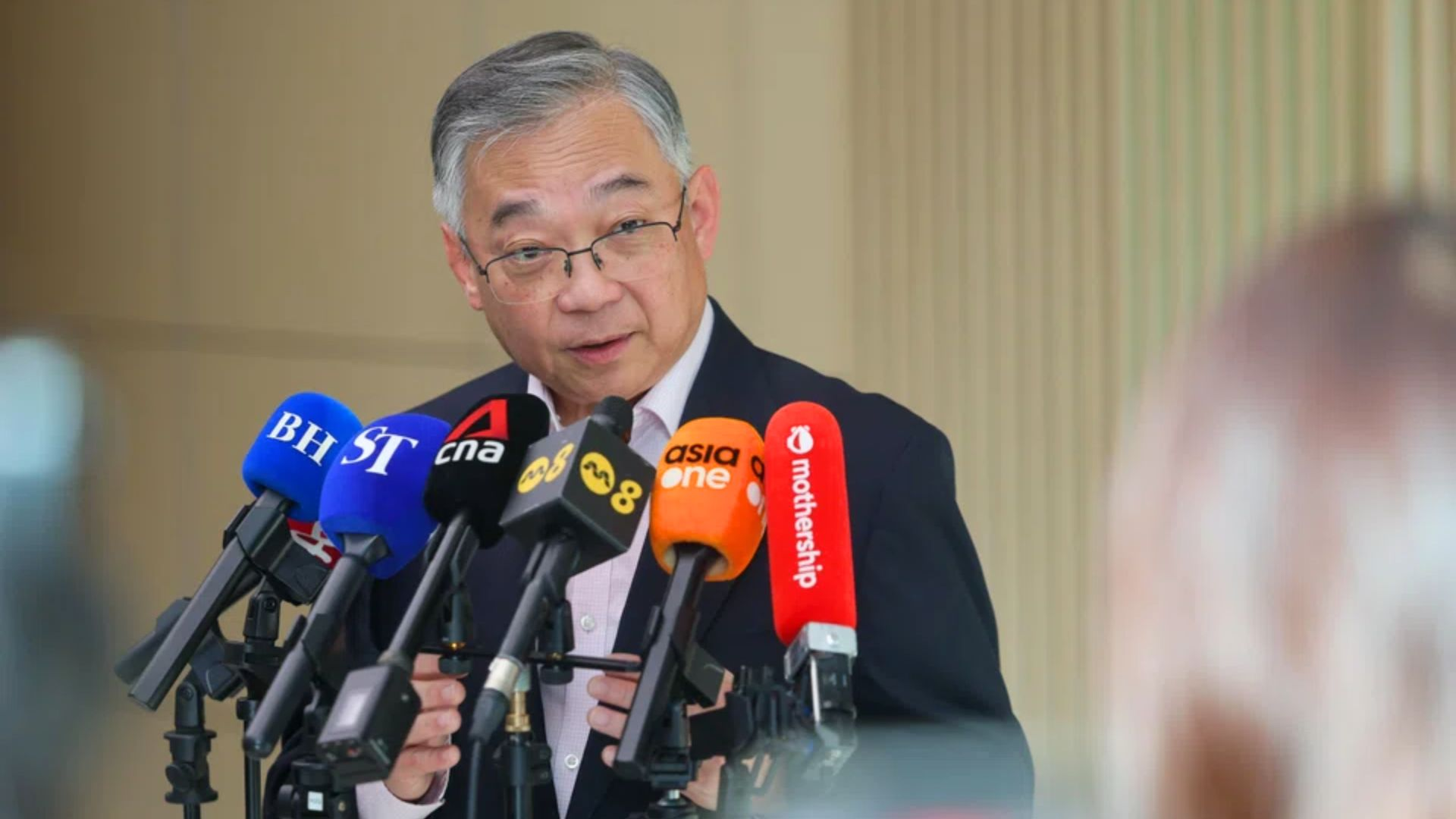
Photo courtesy: The Business Times
Singapore has challenged the United States’ proposed tariffs of up to 20% on its exports, rejecting Washington’s findings that several of the city-state’s economic policies, including its mandatory retirement savings scheme, contribute to unfair trading conditions.
Deputy Prime Minister Gan Kim Yong expressed disappointment on November 26, saying the findings failed to account for Singapore’s economic structure, limited domestic market and ageing population.
The proposal follows an investigation by the Office of the United States Trade Representative (USTR) under Section 301 of the Trade Act of 1974, which allows Washington to address foreign practices it determines are harmful to American commerce.
Singapore is among 14 economies facing proposed tariff measures following the investigation into excess manufacturing capacity and production.
The proposed 20% rate takes existing Section 301 tariffs into account and excludes certain products. Washington has also indicated that the rate could be adjusted to 10% if Singapore reaches an agreement addressing the concerns identified in the investigation.
Singapore defends its Central Provident Fund
Among the policies scrutinized by Washington is Singapore’s Central Provident Fund (CPF), a compulsory savings system funded through contributions from eligible employees and their employers.
The USTR argued that mandatory savings reduce household consumption and contribute to Singapore’s persistent current account surplus.
Gan disputed this assessment, explaining that the CPF allows Singaporeans to prepare for retirement, housing and medical expenses without placing excessive financial pressure on younger generations.
“It is not a scheme to suppress domestic consumption,” Gan said.
He also pointed to Singapore’s Community Development Council vouchers, which encourage spending at local businesses.
Under the CPF’s 2026 contribution schedule, eligible Singaporean citizens and permanent residents aged 55 and below generally contribute 20% of their wages, while employers contribute another 17%, subject to applicable wage limits and eligibility requirements.
Foreign workers who are neither Singaporean citizens nor permanent residents are exempt from compulsory CPF contributions.
Manufacturing policies under scrutiny
Washington’s findings extend beyond Singapore’s social security system.
The USTR also examined Singapore’s Manufacturing 2030 strategy, government-backed business financing and the S$37-billion Research, Innovation and Enterprise 2030 plan.
American trade officials contend that government support for industries such as electronics, semiconductors, pharmaceuticals and petrochemicals contributes to production beyond what would occur under market conditions, limiting opportunities for American manufacturers.
Singapore maintains that manufacturing is essential to sustaining employment and economic growth in a country with limited natural resources and a small domestic consumer market.
US records trade surplus with Singapore
The proposed tariffs come despite a longstanding free trade agreement between the two countries, which took effect on January 1, 2004.
According to the USTR’s own trade statistics, bilateral trade in goods and services reached approximately US$146.2 billion in 2025.
The United States recorded a merchandise trade surplus of US
3.4billionandaservicestradesurplusofUS29.5 billion with Singapore that year, bringing its combined surplus to approximately US$32.9 billion.
Washington acknowledged Singapore’s bilateral trade deficit with the United States but argued that its investigation also considered competition in international markets and Singapore’s trade policies more broadly.
Migrant worker protections also questioned
The US investigation identified migrant worker recruitment fees as another area of concern, arguing that such charges can expose foreign workers to debt-related exploitation.
Singapore’s Ministry of Manpower allows licensed employment agencies to charge workers up to one month’s fixed salary for each year of service, capped at two months’ salary. Charging fees beyond this limit is an offence.
The issue carries particular relevance for the Philippines. According to the Philippine Embassy in Singapore, approximately 220,000 Filipinos live and work in the city-state, with around 60% employed as professionals and skilled workers and the remainder working in household service roles.
Trade negotiations and regional implications
Gan said Singapore would continue engaging Washington while working with affected businesses through the Singapore Economic Resilience Taskforce.
He estimated that the proposed measures could raise the effective US tariff rate on Singapore’s exports from 7.8% to 10.3%. The impact would vary across industries because of product exclusions and existing sector-specific tariffs.
Several other Southeast Asian economies, including Malaysia, Indonesia, Thailand, Cambodia and Vietnam, are also covered by the latest US trade action. The Philippines is not among the 14 economies named in the November 25 announcement.
The USTR has opened the proposals to public consultation, with written submissions due on January 5, 2027, and public hearings scheduled for January 25, 2027, in Washington.