Headline
DFA urges PH officials to align China remarks with Marcos’ foreign policy

ASM, Philippine Canadian Inquirer
November 09, 2026
Photo courtesy: Multiple Sources
MANILA, Philippines — The Department of Foreign Affairs (DFA) has urged Philippine government officials to align their public statements about China with President Ferdinand Marcos Jr.’s foreign policy.
In a statement on Sunday, November 8, the DFA warned that conflicting remarks could weaken diplomatic efforts amid continuing tensions in the West Philippine Sea.
The department stressed that the President directs the country’s foreign policy. It also reminded civilian and military officials of their responsibility to follow the administration’s diplomatic approach.
DFA warns against conflicting statements
According to the DFA, government officials must consider how their public remarks could affect the Philippines’ relations with other countries.
While officials may hold personal views, the department said these should not conflict with the government’s broader foreign policy.
The DFA described recent comments by certain Philippine officials as regrettable. It said the remarks had blurred the distinction between documenting maritime incidents, public messaging and formal diplomacy.
Such statements, the department warned, could complicate diplomatic negotiations and weaken the country’s credibility abroad.
However, the DFA did not identify the officials it was referring to.
Transparency remains important in West Philippine Sea
The DFA also recognized the role of public transparency in documenting incidents involving Chinese vessels in the West Philippine Sea.
It said releasing evidence of maritime encounters has helped establish facts, counter disinformation and raise international awareness.
However, the department emphasized that public disclosure should support diplomatic and legal efforts rather than replace them.
“Transparency is a tool, not a strategy in itself,” the DFA said.
The department also pointed to the Philippines’ victory in the 2016 South China Sea arbitration case.
The ruling rejected the legal basis for China’s expansive maritime claims under its nine-dash line. However, Beijing continues to reject the decision.
The DFA maintained that international law and diplomatic engagement remain essential to protecting the country’s maritime rights.
Statement follows talks between Philippine, Chinese officials
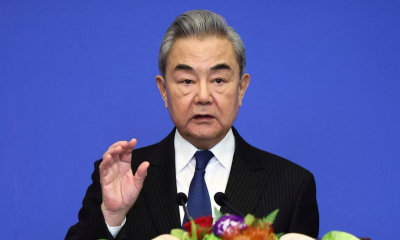
The warning came days after Foreign Affairs Secretary Ma. Theresa Lazaro spoke with Chinese Foreign Minister Wang Yi on November 3.
During the telephone conversation, both officials agreed to maintain diplomatic communication and manage disagreements between their countries.
The DFA described the discussion as part of efforts to preserve bilateral relations ahead of major regional meetings.
The Philippines is preparing to host the 49th ASEAN Summit and Related Summits in Metro Manila later this month.
Meanwhile, China will host the Asia-Pacific Economic Cooperation (APEC) Economic Leaders’ Meeting in Shenzhen on November 18 and 19.
The diplomatic talks followed months of tensions over competing maritime claims and exchanges between Philippine officials and the Chinese Embassy in Manila.
Tensions continue between Manila and Beijing
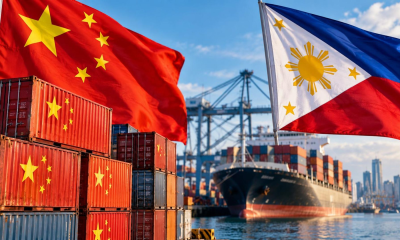
The Philippines and China remain at odds over activities in the South China Sea, particularly within waters Manila considers part of its exclusive economic zone.
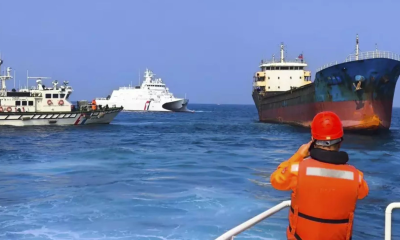
Philippine authorities have repeatedly documented encounters involving Chinese vessels near disputed maritime areas.
Meanwhile, the Chinese Embassy has criticized Philippine officials over their public statements about Beijing’s actions.
Defense Secretary Gilberto Teodoro Jr. and Philippine Coast Guard spokesperson Rear Admiral Jay Tarriela have been among the officials involved in public exchanges with Chinese representatives.
Some Philippine lawmakers have also called for the recall of Chinese Ambassador Jing Quan following his remarks about China’s possible use of force against the Philippines.
Amid these disagreements, the DFA emphasized that government agencies must coordinate their approaches to foreign affairs.
The department said Philippine officials should address policy differences through established government channels while continuing to protect the country’s sovereignty and maritime rights.
The DFA also maintained that diplomatic engagement should not be mistaken for abandoning the country’s position on the West Philippine Sea.