Food
Rambutan peels show potential against cervical cancer cells in laboratory study

ASM, Philippine Canadian Inquirer
October 21, 2026
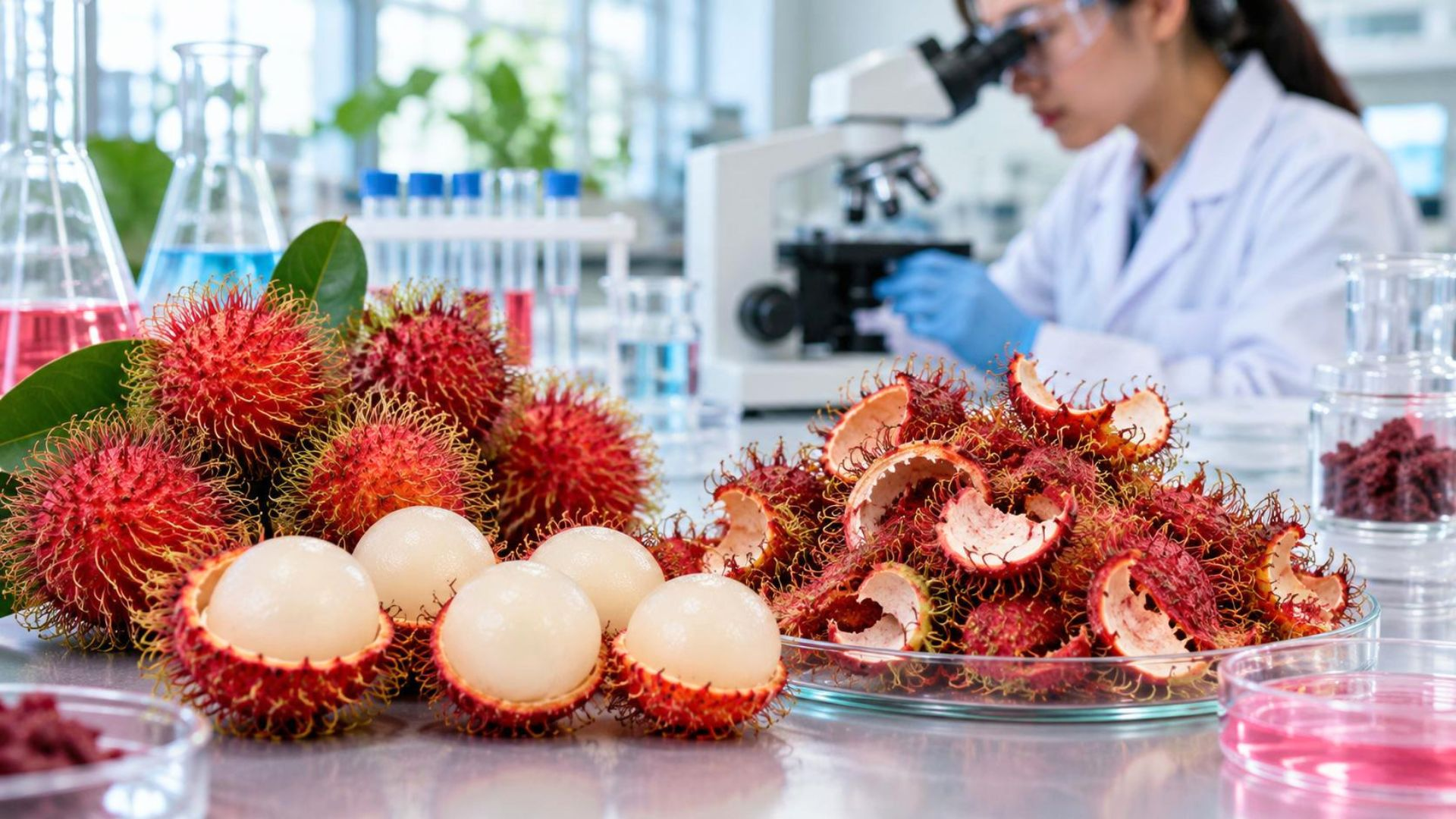
MANILA, Philippines — Rambutan peels, often discarded after eating the tropical fruit, may hold potential for future cancer research after scientists discovered that compounds extracted from them reduced the survival of cervical cancer cells in laboratory experiments.
The study, conducted by researchers in Mexico, was published on August 27, 2026, in the peer-reviewed journal Nutraceuticals.
Researchers found that a specially prepared rambutan peel extract significantly reduced the viability of HeLa cells, a type of human cervical cancer cell commonly used in scientific research.
However, the findings do not mean that eating rambutan peels or drinking preparations made from them can prevent or treat cancer.
What researchers discovered
The research team examined natural compounds found in rambutan peels, particularly polyphenols, which are plant substances known for their biological activity.
These include geraniin and corilagin, compounds that have attracted scientific interest for their antioxidant and other biological properties.
To investigate their effects, researchers prepared a concentrated rambutan peel extract and applied it to cervical cancer cells grown in a laboratory.
The cells were exposed to different concentrations of the extract for 24, 48 and 72 hours.
Results showed that the extract reduced cancer cell viability, with stronger effects generally observed at higher concentrations and longer exposure periods.
After 72 hours, cell viability fell below 20 percent of the untreated control at two of the higher concentrations tested.
This suggests that substances found in rambutan peels may interfere with the survival or growth of certain cancer cells under laboratory conditions.
Normal cells were also tested
To better understand the extract’s effects, the researchers tested it on normal human skin cells.
These cells were generally less affected than the cervical cancer cells, suggesting that the extract may act differently on cancerous and noncancerous cells.
However, the extract still reduced the viability of some normal cells, particularly at higher concentrations and longer exposure times.
The researchers also observed changes in treated cancer cells consistent with apoptosis, a natural process in which damaged or unwanted cells undergo programmed cell death.
Further studies are needed to confirm the mechanisms involved and determine whether the findings have medical applications.
Does this mean rambutan peels can treat cancer?
Not yet.
The experiments were conducted on cells grown in a laboratory, not on human patients.
Although the findings suggest that rambutan peel compounds deserve further investigation, laboratory results cannot establish whether a substance is safe or effective as a cancer treatment.
Researchers must first determine how the compounds behave in living organisms, including how they are absorbed, processed and eliminated by the body.
Additional research would also be needed to assess appropriate doses, possible side effects and whether the compounds can affect tumors without harming healthy tissues.
The extract used in the study was specially processed and concentrated.
It is not equivalent to eating raw rambutan peels or boiling them in water.
For this reason, the findings should not be interpreted as support for using rambutan peels as a home remedy or replacing established cervical cancer treatments.
From fruit waste to scientific research
Rambutan is a familiar tropical fruit in the Philippines and other Southeast Asian countries.
Its peels are typically discarded, although scientists have increasingly examined them as a possible source of useful plant compounds.
The latest research adds to growing interest in agricultural waste as a source of materials for scientific and pharmaceutical investigation.
For now, the study provides early evidence that rambutan peel extracts can affect cervical cancer cells under controlled laboratory conditions.
Whether those effects can eventually contribute to safe and effective medical treatments remains an open question requiring further research.