Environment & Nature
DSWD prepares portable water filters as El Niño threatens water supply

ASM, Philippine Canadian Inquirer
October 15, 2026
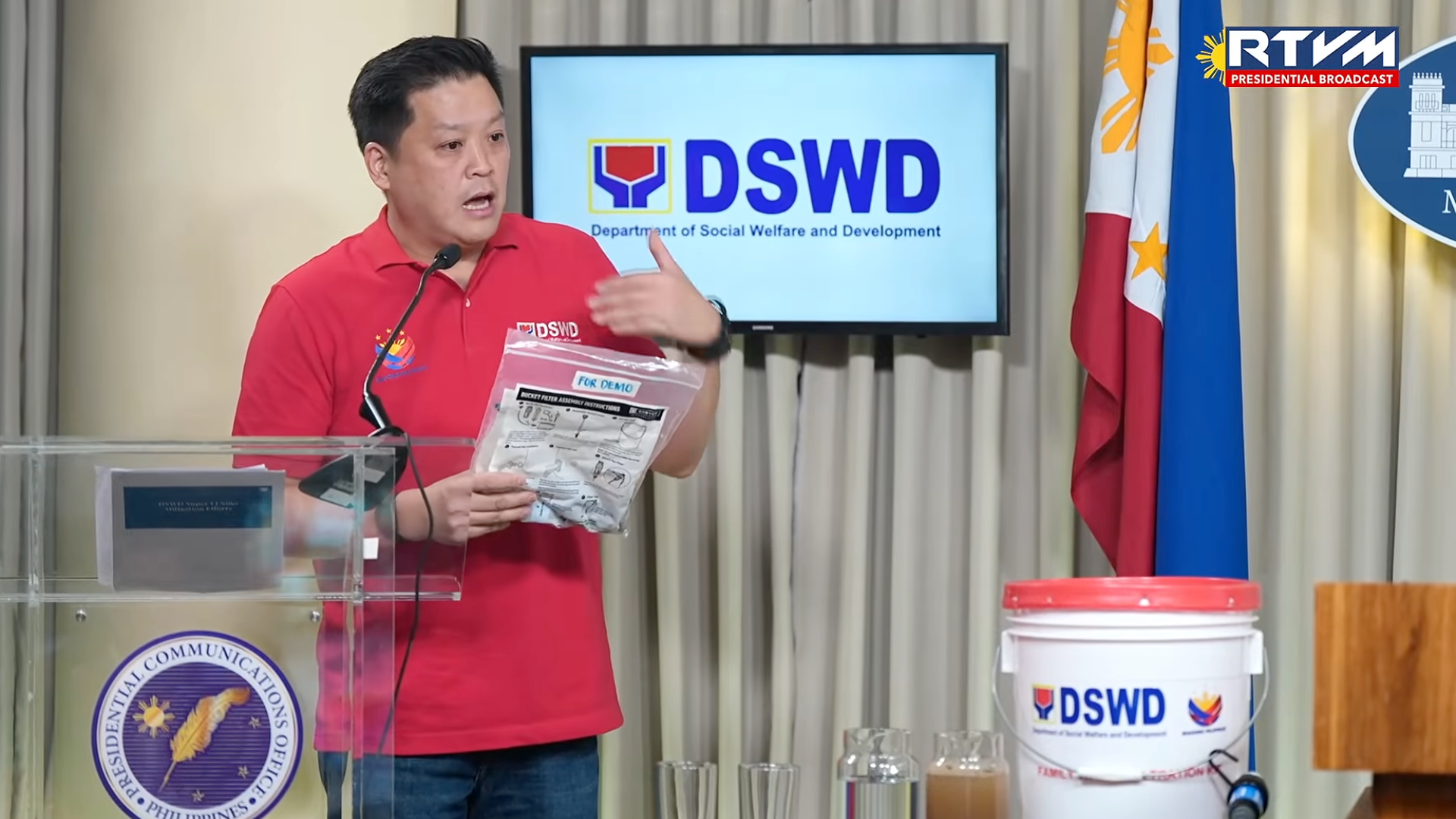
Photo courtesy: RTVM
The Department of Social Welfare and Development (DSWD) is preparing portable water filtration kits to help communities maintain access to safe drinking water amid a strong to very strong El Niño.
Social Welfare Secretary Rex Gatchalian said the kits can turn properly collected rainwater into drinking water. The equipment can also help households facing water shortages during disasters and other emergencies.
During a Palace briefing on Wednesday, October 14, Gatchalian demonstrated how the filtration system works using a 20-liter bucket. He poured water mixed with soil through the filter to show its ability to remove impurities.
The portable system does not require electricity or chemicals, making it useful in areas with limited resources.
DSWD explains how water filters work
The kits use 0.1-micron filters supplied by Waves for Water Organization Inc. The DSWD said the equipment has been certified by the Food and Drug Administration (FDA).
Tests also showed that filtered water met the Philippine National Standards for Drinking Water for the physical, chemical and microbiological parameters examined.
According to Gatchalian, the department already has filtration kits available for emergency deployment.
The DSWD has used similar equipment in disaster response operations since 2024. These include relief efforts in Batanes following Typhoon Julian and other areas where safe drinking water became scarce.
With proper maintenance, each filter can last up to five years.
The department also plans to conduct barangay-level demonstrations. These activities will teach residents how to use, clean and maintain the filtration systems.
Rainwater collection projects also underway
Aside from portable filters, the DSWD plans to establish community rainwater collection facilities.
The first site is planned in Tondo, Manila, while similar systems are being considered for other disaster-affected communities.
Meanwhile, the agency continues to implement Project LAWA at BINHI. The initiative supports water and food security through small water-impounding facilities and other community projects.
El Niño could persist until 2027
The Philippine Atmospheric, Geophysical and Astronomical Services Administration (PAGASA) reported on October 7 that a strong to very strong El Niño is affecting the tropical Pacific.
The weather phenomenon is expected to continue through the first half of 2027. It could also reach its peak before the end of 2026.
PAGASA warned that El Niño increases the likelihood of below-normal rainfall, prolonged dry spells and drought in parts of the Philippines.
These conditions could put additional pressure on water supplies, particularly in communities with limited access to reliable drinking water sources.