Canada News
Canada’s federal deficit shrinks to C$370 million from C$6.3 billion

Abi Sarabia M., Philippine Canadian Inquirer
September 03, 2026
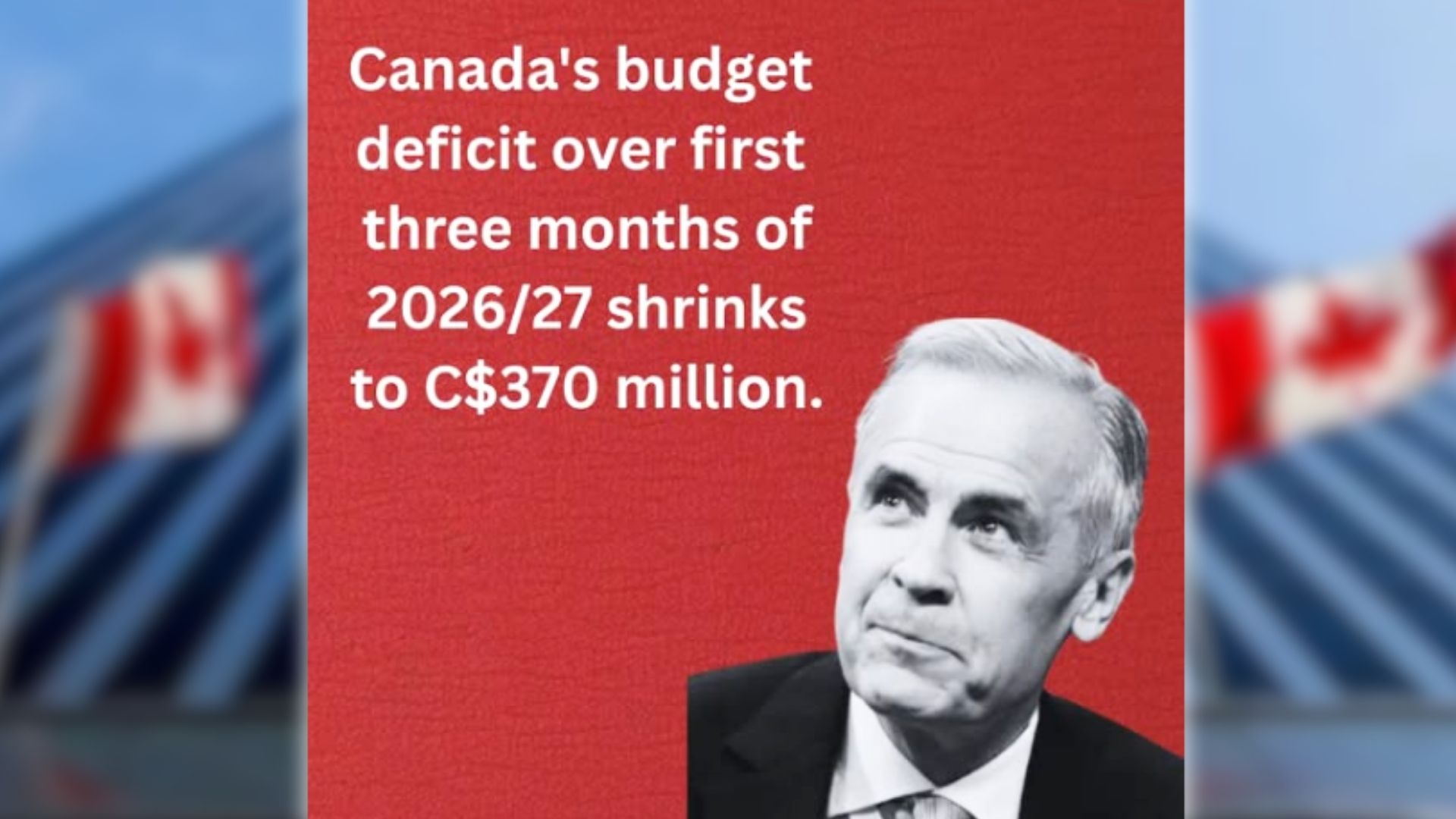
Photo courtesy: Canadians United
OTTAWA — Canada’s federal deficit narrowed sharply in the first three months of the 2026–27 fiscal year, falling to C$370 million from C$6.28 billion during the same period a year earlier, according to the Department of Finance.
The latest Fiscal Monitor, covering April through June 2026, shows a substantial improvement in the federal government’s budgetary balance compared with the first quarter of 2025–26.
Federal revenues reached C$132.64 billion during the three-month period, up C$11.8 billion, or 9.8%, from C$120.84 billion a year earlier. Finance Canada attributed the increase largely to higher personal and corporate income tax revenues, Goods and Services Tax collections and other government revenues.
The improvement did not come from an overall reduction in government expenditures.
Program expenses, excluding net actuarial losses, rose C$4.8 billion or 4.3% to C$117.16 billion. Public debt charges also increased 6.1% to C$14.61 billion, partly because of higher effective interest rates on government bonds.
Even with those increases, revenue growth was strong enough to substantially narrow the deficit. Before net actuarial losses, the federal government recorded a C$875-million surplus between April and June, compared with a C$5.27-billion deficit during the same period last year. After accounting for those losses, the government posted the C$370-million deficit.
In June alone, Ottawa recorded a budgetary surplus of C$989 million. That was lower than the C$3.63-billion surplus recorded in June 2025.
The first-quarter results provide an encouraging early indicator for Prime Minister Mark Carney’s government, but they represent only three months of the fiscal year and should not be treated as evidence that Canada has eliminated its broader deficit problem.
The federal government’s Spring Economic Update still projects a C$65.3-billion deficit for the full 2026–27 fiscal year, followed by gradually declining deficits reaching C$53.2 billion in 2030–31. The government has said it intends to balance day-to-day operating spending while continuing to borrow for capital investments.
For now, however, the latest numbers show a clear improvement: Ottawa entered the fiscal year with significantly stronger revenue growth and a much smaller first-quarter deficit than it recorded a year ago.