By Paul Hamilton, Brock University and Tristan Sheppard, Brock University, The Conversation
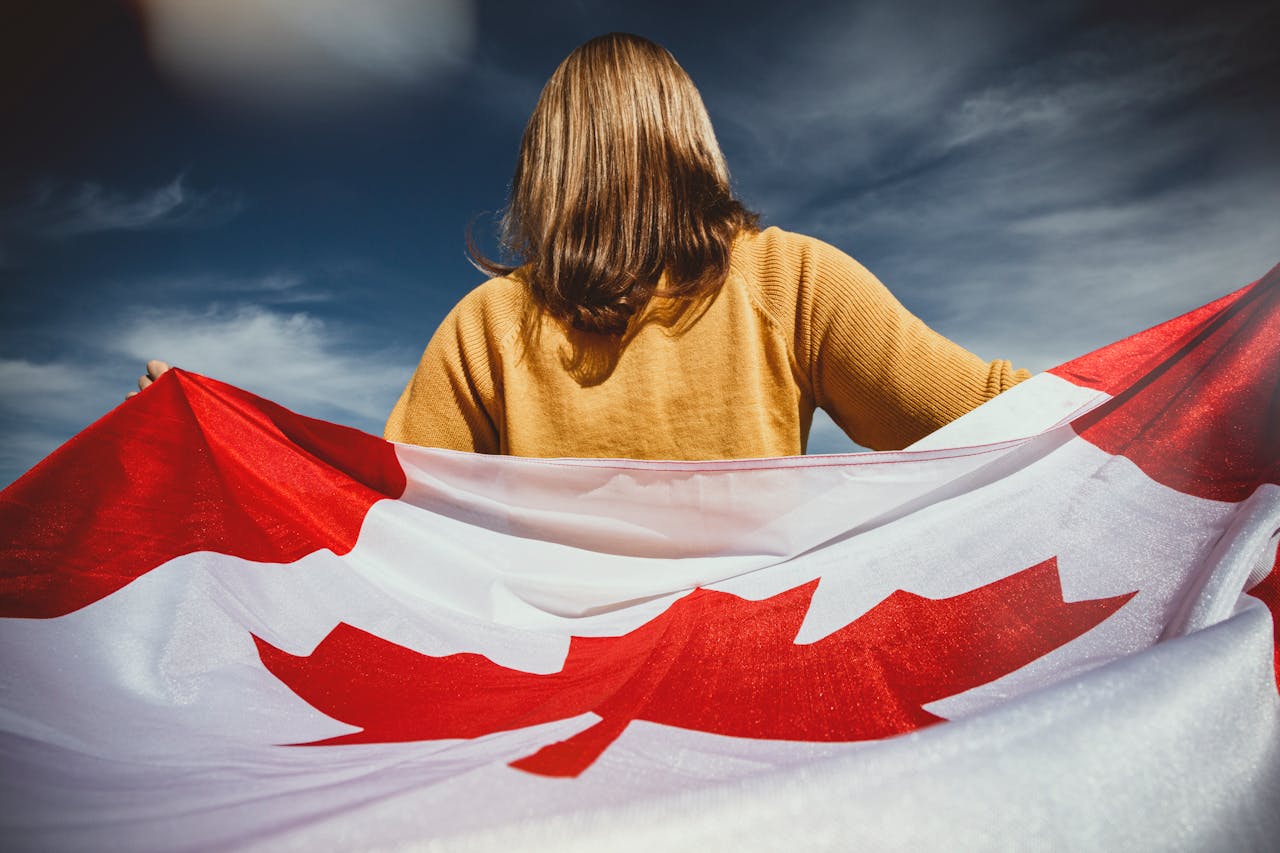
The recent resurgence of Canadian nationalism is a response to explicit threats made by United States President Donald Trump, who has repeatedly expressed his desire to make Canada the 51st American state.
Canadian flag sales have skyrocketed, informal and formal boycotts of American goods are continuing and Canadians are being urged to stay home and spend their vacation dollars domestically. Even in Québec, pro-Canadian sentiments are evident. Canadian nationalism is back.
Yet only a decade ago, the newly elected Justin Trudeau labelled Canada the first “post-national nation” in an interview with The New York Times. In essence, the prime minister suggested, Canada was moving beyond nationalism to some new phase of social identity. Nationalism, like a step in the launch of a spacecraft, would be jettisoned now that it was a vestigial and outdated feature of Canadian society.
As we argue in a recently presented paper to be published soon, Canadians are nowhere near either a homogeneous, popularly held identity, nor are they “beyond nationalism” as if it were an outdated hairstyle.
Instead, Canadian steps toward a united, widely held nationalism continue to be stymied by both substantial constitutional issues (Québec, western alienation, Indigenous aspirations to self-determination) but also by battles over banal symbols of national identity. Canadians are, in the words of journalist Ian Brown, “a unity of contradictions.”
The importance of symbols
In his influential book, Banal Nationalism, British social science scholar Michael Billig highlighted the role of symbols like stamps, currency and flags to identify barely noticed transmitters of national consciousness.
Writing in 1995, at a time of ethnic nationalist resurgence in the former Yugoslavia, Billig contrasted the understated, reserved nationalism of citizens of established states like Canada with the dangerous, passionate expressions of nationalism in the Balkans.
This genteel nationalism is barely noticed much of the time, but proposals to alter national symbols arouse debate — like during the great Canadian flag debate of the mid-1960s — and expose deep emotional attachments. Canadians, too, are nationalists.
But they’re also citizens of a liberal democracy where nationalistic narratives compete to define and unite the nation. Societies evolve and generational change can lead to new symbols reflecting changing values. The historical episodes of discontent pertaining to national symbols show how Canadian society has evolved since its drift away from Britain after the Second World War.
During the flag debate, Liberal Prime Minister Lester B. Pearson said Canada needed a new flag that would present a united nation rather than a confusing amalgamation of different people. Conservative Leader John Diefenbaker, on the other hand, argued Canada should be “all Canadian and all British” during the debate, adding that any Canadian who disagreed should “be denounced.”
The leaders could not agree, with Diefenbaker opting for something like the status quo and Pearson for a complete redesign that would represent all Canadians, regardless of national heritage. In a 1964 La Presse article on the debate, columnist Guy Cormier crudely voiced Québec’s concerns that Pearson’s handling of the flag debate was an attempt to “artificially inseminate” his agenda on the province. The Philadelphia Evening Bulletin reported on the debate, declaring that “tinkering with a nation’s flag is sort of like playing volleyball with a hornets nest.”
Mountie symbolism
As Canada became increasingly more multicultural in the 1980s, another symbol became the centre of controversy. A Sikh entering the RCMP wanted to be able to wear a turban instead of the traditional Stetson.
Despite government and RCMP support, public opinion was mixed. Racist lapel pins were sold with the message “Keep the RCMP Canadian” as some argued the old uniform should remain and that new recruits should adapt to it.
While few Canadians knew much about the design and history of the RCMP uniform, almost all Canadians consider it an iconic representation of Canada. Changes to it represent a threat to some, inclusion for others.
Changes to the anthem, passport
Changes to O Canada, the national anthem, have been proposed over the past decades. Recently, a more inclusive version was drafted, changing “in all thy sons command” to “all of us command.”
Conservative MPs and some television pundits argued the change wasn’t necessary and the anthem doesn’t belong to a political party. Opponents argued that most people aren’t offended by the anthem’s lyrics, the anthem wasn’t broken and was not in need of fixing. Ultimately, the change was made, with great praise from some and vexation from others.
Removing images of the late Terry Fox in 2023 from the Canadian passport, a document few think about until checking its expiry date before a vacation, caused significant uproar.
Other images from Canadian history were also removed, but Fox’s removal was most notable since he was someone most Canadians consider the embodiment of a Canadian hero.
The response to these changes ranged from mild — with those arguing that Canada needs more Terry Fox, not less, — to furious, as some accused Trudeau of being out of touch with Canadians and a “fault finder-in-chief.”
Far from trivial, these arguments over national symbols reveal how deeply some Canadians are attached to them. The nature of Canadian identity and nationalism will continue to be dated and contested. In that respect, Canadians are no different than the citizens of any other country.
Paul Hamilton, Associate Professor of Political Science, Brock University and Tristan Sheppard, Graduate M.A., Nationalism, Brock University
This article is republished from The Conversation under a Creative Commons license. Read the original article.