

By Anthony Burke, UNSW Sydney, The Conversation
The United States’ and Israel’s strikes on Iran are concerning, and not just for the questionable legal justifications provided by both governments.
Even if their attacks cause severe damage to Iran’s nuclear facilities, this will only harden Iran’s resolve to acquire a bomb.
And if Iran follows through on its threat to pull out of the Treaty on the Nonproliferation of Nuclear Weapons (NPT), this will gravely damage the global nuclear nonproliferation regime.
In a decade of international security crises, this could be the most serious. Is there still time to prevent this from happening?
A successful but vulnerable treaty
In May 2015, I attended the five-yearly review conference of the NPT. Delegates debated a draft outcome for weeks, and then, not for the first time, went home with nothing. Delegates from the US, United Kingdom and Canada blocked the final outcome to prevent words being added that would call for Israel to attend a disarmament conference.
Russia did the same in 2022 in protest at language on its illegal occupation of the Zaporizhzhia nuclear power station in Ukraine.
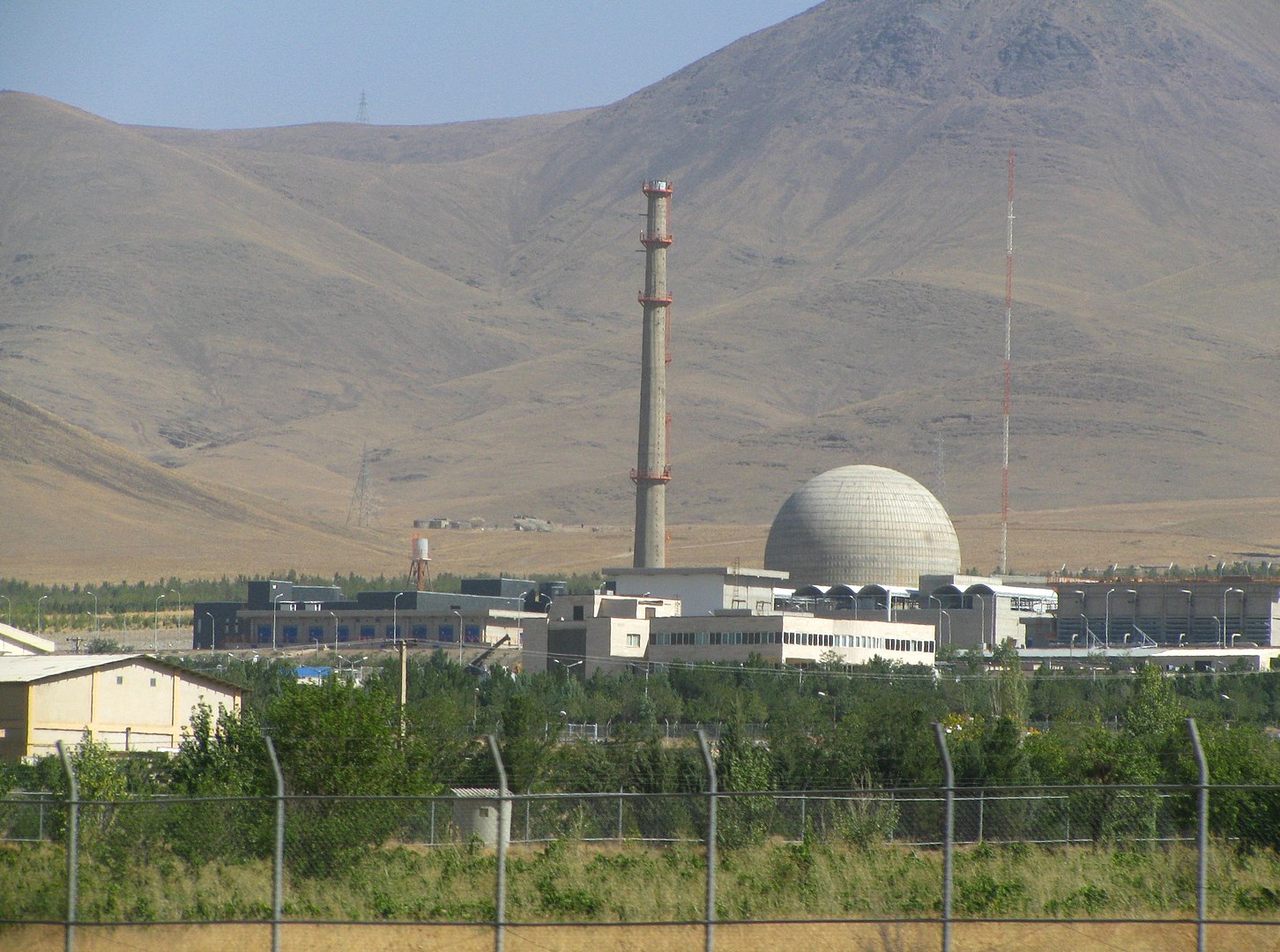
Now, in the latest challenge to the NPT, Israel and the US have bombed Iran’s nuclear complexes to ostensibly enforce a treaty neither one respects.
When the treaty was adopted in 1968, it allowed the five nuclear-armed states at the time – the US, Soviet Union, France, UK and China – to join if they committed not to pass weapons or material to other states, and to disarm themselves.
All other members had to pledge never to acquire nuclear weapons. Newer nuclear powers were not permitted to join unless they gave up their weapons.
Israel declined to join, as it had developed its own undeclared nuclear arsenal by the late 1960s. India, Pakistan and South Sudan have also never signed; North Korea was a member but withdrew in 2003. Only South Sudan does not have nuclear weapons today.
To make the obligations enforceable and strengthen safeguards against the diversion of nuclear material to non-nuclear weapons states, members were later required to sign the IAEA Additional Protocol. This gave the International Atomic Energy Agency (IAEA) wide powers to inspect a state’s nuclear facilities and detect violations.
It was the IAEA that first blew the whistle on Iran’s concerning uranium enrichment activity in 2003. Just before Israel’s attacks this month, the organisation also reported Iran was in breach of its obligations under the NPT for the first time in two decades.
The NPT is arguably the world’s most universal, important and successful security treaty, but it is also paradoxically vulnerable.
The treaty’s underlying consensus has been damaged by the failure of the five nuclear-weapon states to disarm as required, and by the failure to prevent North Korea from developing a now formidable nuclear arsenal.
North Korea withdrew from the treaty in 2003, tested a weapon in 2006, and now may have up to 50 warheads.
Iran could be next.
How things can deteriorate from here
Iran argues Israel’s attacks have undermined the credibility of the IAEA, given Israel used the IAEA’s new report on Iran as a pretext for its strikes, taking the matter out of the hands of the UN Security Council.
For its part, the IAEA has maintained a principled position and criticised both the US and Israeli strikes.
Iran has retaliated with its own missile strikes against both Israel and a US base in Qatar. In addition, it wasted no time announcing it would withdraw from the NPT.
On June 23, an Iranian parliament committee also approved a bill that would fully suspend Iran’s cooperation with the IAEA, including allowing inspections and submitting reports to the organisation.
Iran’s envoy to the IAEA, Reza Najafi, said the US strikes:
[…] delivered a fundamental and irreparable blow to the international non-proliferation regime conclusively demonstrating that the existing NPT framework has been rendered ineffective.
Even if Israel and the US consider their bombing campaign successful, it has almost certainly renewed the Iranians’ resolve to build a weapon. The strikes may only delay an Iranian bomb by a few years.
Iran will have two paths to do so. The slower path would be to reconstitute its enrichment activity and obtain nuclear implosion designs, which create extremely devastating weapons, from Russia or North Korea.
Alternatively, Russia could send Iran some of its weapons. This should be a real concern given Moscow’s cascade of withdrawals from critical arms control agreements over the last decade.
An Iranian bomb could then trigger NPT withdrawals by other regional states, especially Saudi Arabia, who suddenly face a new threat to their security.
Why Iran might now pursue a bomb
Iran’s support for Hamas, Hezbollah and Syria’s Assad regime certainly shows it is a dangerous international actor. Iranian leaders have also long used alarming rhetoric about Israel’s destruction.
However repugnant the words, Israeli and US conservatives have misjudged Iran’s motives in seeking nuclear weapons.
Israel fears an Iranian bomb would be an existential threat to its survival, given Iran’s promises to destroy it. But this neglects the fact that Israel already possesses a potent (if undeclared) nuclear deterrent capability.
Israeli anxieties about an Iranian bomb should not be dismissed. But other analysts (myself included) see Iran’s desire for nuclear weapons capability more as a way to establish deterrence to prevent future military attacks from Israel and the US to protect their regime.
Iranians were shaken by Iraq’s invasion in 1980 and then again by the US-led removal of Iraqi dictator Saddam Hussein in 2003. This war with Israel and the US will shake them even more.
Last week, I felt that if the Israeli bombing ceased, a new diplomatic effort to bring Iran into compliance with the IAEA and persuade it to abandon its program might have a chance.
However, the US strikes may have buried that possibility for decades. And by then, the damage to the nonproliferation regime could be irreversible.
Anthony Burke, Professor of Environmental Politics & International Relations, UNSW Sydney
This article is republished from The Conversation under a Creative Commons license. Read the original article.




















