

By Sam Power, University of Bristol, The Conversation
Former chairman Zia Yusuf has rejoined Reform after quitting days previously. Yusuf had said he no longer wanted to work to get the party into government when new MP Sarah Pochin called for a ban on burqas in the UK. However, he seems to have had a change of heart and will return, ostensibly to lead the party’s “department of government efficiency”.
Donald Trump and Elon Musk’s bromance, however, is on much rockier ground. There’s no sign of the world’s richest man reconciling with the US president, his former employer.
These spats, at first glance, might seem like little more than, put politely, teething problems in (relatively) new political operations. Or, a little less politely, the unedifying spectacle of people in or seeking power being completely unable to act like adults.
However, it also points to something more akin to a canary in the coalmine for radical right parties around the world. Their increasing reliance on an ultra-wealthy donor class presents an ideological puzzle that may not be solvable.
Want more politics coverage from academic experts? Every week, we bring you informed analysis of developments in government and fact check the claims being made.
Sign up for our weekly politics newsletter, delivered every Friday.
Reform currently operates on what has been described as vibes alone. That is to say, there’s very little meaningful common ground between the people who vote for Reform and the party elite. The only continuity is their sense of anger at the current political system.
This, as we are seeing in election after election, is an incredibly powerful (and compelling) force. The problem is, of course, that you can’t oppose forever. You often end up having to actually do something. All boxers, Mike Tyson will be glad to tell you, have a plan – until they get punched in the face.
And what makes them such a powerful force at the moment, is precisely that which may cause challenges further down the line. At least for me, given it’s my bread and butter research-wise, I see this when I follow the money.
And I’m increasingly asked a lot of questions about the kind of people who are either giving money to Reform – or who Reform are courting (and at the moment it is decidedly the latter which is the case).
My position is that they very broadly fit into three categories. First are disaffected traditional Conservatives who are increasingly seeing a party – in the words of Farage – “worth investing in”. In the donations figures released on June 10, these are represented by bussinessmen Bassim Haidar and Mohammed Amersi.
Then you have a Silicon Valley-reared tech-bro libertarian. This group already runs on a “move fast and break things” philosophy so the idea of an insurgent party which proclaims, on entering parliament, that “the fox is in the henhouse” naturally appeals.
The final pot of money is filled via small donations, ballooning membership and a whole chunk of votes from a disaffected white working-class population to whom the language of economic and cultural grievances resonates.
There are some places where the interests of these groups align – most notably a distaste for government interference and red tape (though not necessarily a smaller state in terms spending on public services). They also share a sense that progressive politics, broadly defined, ought to be pegged back a bit (but with an emphasis on a bit).
They differ on a great deal else, to the extent that you can only really please two out of the three, but never everybody. And, unfortunately, without all three the project starts collapsing. This is what we have been seeing in the fractious relationships between Trump and Musk and Farage and Yusuf.
Two out of three ain’t bad – but it’s not enough
Yusuf (and Musk) are very much representative of the new tech-bro class. And, when Yusuf called questions about banning the burqa “dumb” he was speaking at both an ideological and organisational level.
At the ideological level it is, frankly, a bit rich for his blood, because “philosophically I am always a bit uneasy about banning things which, for example, would be unconstitutional in the United States”.
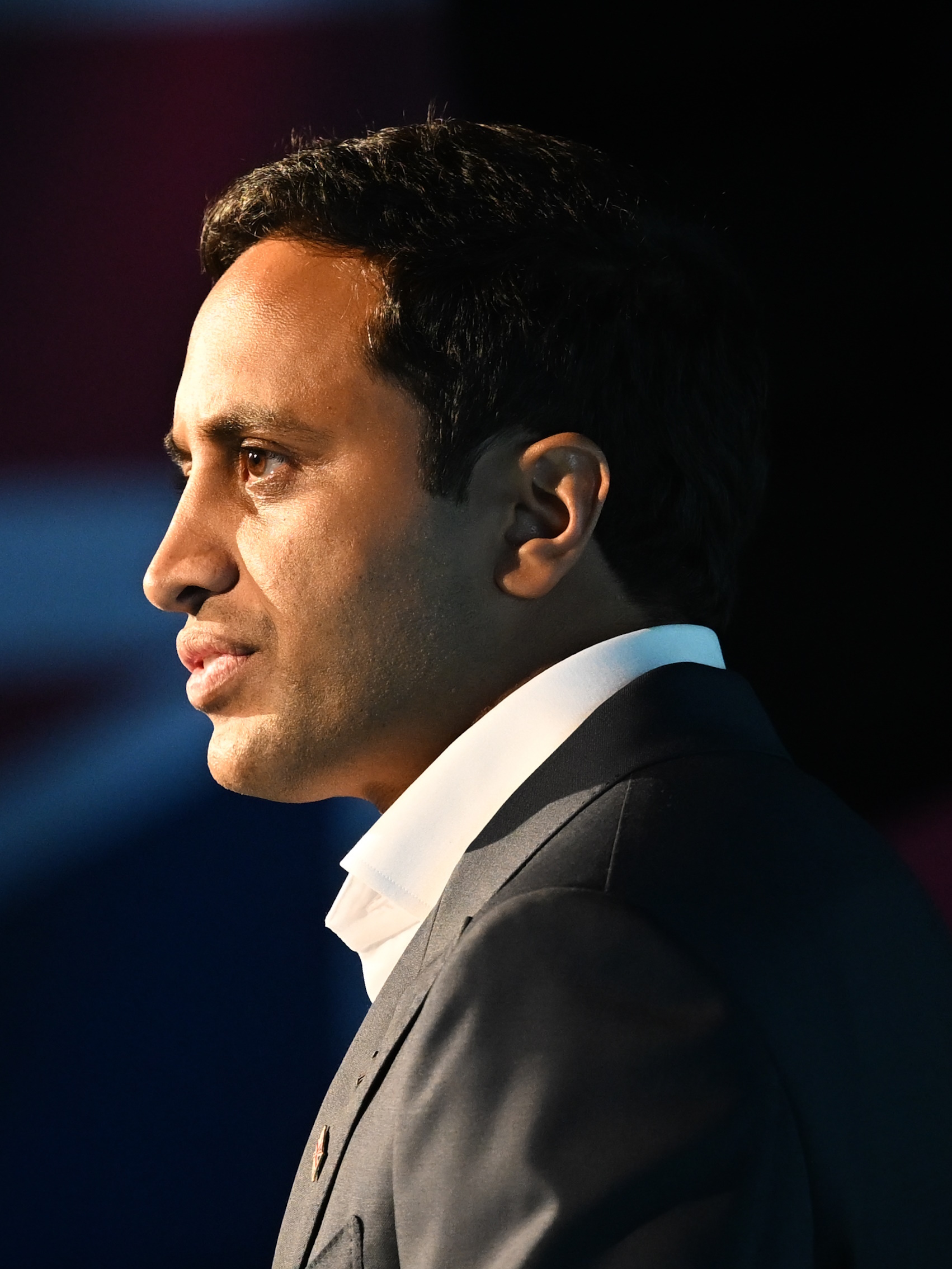
Organisationally, it pushes Reform much closer to what journalist Fraser Nelson calls “a tactic more akin to the old BNP”. Indeed, Reform started “just asking questions” about burqas at the same time as it started twisting footage to claim that Anas Sarwar, leader of Scottish Labour, wants to prioritise the needs of Pakistanis.
This kind of dog-whistle politics appeals to some, but puts off a lot more, including, I think, some of the (saner) tech-bro right.
Indeed, Ian Ward at Politico perceptively notes that if we want to explain the current Musk-Trump meltdown we should look back to Christmas 2024, when cracks first started appearing over immigration policy.
The tech-bro right are, generally speaking, much less hardline on the flow of people than the Maga-populist right (think Steve Bannon and Tommy Robinson). In fact, they are pro-high skilled immigration as it tends to benefit them and their business interests.
Tech-bros also like the idea of moving fast and breaking things in theory. But when things start moving fast and actually breaking in practice (or Tesla stocks start to plummet), they tend to get a bit freaked out.
In other words, it’s not just that they don’t like government, they don’t like governing and the inevitable compromise that comes with it. When they say move fast and break things, I get the sense what they really mean is “leave me alone so I can make billions in peace”.
This, of course, is quite appealing to traditional hedge-fund conservatives, but is also the politics that literally built the economic grievances that much of the white-working class support for the populist radical right is, in turn, built on.
Two out of three ain’t bad, but you do need all three. So, don’t be surprised if despite Farage’s seemingly genuine affection for Yusuf, it all falls apart again before long.
Ultimately, Reform will need to decide how they are going to spin these plates. The good news is that it might well be that they can, indeed, get by on vibes alone until the next general election. The bad news, unfortunately, is that winning an election is the easy bit. Just ask Boris Johnson and Keir Starmer. After all, everyone has a plan.
Sam Power, Lecturer in Politics, University of Bristol
This article is republished from The Conversation under a Creative Commons license. Read the original article.




















