

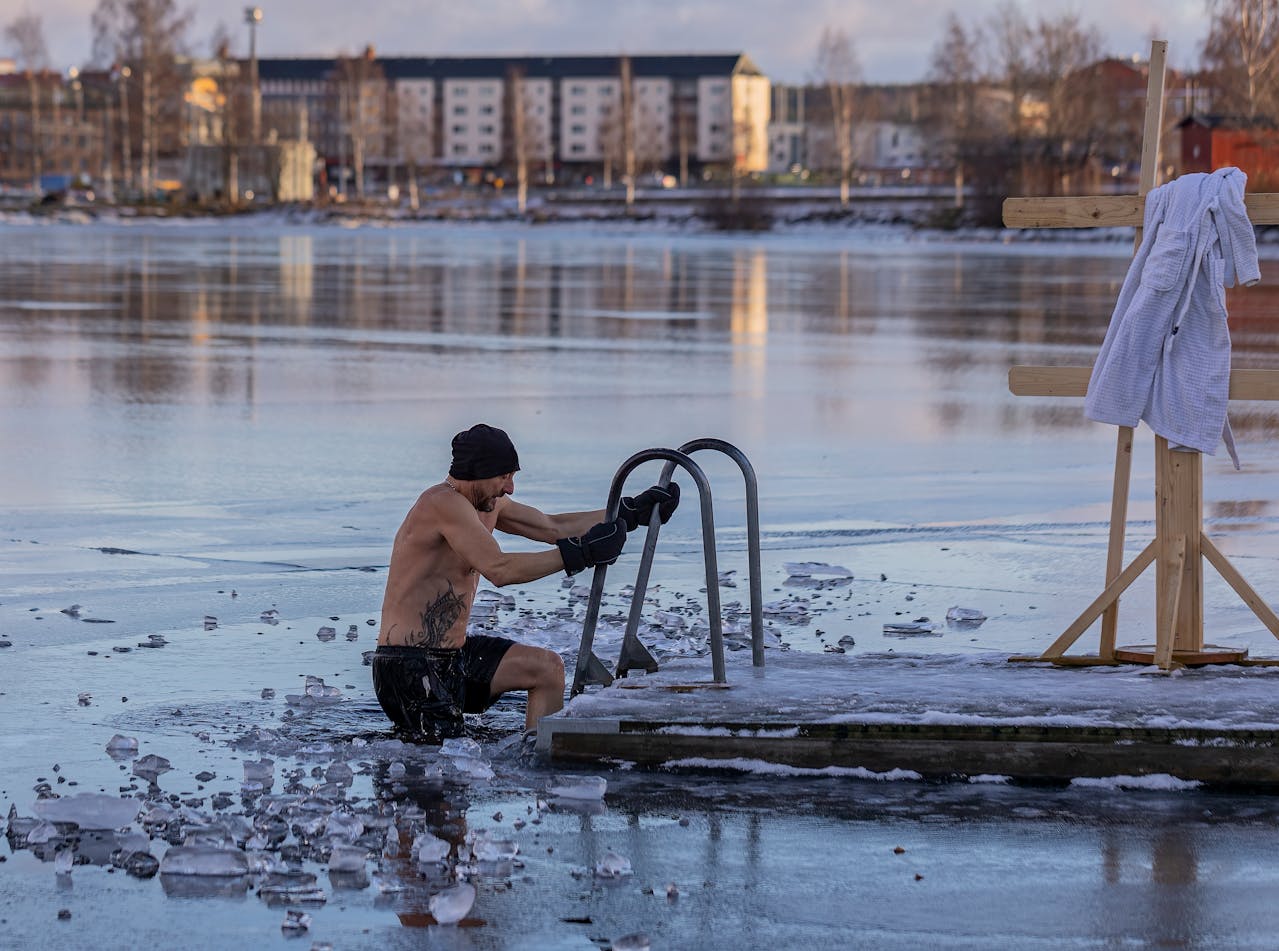
When you expose your body to cold, like during an ice bath, your blood vessels constrict. (Pexels Photo)
By Michelle Spear, University of Bristol, The Conversation
Ice baths are everywhere in modern fitness culture. From professional athletes to weekend warriors, many swear by the post-workout plunge, hoping the icy shock will ease soreness, calm inflammation and help their bodies bounce back faster. But recent research from the Netherlands reveals a surprising downside: those freezing dips might actually slow muscle growth.
When you expose your body to cold, like during an ice bath, your blood vessels constrict. This can reduce swelling, flush out waste products from your workout and ease the muscle soreness that occurs a day or two after intense exercise. That post-workout ache is a sign that your muscles are repairing. So when it fades, it feels like you’re ready to hit the gym again, which helps explain why ice baths are so popular.
But there’s a twist. The very inflammation that causes soreness is also part of how your muscles heal and grow. Shut it down too soon and you might be holding back your progress.
In the recent study, researchers at Maastricht University tested how cold temperatures affect nutrient delivery and muscle-building signals. Twelve healthy young men each did a strength workout using just one leg. Immediately afterwards, each immersed that leg in 8°C water for 20 minutes, while the other leg sat in 30°C water (the “control”). The scientists then measured blood flow and tracked how the muscles used protein to see how the cold affected recovery and muscle-building processes.
The results were clear: right after the ice bath, blood flow in the cold-exposed leg dropped by about 60% compared with the warm-water leg.
Get your news from actual experts, straight to your inbox. Sign up to our daily newsletter to receive all The Conversation UK’s latest coverage of news and research, from politics and business to the arts and sciences.
Even three hours after the workout, blood flow to the muscle that had been cooled was still noticeably lower. Since muscles rely on blood to deliver nutrients, such as amino acids and oxygen, this meant they were getting less of what they needed to grow. In fact, the researchers found about 30% less of the building blocks of protein being used by the muscle.
After strength training, blood flow to your muscles normally increases – a response known as hyperemia. This rush of blood brings important nutrients like amino acids, oxygen and insulin, all of which help to trigger the muscle-building process.
But when you expose your muscles to cold right after a workout, the blood vessels tighten – a reaction called vasoconstriction – which limits how much of those nutrients get through. That means your muscles may miss out during an important window for growth and recovery.
After a workout, a bit of inflammation is actually a good thing – it signals your body to start the repair process. Immune cells release special proteins called cytokines – chemical messengers that help spark muscle repair.
But cooling the muscles too soon, like with an ice bath, can reduce this natural response. It dampens the signals and slows the activation of those repair cells, which may lead to slower progress and less muscle growth over time.
Not all ice baths are equal
Most athletes who use ice baths jump in within minutes after a workout, usually soaking in water between 8°C and 15°C for ten to 20 minutes. This is the standard protocol, although coaches and athletes often adjust the timing and temperature, depending on their goals.
Waiting at least an hour before taking an ice bath might be a smart move as it gives the body time to initiate important muscle-building signals and absorb nutrients without interference. Also, using milder cold water (around 15°C) is gentler on blood flow compared with very cold water. That means it can still help ease soreness without slowing muscle growth as much as colder temperatures might.
How often you use ice baths makes a difference too. In the Maastricht study and others like it, participants used cold plunges after every workout, which led to less muscle growth over time. But if you save ice baths for especially tough days, like during competitions or intense training weeks, athletes can avoid some of those negative effects while still getting recovery benefits when they need them most.
If the goal is to stay sharp and recover quickly – rather than building maximum muscle – then a slight drop in muscle growth might be a fair trade-off for feeling fresher and bouncing back faster.
There’s still a lot we don’t know about ice baths and muscle growth. Most studies so far have focused on young men, so it’s unclear if women, older adults or people with muscle loss due to health conditions respond the same way. More research is needed to understand how cold therapy affects different groups of people.
Most research so far has focused on soaking just one arm or leg, but full-body ice baths might cause different reactions in the body, such as changes in hormones like adrenaline and cortisol, that could affect how muscles adapt. Bigger studies are needed to figure out the best timing, temperature and how different people respond to cold therapy.
The allure of ice baths is understandable: who doesn’t want to feel less sore after a gruelling training session?
But current data should serve as a cautionary tale – muscles need blood, nutrients and even inflammation to grow. By plunging immediately into icy water, athletes risk dampening the very signals that drive muscle growth.
For people who want to maximise muscle size and strength, it might be best to skip the ice bath or delay it by at least an hour. But for athletes facing tough competition schedules who need to recover quickly, carefully timed ice baths can be a helpful tool. Ultimately, each athlete must weigh the benefits of feeling less sore against the possibility of slower muscle growth and adjust how they use cold therapy based on their personal goals and training demands.
Michelle Spear, Professor of Anatomy, University of Bristol
This article is republished from The Conversation under a Creative Commons license. Read the original article.




















