

By Christoph Bluth, University of Bradford; The Conversation
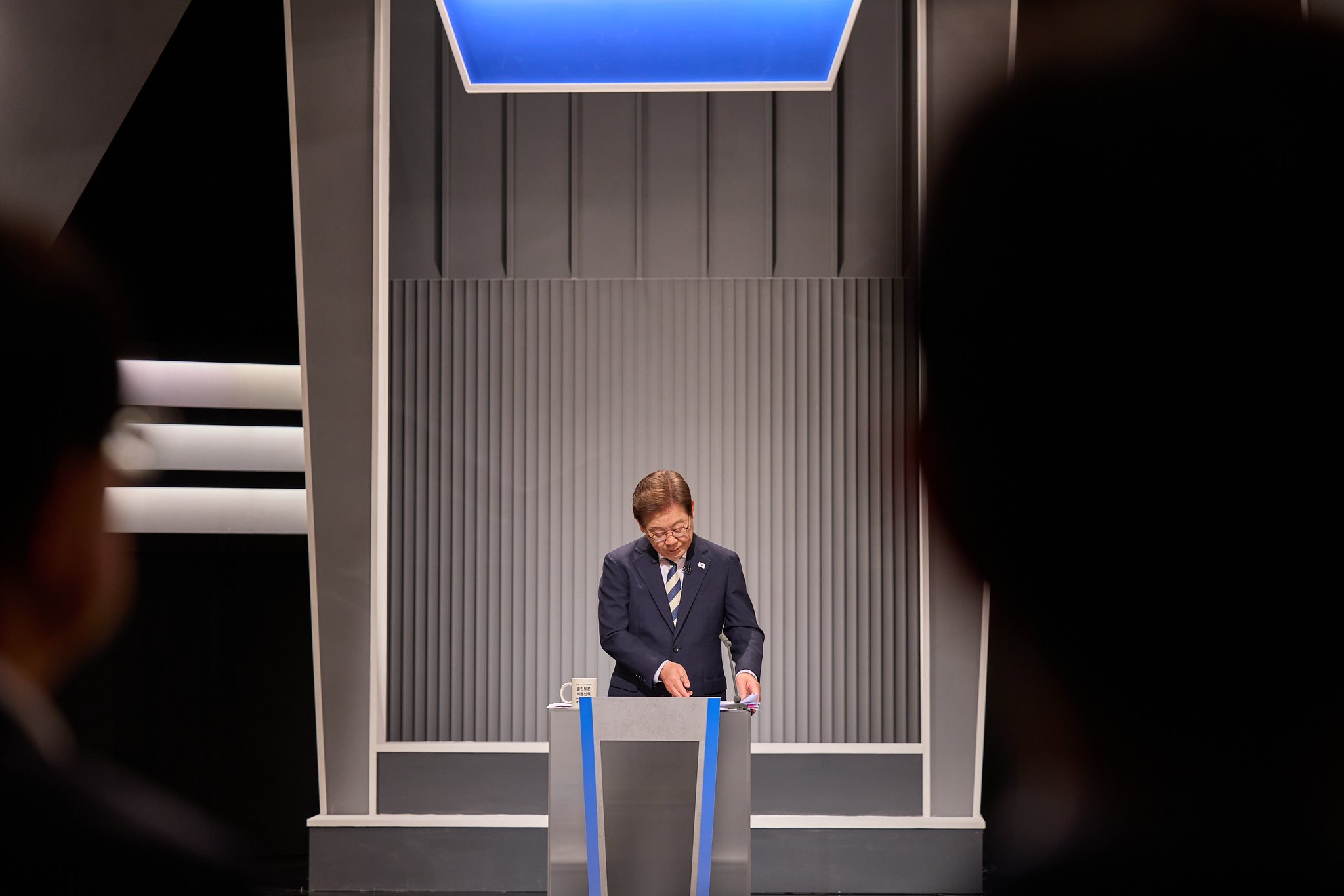
On the campaign trail, Lee sought to dispel doubts about his commitment to the longstanding military alliance between the US and South Korea. (File Photo: 이재명/Facebook)
The new South Korean president, Lee Jae-myung, calls himself a foreign policy “pragmatist”. He says he is driven by South Korea’s national interest, rather than ideology, and has spoken of his desire to improve relations with China and North Korea.
Under the former president, Yoon Suk Yeol, South Korea’s relationship with these countries came under increasing strain. Yoon adopted a confrontational stance toward North Korea, and openly sided with Washington in its rivalry with Beijing. Lee’s vision may bring his government into conflict with the Trump administration.
On the campaign trail, Lee sought to dispel doubts about his commitment to the longstanding military alliance between the US and South Korea. He repeatedly described Seoul’s relationship with Washington as the “basic axis of our diplomacy”.
But he signalled that there would be some rebalancing of relations under his leadership, stressing that South Korea should not rely solely on the US. This reflects the fundamental belief of liberal politicians in South Korea. While acknowledging the importance of ties with the US, they want a more balanced relationship with other regional powers like China.
Lee says closer relations with China will occur within the framework of South Korea’s alliance with the US. But, with Washington and Beijing battling for global influence, this is still likely to become a major point of tension with the US. The Trump administration has taken a hawkish approach towards China and wants its allies to do the same.
Lee, for his part, has stated that South Korea should not be forced to choose between the US and China, saying: “We should not put all our eggs in one basket”. And he has signalled that his government will resist efforts by Washington to draw South Korea into any conflict with China over Taiwan or territorial disputes in the South China Sea.
The Lee government clearly has a delicate balancing act ahead when it comes to the two superpowers. Trump has previously criticised the amount South Korea pays for the US forces stationed on its soil, while recent reports suggest he is considering the withdrawal of about 4,500 US troops from the country.
Relations with Pyongyang
Another of Lee’s pressing foreign policy issues is how to deal with the North Korean threat. Yoon’s government avoided dialogue with the North and encouraged the spread of outside information across the border.
Over the past decade, in response to North Korea’s improved nuclear and missile capabilities, public opinion in South Korea has shifted in favour of developing an independent nuclear weapons programme.
This is not a strategy the Lee government will pursue. The Democratic party, of which Lee is a member, has historically advocated a policy of engagement and peaceful coexistence with North Korea.
From 1998 to 2008, and then again from 2017 to 2022, liberal governments in South Korea pursued a so-called “sunshine policy” towards the North. The goal was to reduce tension through engagement, with the ultimate goal being to create the conditions for unification.
In his inaugural address on June 4, Lee said his government would deal with North Korean aggression with “strong deterrence” – referring to the military alliance with the US. But he also elaborated on the need to again reopen channels of communication with North Korea to deliver peace through talks and cooperation. He added: “Peace is always cheaper than war”.
In a signal of his intent for renewed engagement with the North, Lee has nominated the former unification minister, Lee Jong-seok, as chief of the National Intelligence Service. Lee Jong-seok was the architect of South Korea’s policy towards the North between 2003 and 2008, during the presidency of Roh Moo-hyun.
However, the geopolitical landscape has changed in recent years. In January 2024, North Korean leader Kim Jong-un declared South Korea an “enemy” nation and said the North would no longer be working toward reunification. North Korea has since then stopped any contact with the South and has ceased any economic collaboration.
South Korea’s sunshine policy had seen the development of projects such as the Kaesong Industrial Complex, which involved South Korean businesses establishing factories in North Korea and employing North Korean workers.
North Korea is a foreign policy issue in which the Trump administration and the Lee government may pursue similar objectives. Trump has also signalled that he is seeking to renew dialogue with North Korea, and has hinted at the possibility of future summits to discuss a nuclear agreement.
Trump’s first term saw him become the first US president to meet with a North Korean leader while in office, though he ultimately made no progress in restraining North Korea’s nuclear programme.
Kim is very unlikely to be responsive to efforts by either country to engage in dialogue. North Korea has forged a close partnership with Russia in recent years, which has even seen it send troops to fight against Ukraine, and no longer considers engagement with the US or South Korea necessary.
It is instead banking on making significant advances in military technology. Russian assistance has reportedly already contributed to improvements in North Korea’s missile guidance systems, while Russia has also supplied North Korea with advanced air defence systems.
The new Lee government faces a very challenging international environment. The North Korean threat is growing, the US security guarantee is weakening, and it will have to resist Trump’s attempts to draw South Korea into a regional military network to contain China. How it meets all of these challenges will become clear in the months and years ahead.
Christoph Bluth, Professor of International Relations and Security, University of Bradford
This article is republished from The Conversation under a Creative Commons license. Read the original article.




















