

By Jonathan Hamilton-Diabo, University of Toronto, The Conversation
With the death of Pope Francis, his apology for residential schools in Canada and its impacts needs to be explored nearly three years after it was delivered.
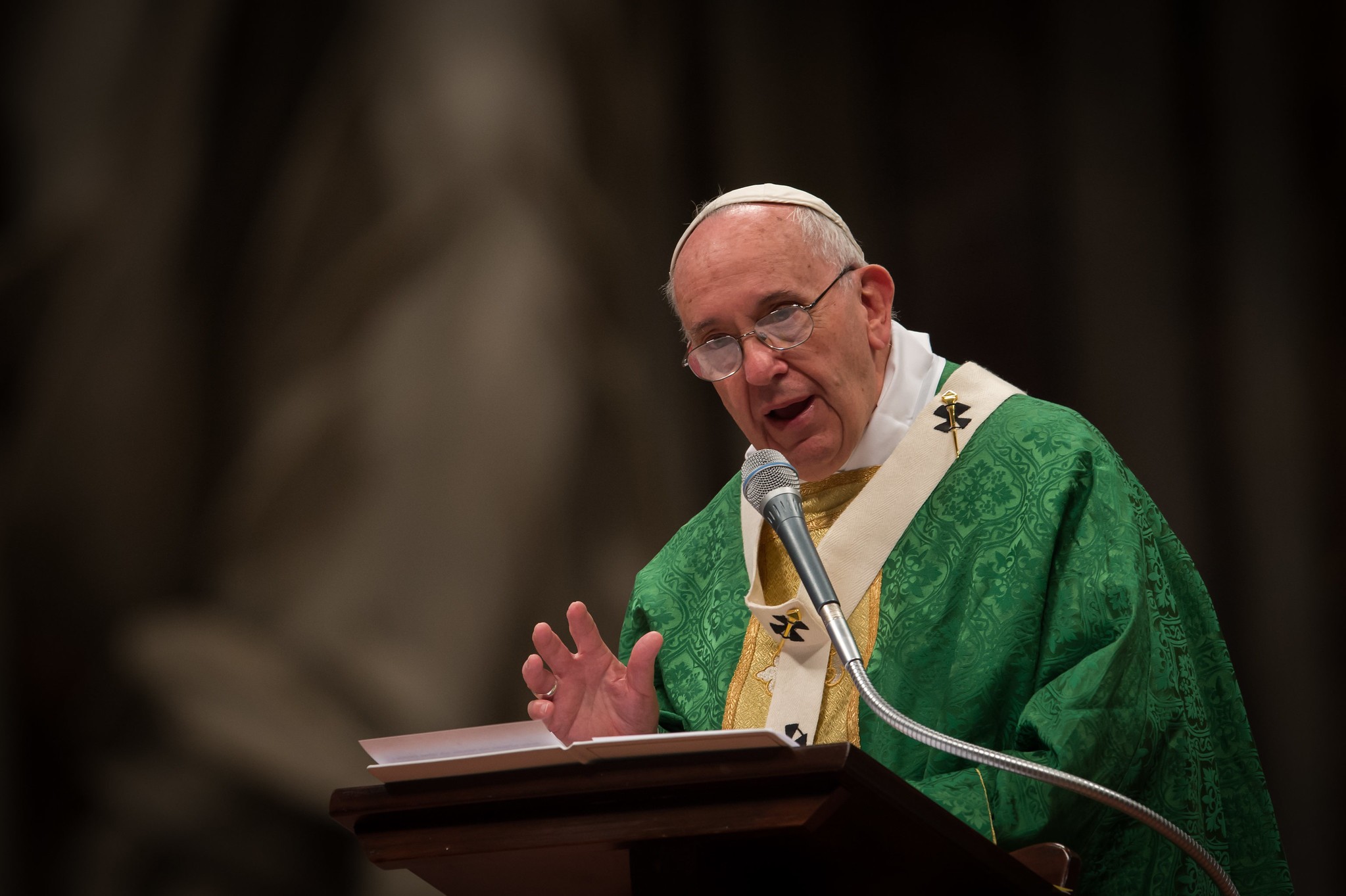
On July 25, 2022, in Maskwacîs, Alta., Pope Francis apologized on behalf of the Roman Catholic Church for its role in the residential school system:
“I am sorry. I ask forgiveness, in particular, for the ways in which many members of the church and of religious communities co-operated, not least through their indifference, in projects of cultural destruction and forced assimilation promoted by the governments of that time, which culminated in the system of residential schools.”
This formal apology, and other statements the Pope made in Canada, came seven years after the Truth and Reconciliation Commission’s 2015 Final Report. The TRC called for the Pope “to issue an apology to Survivors, their families, and communities for the Roman Catholic Church’s role in the spiritual, cultural, emotional, physical, and sexual abuse of First Nations, Inuit, and Métis children in Catholic-run residential schools.” This was to occur, in Canada, within one year.
It is important to understand circumstances leading to the Pope’s Maskwacîs apology, the reaction at the time and its significance for the relationship between Indigenous Peoples and the Catholic Church.
I previous explored these themes as the Pope arrived in Canada. I questioned whether the apology would contribute to healing or deepen the distrust in the church. As a Mohawk faculty member raised in Catholicism, who teaches in the fields of theology and education, and has family members who attended these schools, I seek to revisit this question nearly three year later.
Seven years after TRC final report
The Pope’s Maskwacîs apology wasn’t the first time a statement was issued by a member of the Catholic Church. The Missionary Oblates of Mary Immaculate (the Oblates) apologized in 1991 “for the part we played in the cultural, ethnic, linguistic and religious imperialism” which “continually threatened the cultural, linguistic, and religious traditions of the Native peoples.”
This was followed by apologies offered by numerous bishops; however, they were inadequate, considering other leaders, such as the Moderator (United Church of Canada) and the Primate (Anglican Church of Canada), delivered the statements on behalf of their denominations respectively in 1986 and 1993, followed by other Protestant denominations.
The importance of who offers an apology cannot be overstated. In 1998, Jane Stewart, the minister of Indian Affairs of Canada, read a Statement of Reconciliation acknowledging the tragedies experienced by students that attended residential school. Indigenous leaders criticized the statement, sensing a lack of ownership or not taking responsibility. It came across as an expression of regret rather than an apology, and was further rejected, as Prime Minister Jean Chrétien didn’t offer it.
In 2008, Prime Minister Stephen Harper issued an apology on behalf of the country. Although met with mixed reviews, the importance of the prime minister providing it cannot be ignored. The same holds true for the Catholic Church.
Length of time to materialize
In July 2022, Pope Francis apologized before thousands of people: survivors, their families, community members and leaders. This was significant, considering the length of time for this to materialize.
Other denominations begin this process much earlier. The pressure on the Catholic Church mounted, particularly given that it was the last mainline church to have its leader apologize and it operated about 60 per cent of the residential schools. To consider how the apology finally arrived, several events need to be understood.
In 2021, reports on potential unmarked burial sites on former residential school grounds in Kamloops, B.C., began to surface. News of these discoveries not only circulated nationally, but globally. Shortly after this, other residential school sites were being investigated for unmarked burial sites.
Reopened wounds, anger
Extensive work had already been done around unmarked burial sites: The TRC’s Final Report dedicated a volume on this issue; in 2007, The Working Group on Missing Children and Unmarked Burials was established, whose members comprised national Indigenous organizations, former students, archivists and the federal government; work at the Mohawk Institute was already in progress. Yet, the nation was stunned. Wounds were reopened for many Indigenous people.
From this pain, a great amount of anger was directed towards the Catholic Church.
Church buildings were vandalized or set on fire. As many were in First Nations territories, this created tensions, since there were still community members that were part of the Christian tradition.
This outcry reignited attention towards residential schools and the Church. The Vatican invited a delegation of survivors to meet the Pope in March 2022. This visit provided an opportunity for delegation members to share their stories, however its location is important to consider. The meeting took place at the Vatican, potentially escalating the power imbalance between the Church and First Nation, Inuit and Métis delegates.
Survivors speak about meaning
Members of the delegation invited the Pope to visit Canada. Martha Grigg, an Inuit Elder and a residential school survivor, spoke about how his visit would be meaningful to former residential school students and their families. Pope Francis offered an apology to the delegates, committing to travelling to Canada.
Months after the Vatican trip, the Pope came to Canada to deliver a formal apology. Reactions varied from acceptance to outright rejection, while a “wait-and-see” approach was also adopted.
Some expressed how the apology “has helped to open the door for survivors and their families to walk together with the church for a present and future of forgiveness and healing.” Discontent was voiced about certain issues, such as the Doctrine of Discovery, or omitting a commitment to allow access to records.
Without apology, other measures stalled
Some of the impacts of the apology may not be felt instantaneously. It represents hope for a better relationship and a starting point for healing. Without any apology, any measures that the church offered would not gain traction. The lack of a papal apology over many years kept this as the focal point, further damaging the relationship between the Church and many Indigenous people and continuing to erode trust.
Since then, the Catholic Church has undertaken steps to address the harms of the residential schools and contribute to healing process. In 2023, the Vatican released a statement on the Doctrine of Discovery, indicating the Catholic Church was distancing itself from this concept and repudiating it, as it was not part of Church teachings.
The Canadian Conference of Catholic Bishops (CCCB) and the Oblates committed to developing a process for the transparent access to records. Barriers to church records prevented access to documents that could help locate family members who never came home.
The bishops pledged to raise $30 million for the Indigenous Reconciliation Fund to support activities dedicated to healing and reconciliation in 2021. The apology energized the campaign, raising half of the funds ahead of the five-year timeline.
In a July 2024 statement, the CCCB said it has “established structures … to support dialogues and foster greater understanding of Indigenous cultural, linguistic and spiritual traditions and values,” and wishes to deepen academic collaborations to understand of the Doctrine of Discovery.
Healing journey is long, apology was necessary
While small advancements in reconciliation activities stemming from Pope Francis’ apology have occurred, the healing journey is long. Distrust is evident as the Church’s sincerity in this process is questioned; however, the apology presents an opportunity to renew relationships and forge new paths together.
The criticisms of how and when it transpired and even what was said will always remain, however the apology was necessary.
It was necessary for many survivors, who felt recognized. It was necessary for the Church to formally acknowledge its responsibility. It was necessary for Pope Francis to offer the apology directly to Indigenous people.
Jonathan Hamilton-Diabo, Assistant Professor, Teaching Stream; June Callwood Professor of Social Justice; Special Advisor on Indigenous Initiatives, Victoria University, University of Toronto
This article is republished from The Conversation under a Creative Commons license. Read the original article.




















