

By Shelley Boulianne, Mount Royal University, The Conversation
For some people, protests don’t seem like rational and responsible forms of political participation in a democratic system. According to the latest World Values Survey (2017-2022), 28.6 per cent of Canadians and 27.7 per cent of Americans said they’d would never, under any circumstances, attend a peaceful demonstration.
Yet citizens often lack opportunities to influence government decisions outside of voting during elections, leaving them feeling powerless about the direction of their elected government.
From this perspective, it’s easy to understand why millions may attend protests against Donald Trump’s tariffs, his annexation threats and other policy decisions.
Some argue that citizens should email, call or write letters to political leaders, but these individualistic activities are easily ignored because they occur behind closed doors. The visibility of protests, combined with a large turnout, helps raise awareness of issues among other citizens and political leaders.
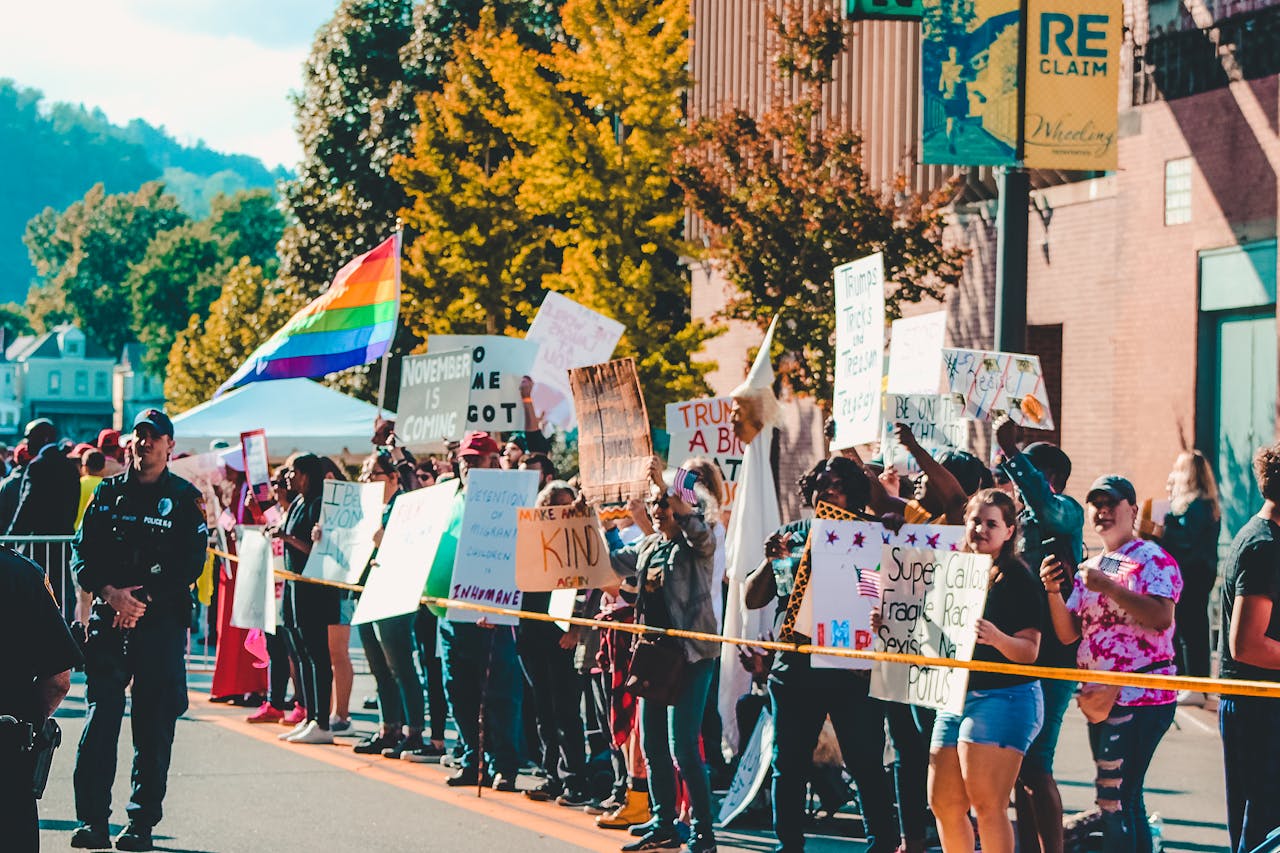
Protests serve a critical function in a democratic system — they offer a collective and visible method for citizens to express their political views. These events can attract millions of people — many more than the number of respondents to public opinion polls or attendees at government public consultation events.
Perceptions of effectiveness
When deciding whether to participate in a march or demonstration, anger, grievances and discontent are important, but these sentiments alone are insufficient to motivate people to act.
Instead, citizens must interpret their experiences as unjust or unfair to feel compelled to participate in a protest. Likewise, people must believe that the protest will be effective in influencing political leaders.
In 2019, I conducted an online survey in four countries — the U.S., Canada, the U.K and France — asking respondents to rate the effectiveness of street marches and demonstrations in influencing political leaders.
Across the four countries, the averages were similar, based on the five-point scale ranging from “not at all” to “a great deal.” And those who believed that protests were effective were far more likely to report having participated in a march or demonstration in the past 12 months compared to those who did not view protests as effective.
Who protests and why?
The decision to take part in a protest involves weighing a variety of factors that may encourage or discourage participation, as well as views about the effectiveness of public protests.
People will often join if they’re asked to, and whether they’re asked to depends on their ties to others who are also interested in attending, or if they’re a member of an organization that encourages its members to attend.
This social network effect is as important, if not more important, than simply being angry or frustrated.
People who identify as left-wing are more likely to participate in marches and demonstrations. Historically, this has been true in the United States, but in contemporary research, individuals on both the right and the left sides of the political continuum participate in protest.
Furthermore, these ideological differences vary by country and time period. Whether a protest attracts those from the right versus the left depends on the issue. Liberals tend to protest against racism, for example, while conservatives protested COVID-19 restrictions.
Paying attention
Rather than focusing on left vs. right, research should pay attention to political interest. Are people paying attention to current events or what’s going on in government? Political interest precedes the development of ideological views.
Furthermore, people can only form their views about the effectiveness of protest once they start paying attention to politics.
The recent global Hands Off protests attracted citizens who are dissatisfied with Trump’s newly imposed tariffs and other recent government decisions, such as firing thousands of federal civil servants, dismantling of the Department of Education, changes to immigration enforcement and Social Security administration and the termination of health and science funding, especially those with a diversity, equity and inclusion focus.
These demonstrations were part of a cycle of protests, similar to those observed in 2017 after Trump’s first election.
To truly understand who participates and who does not in public protests, we need to consider social connections, views about the effectiveness of protest and people’s interest in politics.
Shelley Boulianne, Professor in Communication Studies, Mount Royal University
This article is republished from The Conversation under a Creative Commons license. Read the original article.




















