

By Sylvanus Kwaku Afesorgbor, University of Guelph; The Conversation
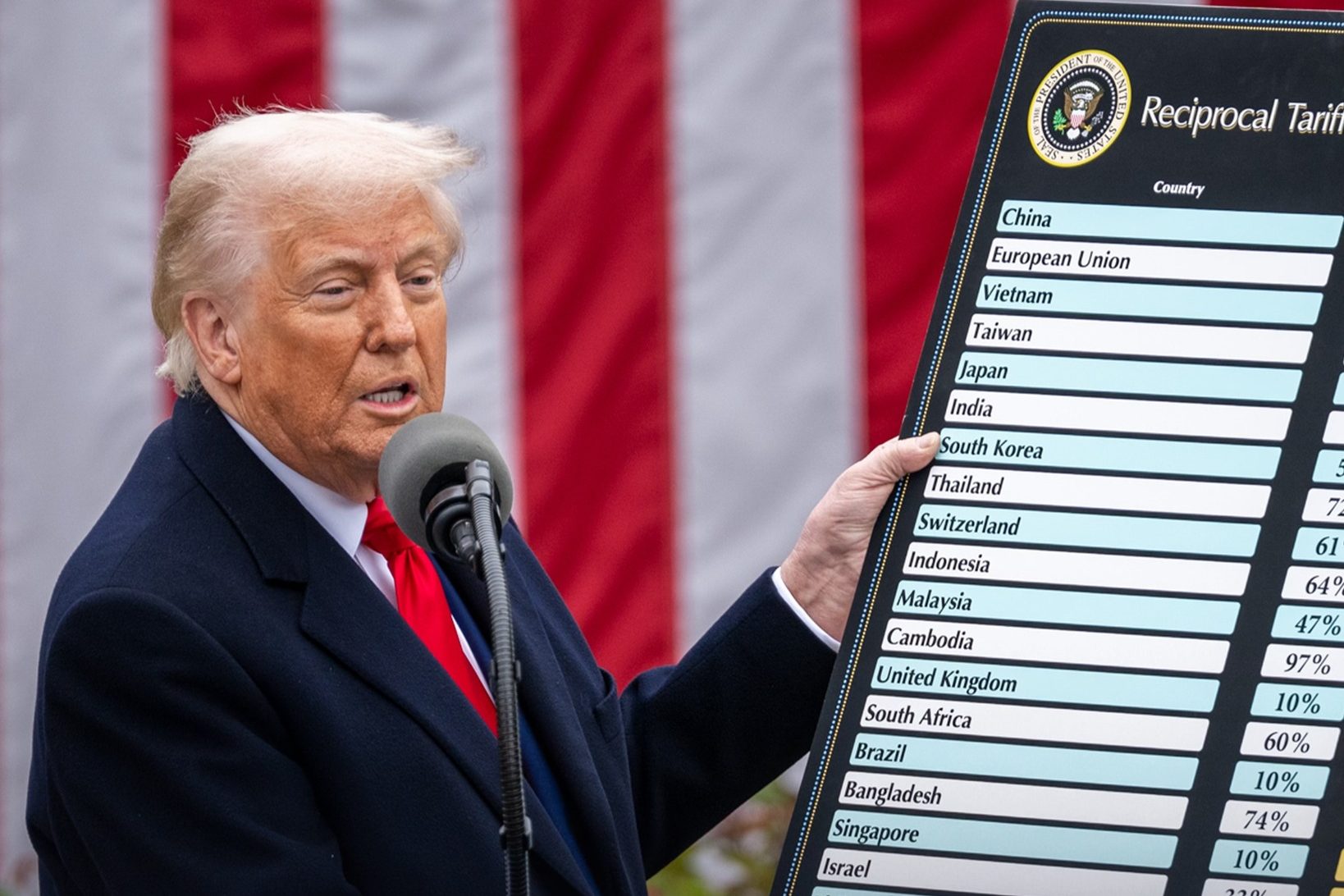
Although Canada was not directly targeted by Trump’s reciprocal tariffs, its steel and aluminum industries remains significantly impacted by Section 232 tariffs. (File Photo: The White House/Facebook)
United States President Donald Trump’s so-called Liberation Day introduced sweeping reciprocal tariffs on approximately 60 countries on April 2.
Canada, a major U.S. trading partner, was largely spared from these reciprocal tariffs thanks to the Canada-United States-Mexico Agreement (CUSMA) — a free trade agreement renegotiated and signed by the Trump administration in 2020.
Although it may appear Canada has avoided the worst of the tariff measures, other existing tariffs could still significantly impact Canadian trade with the U.S.
Currently, Canada faces other tariffs on its exports to the U.S., which Trump has linked to concerns over illicit drugs and immigrants crossing the border. Under these measures, the U.S. has imposed a 25 per cent tariff on non-CUSMA compliant goods. Canadian energy and potash exports that are not CUSMA-compliant have been hit with a 10 per cent tariff.
If the current tariffs related to fentanyl and migration are lifted, CUSMA-compliant goods would continue to enjoy preferential treatment, while non-compliant goods would then be subject to a 12 per cent reciprocal tariff.
What makes a product CUSMA-compliant?
Under CUSMA, a product is considered compliant if it originates from any of the three member countries: Canada, the U.S. or Mexico. This means the product satisfies the originating status according to the rules of origin criteria listed in the CUSMA agreement.
To be deemed originating, some of the criteria includes, for instance:
- That the product is wholly produced in the territory of one of the member states.
- That, if the product is produced with non-originating materials, the regional value of content must not be less than product specific rules of origin.
- That the product has undergone substantial transformation or a change in tariff classification.
Regional value content is the difference between the transaction value of a product adjusted for costs related to international shipping of the good, and the value of non-originating material. It is expressed as a percentage of the transaction value.
When a product qualifies for an originating status, it is considered CUSMA-compliant. It then qualifies for a preferential treatment, which means it can enter the CUSMA market duty-free or at a reduced rate.
Products exported under CUSMA
Under the CUSMA tariff schedule, which outlines tariff commitments on Canadian products, the vast majority of Canadian exports to the U.S. are eligible for preferential treatment.
In fact, more than 98 per cent of tariff lines and more than 99.9 per cent of bilateral trade are CUSMA-compliant, meaning Canadian exporters can claim preferential access if their products meet the agreement’s rules of origin.
Based on the Tariff Schedule of the United States, 98.4 per cent of Canadian products enter the U.S. duty-free, while only 1.6 per cent face tariffs. These protected products are primarily agricultural goods considered sensitive by the U.S. — notably dairy and sugar.
These protected items are typically subject to tariff rate quotas, which allow limited quantities to enter at a lower (within-quota) duty rate, while imports beyond the quota are permitted at a higher (over-quota) tariff rate.
Steel and aluminum tariffs
Although Canada was not directly targeted by Trump’s reciprocal tariffs, its steel and aluminum industries remains significantly impacted by Section 232 tariffs. Importantly, these tariffs cannot be waived due to CUSMA.
Section 232 of the Trade Expansion Act of 1962 authorizes the U.S. president to restrict the import of certain goods if they threaten national security. Under this provision, the Trump administration has imposed a 25 per cent duty on steel, aluminum and related products.
Steel and aluminum products are crucial to Canada, with total exports of iron and steel, iron or steel products and aluminum products reaching $34.8 billion in 2024. It’s hard to imagine the U.S. justifying tariffs on Canadian steel and aluminum on national security grounds, given Canada’s longstanding role as one of its closest allies.
Automotive tariffs
The automotive sector has also been targeted with the Section 232 tariffs. As Canada’s second-largest export to the U.S., valued at over $72.3 billion in 2024, the industry relies heavily on an integrated cross-border supply chain. That makes the sector particularly vulnerable to tariffs.
The imposition of a 25 per cent tariff on non-U.S. content in vehicles threatens the profitability of Canadian producers and reduces production efficiency.
Determining non-U.S. content at the border will lead to significant inefficiencies, including long wait times, as companies attempt to prove American content in vehicles. This process will also demand an excessive amount of documentation, imposing unnecessary costs on businesses.
This tariff also undermines CUSMA’s rules of origin, which allow vehicles with at least 75 per cent North American content to qualify for duty-free access. The Section 232 measure effectively penalizes compliant vehicles, creating a trade barrier inconsistent with the spirit of the agreement.
The way forward
The uncertainty created by the Trump administration’s unilateral trade policies poses a serious threat to Canada and the global economy as a whole. With Trump’s presidency just beginning, both Canada and the rest of the world must brace for the economic disruptions his policies may bring.
At the bilateral level, Canada appears to have exhausted nearly all diplomatic avenues to persuade the Trump administration to reverse its harmful tariff measures. Regionally, while Trump renegotiated the CUSMA agreement, his actions have undermined its spirit and violated key provisions.
At the multilateral level, the World Trade Organization (WTO) has been significantly weakened. Its dispute settlement mechanism has been rendered ineffective due to the U.S. blocking the appointment of new judges to its appellate body.
The only faint silver lining is that, despite threats during his first term to withdraw from the organization, Trump has not followed through. This suggests he still holds at least some degree of respect or recognition for the WTO’s role in global trade.
The world is currently navigating a period of deep uncertainty and confusion. Canada must stand in solidarity with the international community to exert collective pressure on the U.S. A co-ordinated global response could compel Trump to reconsider his unilateral trade policies.
Although Canada has been granted a reprieve from the new reciprocal tariffs, this should not lead to complacency. Instead, Canada should continue to collaborate with other nations to push for a more stable and rules-based global trading system. This is the way to protect Canada’s interests and reinforce multilateral co-operation.
Sylvanus Kwaku Afesorgbor, Associate Professor of Agri-Food Trade and Policy, University of Guelph
This article is republished from The Conversation under a Creative Commons license. Read the original article.




















