

By Jay L. Zagorsky, Boston University; The Conversation
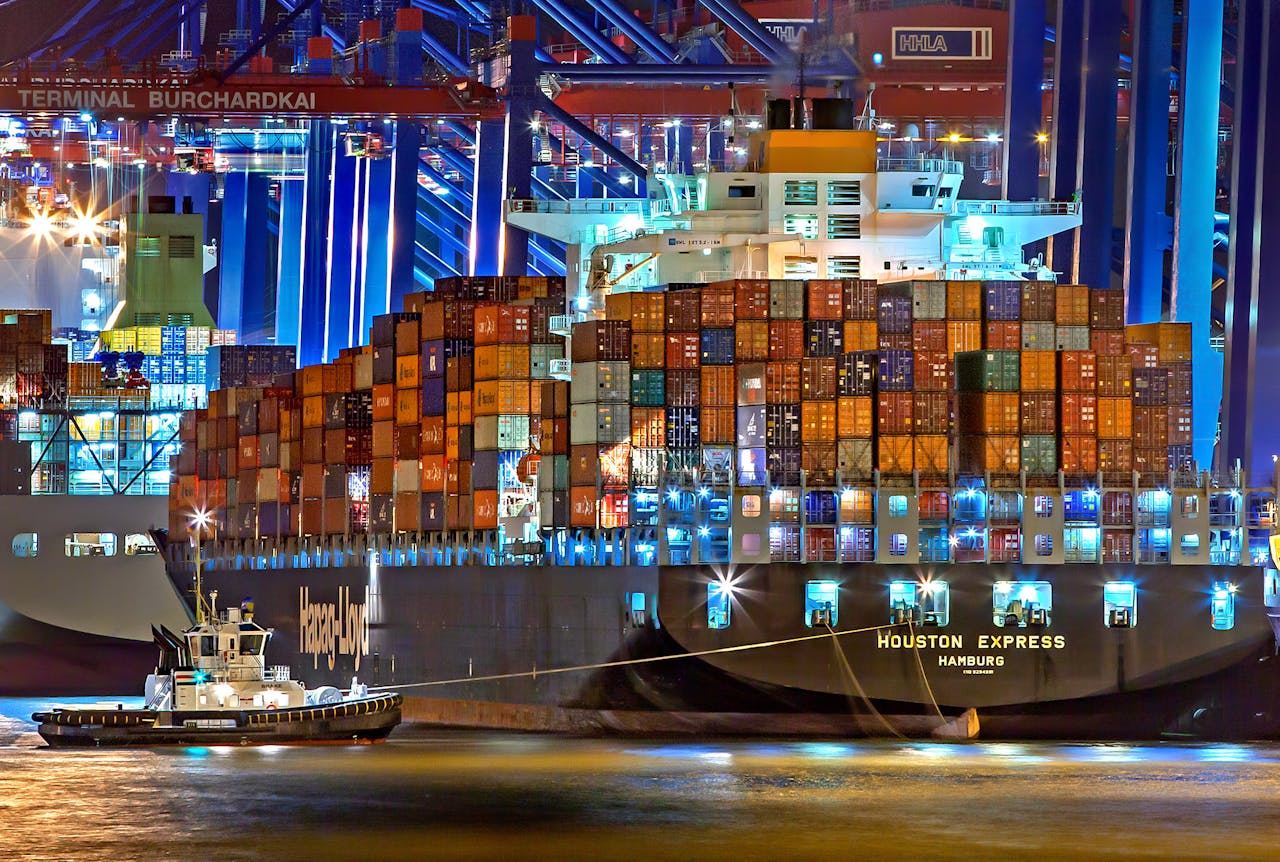
But while high-technology equipment often gets the headlines, imports from Taiwan are far broader – and the U.S. would face several economic shocks if Taiwan suddenly stopped exporting. (Pexels Photo)
What would the United States stand to lose economically if its current access to the Taiwanese market were upended or totally restricted?
This seemingly theoretical question about the longtime U.S. trading partner has taken on more relevance in the past several weeks. First, longtime fears about a potential Chinese invasion of the island – which Beijing claims as its own – were magnified as China increased military pressure by sending patrols, firing live ammunition nearby, practicing blockading the island and even publicly revealing the existence of new barges that might be used in an invasion. If China uses force, Taiwan’s manufacturing capacity could be destroyed.
Then on April 2, 2025, President Donald Trump announced a new 32% tariff on imports from Taipei, excluding semiconductors. Taiwan described the new tariffs, part of a radical upending of U.S. trade practices, as “deeply unreasonable.” They could also be deeply painful to U.S. consumers given the outsize role Taiwan imports play.
The U.S. State Department calls Taiwan an important U.S. partner in “semiconductors and other critical supply chains.” But as I learned studying trade data and visiting the small but thriving island last fall, the U.S. depends on Taiwan for more than just sophisticated computer chips. In 2024, Taiwanese products constituted 3.6% of all U.S. imports.
Overall trade figures
Trade figures are known in detail because almost every government carefully tracks the contents of all shipping containers, cargo flights and bulk deliveries that legally leave and enter their borders. These figures are published online and broken down into very fine detail using a system called the Harmonized Tariff Schedule, or HTS. The HTS shows the tax or duty that must be paid for each kind of item and from every kind of country.
In 2024, the U.S. exported US$1.7 trillion worth of goods to the world. Since few of us can conceptualize trillions, that is about $5,000 for every man, woman and child in the U.S.
For its part, Taiwan in 2024 exported about that same amount per resident of the island just to the U.S., $5,000 – or about $90 billion overall. The U.S. is Taiwan’s second-biggest trading partner, after mainland China. Looking at their total exports, Taiwan shipped to the entire world about $20,000 worth of items for every resident.
The vital technology component
Not surprisingly, Taiwan’s biggest exports to the U.S. are computers, chips and other electronic hardware such as power supplies. These computer chips are so important that they were specifically excluded from the new tariffs.
However, $90 billion of exports dramatically underestimates the amount of Taiwanese electronics that end up in U.S. hands. For example, the main chip inside all Apple iPhones is Taiwanese. However, these chips are sent from Taiwan to mainland Chinese factories where the phones are assembled. When these iPhones are exported from mainland China, the value of the chips inside the phone is not counted as U.S. imports from Taiwan. Instead, the whole phone is counted as an import from mainland China and slapped with a tariff.
The building industry
But while high-technology equipment often gets the headlines, imports from Taiwan are far broader – and the U.S. would face several economic shocks if Taiwan suddenly stopped exporting.
First, the U.S. building industry could grind to a halt because Taiwan is a major producer of drywall screws. Though small and cheap, that’s a very significant product, given the prominence of drywall in the interior walls of almost every house, office and factory.
Overall, the U.S. uses a massive amount of drywall for new construction and remodeling. In 2024, the country consumed about 28 billion square feet of wallboard. That amount is enough to cover almost the state of Rhode Island.
To hang drywall, every 100 square feet of the sheets needs about 125 screws. And the vast majority came last year from Taiwan. The U.S. imported over two-thirds of a billion dollars’ worth of the screws; the screws weighed over half a billion pounds.
While the U.S. does make screws, domestic screw manufacturers primarily focus on high-value parts such as screws needed for airplanes, rocket ships and other performance vehicles, not lower-value screws whose wholesale cost is slightly more than a dollar a pound.
Beyond screws, Taiwan is a major producer of tools. For example, approximately two-thirds of all socket wrenches, band saws, blowtorches, air compressors and grinders imported into the U.S. come from that island. Losing access to tools is not as crucial as losing access to the screws because many tools last a long time. But finding new suppliers is not trivial.
The other basket of imports
Finally, Taiwan is also a big U.S. supplier of sports goods.
The country is a major producer of bicycles, with manufacturers such as Giant. In 2024, the U.S. imported from Taiwan over a quarter of a billion dollars in just bike parts, which U.S. manufacturers such as Specialized and Trek use when assembling bikes.
Moreover, Taiwan controls a few key parts of the bike market. For example, over half of all bicycle crank sets, derailleurs and brake parts came from Taiwan. Without these products it is impossible to pedal, shift and even stop a bike.
Taiwan is also one of the world’s leading suppliers of golf clubs, with the U.S. in 2024 importing about a quarter of a billion dollars’ worth of clubs from the island. To go along with the clubs, Taiwan also sent half a billion golf balls. Given that about 25 million people play on golf courses in the U.S. each year, that works out to 20 balls per player in just 2024.
Finally, the island sent over a third of a million lacrosse sticks last year, which is almost one new stick for every member of the USA Lacrosse federation.
All together, the data shows that not just Silicon Valley should be worried about geopolitical factors that disrupt imports from Taiwan. Taiwan might be a small island, but as the story of David and Goliath reminds us, size and impact are not related.
Jay L. Zagorsky, Associate Professor Questrom School of Business, Boston University
This article is republished from The Conversation under a Creative Commons license. Read the original article.




















