

By Noel Anderson, University of Toronto, The Conversation
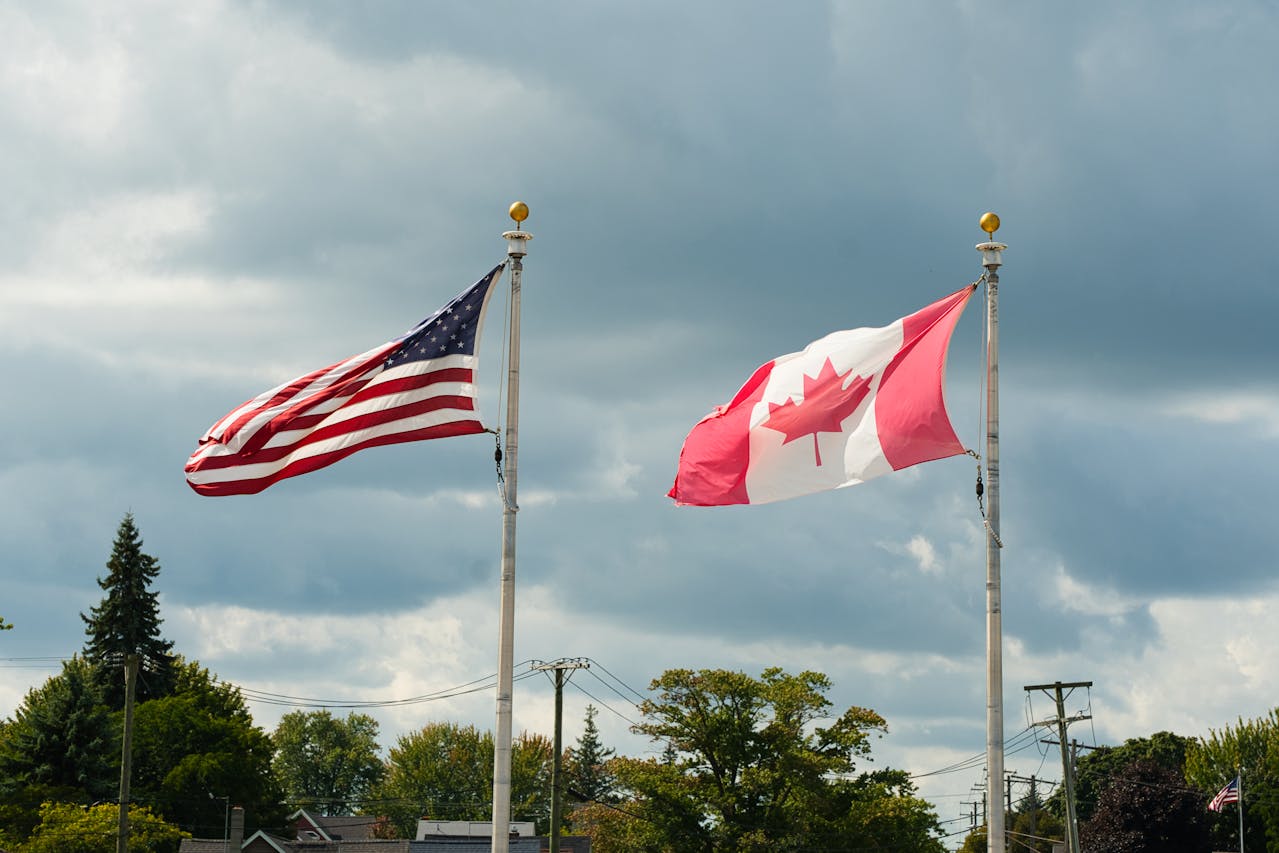
Canada and the U.S. have enjoyed one of the most peaceful bilateral relationships in modern history, marked by deep economic integration, extensive cultural ties and close military co-operation. (Pexels Photo)
Two months ago, the idea that the United States posed a military threat to Canada was unthinkable. Today, discussions about a potential American annexation attempt are dominating Canadian media headlines and are a primary issue of concern among the country’s government officials.
How did we get here? And should Canadians be worried?
While the Donald Trump administration’s rhetoric and behaviour toward Canada is disturbing, the prospect of American military aggression remains remote. Military, economic and geopolitical realities ensure any attack on Canada would be a self-defeating blow.
How did we get here?
Canada and the U.S. have enjoyed one of the most peaceful bilateral relationships in modern history, marked by deep economic integration, extensive cultural ties and close military co-operation.
Yet, in an extraordinary statement earlier this month before he was replaced as prime minister by Mark Carney, Justin Trudeau asserted that Trump was pursuing a strategy designed to collapse the Canadian economy to pave the way for annexation.
Since his re-election, Trump has demonstrated a routine disregard for Canadian sovereignty, with repeated references to Canada as the “51st state” and to Trudeau as its “governor.”
He has referred to the Canada-U.S. border as “an artificial line of separation” and questioned the validity of the 1908 treaty that finalized it.
Senior Trump advisers have claimed that “Canada is not a real country,” and have reportedly pushed for its removal from the Five Eyes intelligence-sharing alliance. Trump’s instigation of a trade war against Canada is the latest, and most explicit, demonstration of his coercive intent.
Violating international law
An unprovoked military attack in pursuit of annexation would violate international law. But if the order was framed as a response to a fabricated threat, invoking border security or counterterrorism initiatives, American military commanders would nonetheless face pressure to comply.
In this context, Trump adviser Peter Navarro’s bizarre claim that Canada has been “taken over by Mexican cartels” is troubling. After all, Trump recently designated drug cartels as “terrorist organizations,” raising speculation about possible military action abroad.
Trump’s dismissal of U.S. military leaders and what are known as “judge advocates general” is equally concerning.
U.S. Secretary of Defense Pete Hegseth’s justification for the purge — that it was necessary to remove “roadblocks to orders that are given by a commander-in-chief” — suggests that the erosion of institutional checks that can impede the use of force was precisely the administration’s goal.
Should Canadians be worried?
All of this is understandably worrying for Canadians, especially amid an unpredictable trade war. But an American invasion is highly unlikely.
It’s true that if the U.S. military challenged the Canadian Armed Forces, it would handily win. But that’s why a Canadian response would not take the form of a conventional confrontation. Instead, the country would likely employ decentralized military resistance and irregular warfare tactics — and would have several advantages in the approach.
Canada’s rugged terrain — characterized by dense forests, mountainous regions and vast northern territories — would provide ample cover for resistance forces to conduct ambushes, disrupt supply lines and impose asymmetrical costs. The long and undefended Canada–U.S. border would further complicate efforts to contain the resistance, permitting attacks on American soil.
The 800,000 Canadians currently residing in the U.S. provide additional opportunities for clandestine “fifth column” activities: espionage, sabotage and subversion. Simply put, an attempted military annexation would be folly in the extreme. It would tie down U.S. forces in Canada, would face blowback on American territory and unleash a transnational insurgency.
The costs of such a conflict would rapidly spiral. Beyond losses in personnel and equipment, the indirect American costs associated with lost trade would likely be as large as the direct costs of fighting. The strain this would impose on American society would quickly sap its already limited resolve: at present, just two per cent of Americans believe the U.S. should annex Canada using military force .
Meanwhile, the geopolitical fallout would be swift and far-reaching. The NATO alliance would be thrown into crisis and American relationships with other western powers would be shattered. China would no doubt exploit the turmoil to advance its global ambitions, while Russia would likely seize the opportunity to renew offensives in Ukraine and further destabilize Europe.
Elbows up
An attempt at military annexation of Canada would therefore be catastrophic for American power and prestige. Short of a desire for self-sabotage, there is no incentive for the U.S. to undertake such a reckless course.
Nonetheless, the Trump administration’s rhetoric and behaviour is a wake-up call for leaders in Ottawa. Successive Canadian governments have under-invested in the Canadian Armed Forces, while the country’s reliance on the American market for trade has left it perilously dependent on an increasingly mercurial neighbour.
Now is the time to take action to safeguard Canadian sovereignty. By investing in defence, diversifying trade relationships and strengthening internal resilience, Canada can chart a more secure and independent path forward. Now and for the foreseeable future, Canadians must keep their elbows up.
Noel Anderson, Assistant Professor, Department of Political Science, University of Toronto
This article is republished from The Conversation under a Creative Commons license. Read the original article.




















