
Canada News
Ottawa needs to step in before nuclear waste project goes any further

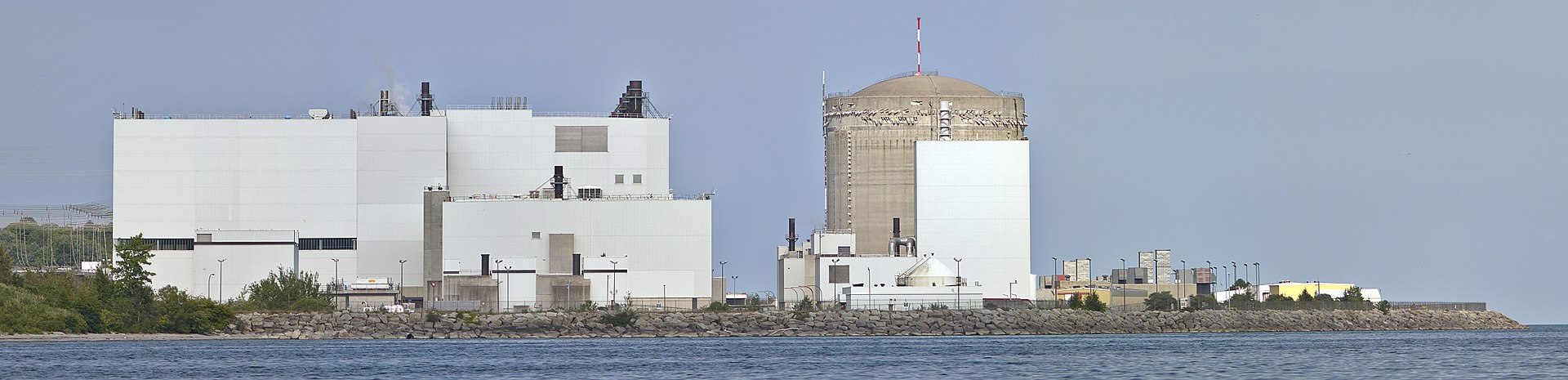
FILE: Darlington Nuclear Generating Station panorama. (Photo By Óðinn/Wikimedia Commons, CC BY-SA 2.5 ca)
In December, Eagle Lake First Nation applied for judicial review of a controversial decision to locate a nuclear waste dump in northwestern Ontario. The lawsuit says there were serious flaws in the process used to select the site, known as a deep geological repository (DGR).
While the Nuclear Waste Management Organization (NWMO) claims it used a “consent-based” approach to making the decision, some First Nations whose rights could be affected were excluded from the process of selecting the site for the $26-billion project to bury millions of used nuclear fuel bundles underground.
The project must still undergo impact assessment and regulatory processes, with operations not set to begin until at least the 2040s.
Before that long process even begins, however, the federal government should order the NWMO to obtain the consent of all potentially affected First Nations, in keeping with Ottawa’s legal duty to consult all affected Indigenous Peoples and with the NWMO’s public commitments.
This duty flows from Section 35 of the Constitution Act, 1982. According to a series of landmark rulings by the Supreme Court of Canada, Ottawa has a legal obligation to “consult and accommodate” Indigenous Peoples before taking actions that could negatively affect their inherent Aboriginal and treaty rights.
The extent of the required consultation and accommodation varies from case to case. In terms of nuclear waste disposal, it must also be informed by the United Nations Declaration on the Rights of Indigenous Peoples, which was recently incorporated into Canadian law through the federal United Nations Declaration on the Rights of Indigenous Peoples Act.
Article 29 of the declaration states that hazardous waste should not be stored or disposed of on Indigenous Peoples’ territories without their free, prior and informed consent.
According to Eagle Lake First Nation, the extent of consultation owed is also affected by the NWMO’s public commitments to seek the consent of affected First Nations.
Since 2005, the NWMO – a nuclear industry-funded private corporation established under the 2002 Nuclear Fuel Waste Act – has been searching for a DGR site in northwestern Ontario.
The act delegates significant responsibilities to the NWMO, including researching and implementing management solutions for high-level radioactive waste.
Decolonizing energy and the nuclear narrative of small modular reactors
Evaluating Canada’s pledge to triple nuclear capacity
Canada’s newest nuclear industry dream is a potential nightmare
The NWMO committed to finding a “willing host” for this DGR. In its reconciliation policy, the NWMO committed to seeking the free, prior and informed consent “of impacted Indigenous peoples before proceeding with the development of a deep geological repository.”
In late 2024, the NWMO announced that it had selected a site for the repository near Revell Lake in northwestern Ontario. Both the Township of Ignace and Wabigoon Lake First Nation had previously supported the proposed waste repository moving forward into impact assessment and licensing. Wabigoon Lake stressed this did not mean final approval but only agreement to begin the process.
In a statement announcing the selection of the site, NWMO CEO Laurie Swami claimed the decision was “consent-based” and “led by Canadians and Indigenous Peoples.”
Yet the decision to select Revell Lake was made despite significant regional opposition to the disposal of nuclear waste in northwestern Ontario. Numerous First Nations, regional Indigenous organizations and municipalities have passed resolutions and issued statements opposing the transportation, storage and disposal of nuclear waste in the region.
Revell Lake is located between Ignace and Wabigoon Lake First Nation. However, there are other First Nations that could be affected. While the NWMO has engaged these nations – and in some cases provided them with funds to “learn more” about its proposed repository – it excluded them from the decision to select Revell Lake.
Eagle Lake First Nation is one such community. It is about 80 kilometres downstream from the proposed repository site, which it claims lies within its traditional territory. Eagle Lake First Nation members continue to use the Revell Lake area in keeping with their treaty rights.
According to its legal challenge, Eagle Lake repeatedly notified the NWMO that it should be considered a host community for the site – as Ignace and Wabigoon were – and should therefore have the opportunity to provide or withhold consent.
However, the NWMO refused to grant it host status. Eagle Lake argues this was unreasonable, in bad faith and is a breach of the Crown’s duty to consult.
Eagle Lake is not the only First Nation dissatisfied with the NWMO’s approach to identifying willing host communities.
In a report issued just days before the Revell Lake announcement, the Assembly of First Nations (AFN) urged the NWMO to rethink its approach to Indigenous communities.
Instead of including only adjacent communities in the formal decision-making process, the AFN argued that consent should be obtained “from all impacted First Nations.”
The AFN said this consent should be sought “before any critical decisions are made” regarding the DGR site from all First Nations along its proposed transportation corridors, on the same watershed and those “whose rights and responsibilities extend beyond geographic proximity to the DGR site.” The NWMO has yet to publicly respond to the AFN’s recommendations.
Eagle Lake is not the only First Nation to assert its rights to withhold consent for nuclear waste disposal.
In a judicial review of approval of a different “low-level” nuclear waste repository in eastern Ontario, the Federal Court found that Kebaowek First Nation had not been properly consulted. The court said the Canadian Nuclear Safety Commission failed to apply the United Nations Declaration on the Rights of Indigenous Peoples when determining if consultations had been adequate.
In a partial victory for Kebaowek, the court ruled that the UN declaration must be used to interpret the duty to consult and that the commission erred in law by failing to do so.
The federal government should therefore fulfil its duty to consult First Nations regarding the disposal of high-level nuclear waste in northwestern Ontario.
Ottawa should issue a ministerial order to the NWMO to revisit its decision. The project should not proceed to environmental impact assessment unless all affected First Nations give their free, prior and informed consent.
This article first appeared on Policy Options and is republished here under a Creative Commons license.




















