

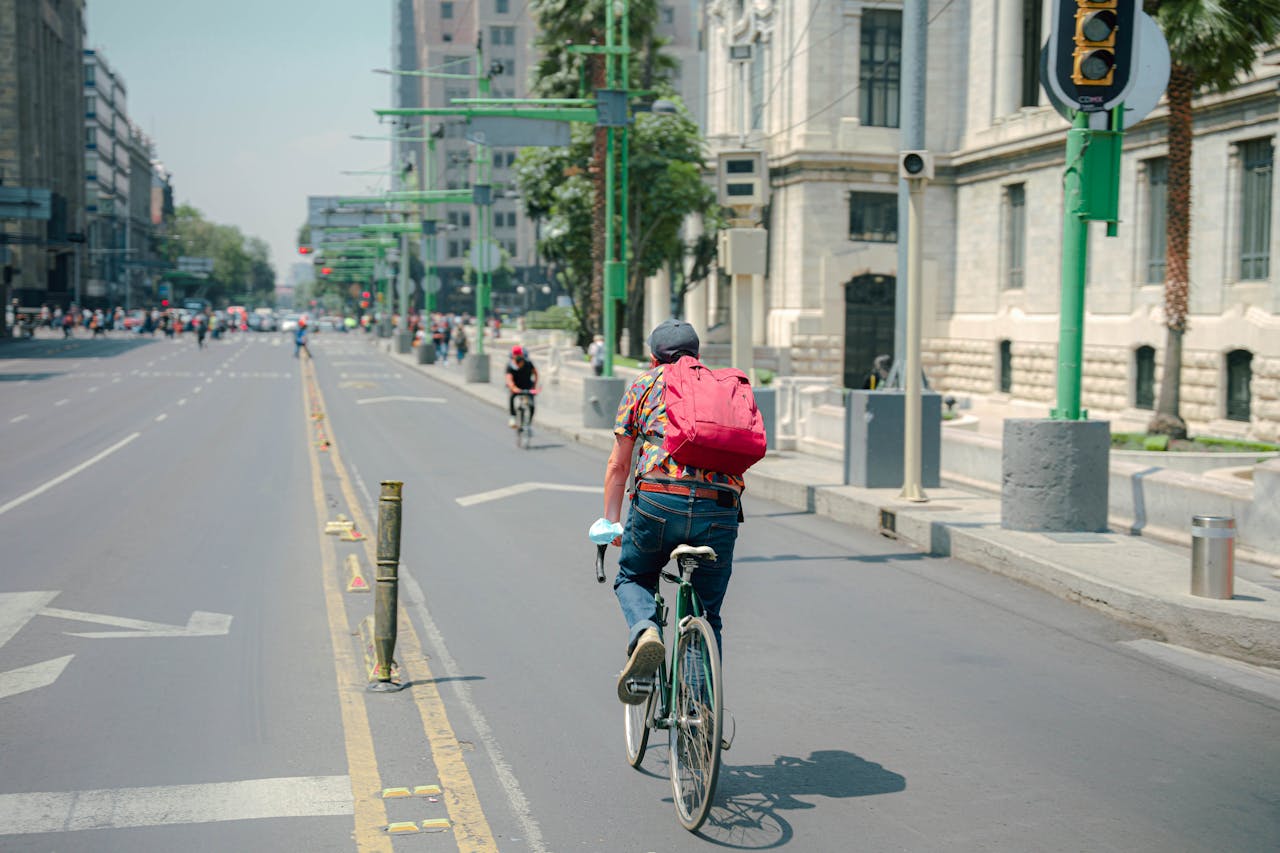
By Mahtot Gebresselassie, York University, Canada; Joanna Silva, York University, Canada, and Steven Lum, York University, Canada, The Conversation
In late 2024, the Ontario legislature passed Bill 212 giving the provincial government significant control over municipal bike lanes. The law requires municipalities to ask the province for its approval to install bike lanes if they would remove a lane for other vehicular traffic. The legislation also allows for the removal of three major bike lanes in Toronto.
Supporters of such moves argue that bike lanes worsen traffic congestion, negatively impact local businesses and delay emergency vehicles from getting where they need to go. However, research shows that bike lanes improve transportation infrastructure, including preventing injuries.
One of the main values of bike lanes is that they promote safety for all road users. Many cities around the world install bike lanes to wholly or partially separate cyclists from larger vehicles. This separation limits the interaction with cars and makes cycling safer.
Bike lanes can also be more efficient at moving more people per unit width of the road compared to car lanes. They are also much more inexpensive to build than roads for cars. Protected bike lanes cost an average of a few hundred thousand per mile compared to vehicular roads in millions of dollars per lane mile.
Reduced injuries
Bicycles are classified as vehicles under Ontario’s Highway Traffic Act, and cyclists are rightful users of all roads except controlled access highways.
When people cycle on infrastructure that supports biking (bike lanes, cycle tracks, low-speed zones, etc.), the risk of injury is reduced significantly. Bike lanes increase the visibility of cyclists to motorists and reduce interaction between cars and bikes.
A 2016 paper that looked at data on bike networks and injuries in 10 Canadian and U.S. cities between 2000 and 2015 showed that an increase in bike networks led to a decrease in fatal and serious injuries.
The safety associated with bike lanes can also encourage more people to take up cycling. A 2020 poll from the Canadian Automobile Association indicates that 40 per cent of Canadians reported they would feel encouraged to cycle on bike lanes physically separated from other vehicles.
More inclusive roads
Bike lanes can make cycling more inclusive for women, children, older adults, people with disabilities and those with limited transportation options.
For them, bike lanes can bridge the equity gap and affirm cycling as something “inherently democratic, inclusive, and affordable.”
Fewer women bike compared to men. A 2014 study that surveyed cyclists in five U.S. cities found that more women than men strongly agreed that protected bike lanes made them feel safe and new ones increased how often they cycled.
Child cyclists benefit a great deal from bike lanes. They are often smaller and less visible to people driving cars. They are also less able to assess risk and navigate shared roads, so a separate lane can reduce those risks.
Older adults and people with disabilities also benefit from bike lanes, as they provide a more suitable cycling environment for riding with limited physical acuity and slower speeds.
Low-income and racialized people are significant bike users and are more likely to rely on biking to get around due to their limited access to transportation options. Yet, without bike lanes, they may have no choice but to risk cycling in a dangerous environment. For them, bike lanes are crucial infrastructure.
Cycling is also much cheaper than having a car. Cycling costs about $0.06/km and driving a car $0.58/km, and switching from driving to cycling can reduce transportation spending from 30 per cent to 10 per cent of household income.
Consumer spending and congestion
Some argue that bike lanes reduce street parking, which can lead to lower economic activity. However, a 2012 study showed that people who cycle, walk and use transit frequent local businesses more and spend the same or more than those who use private cars.
In Toronto, when bike lanes were installed on Bloor Street West, there was an average increase in monthly consumer spending from $186 to $245. A similar trend was observed in New York City, San Francisco, Los Angeles, Bern, Dublin and Copenhagen.
When it comes to congestion, a 2018 study on the impact of installing bike lanes on arterial roads in Toronto found that the most affected street segments would only result in an estimated one-minute delay.
A 2022 study from Melbourne showed a minor effect on traffic when bike lanes were added to residential streets with low speed limits. It also found the “selective inclusion” of safe cycling lanes, in the worst cases, leads to a delay of less than 10 seconds per kilometre for drivers.
In New York, a 2016 study found that adding bike lanes reduced the average time for car travel on major thoroughfares from an average of 4.5 minutes to 3 minutes.
Examples from elsewhere indicate that removing bike lanes would not bode well for Toronto. A well-used bike lane in London, England was removed in December 2020 following residents’ complaints that they caused traffic congestion. A study found that the removal resulted in longer travel time on the street compounded by cars illegally parking in the space previously reserved for the bike lane.
Emergency response
Immediately after the bike lanes were installed on Toronto’s Bloor Street West, paramedics response time within 500 metres of the bike lane corridor rose by 42 seconds compared to 45 seconds city-wide.
Toronto Fire Services (TFS) response time increased by 30 seconds within the same corridor compared to a two-second increase for the entire city. However, these evaluations were for two months in 2023. In October 2024, TFS Chief Jim Jessop said the Bloor Street West bike lanes did not lead to an increase in response time.
If these bike lanes are removed and replaced with others elsewhere, it could create a poorly connected bike network. The safety and convenience associated with connected bike networks will be lost as a result.
Based on what research tells us, Toronto’s bike lanes should stay. Bike lanes provide various benefits, including making our streets more inclusive of more people.
Bike lanes offer safety on the roads by reducing the risk of fatal or non-life-threatening injuries on roads, and are a tremendous gain for transportation infrastructure.
Even in cases where a bike lane causes a few seconds of delay, politicians and city planners must consider the trade-off — especially if it means saving a person’s life.
Mahtot Gebresselassie, Assistant Professor, Environmental and Urban Change, York University, Canada; Joanna Silva, Research Assistant, Environmental Studies, York University, Canada, and Steven Lum, Research Assistant, Environmental Studies, York University, Canada
This article is republished from The Conversation under a Creative Commons license. Read the original article.




















