

By Kenneth Evans, Rice University; The Conversation
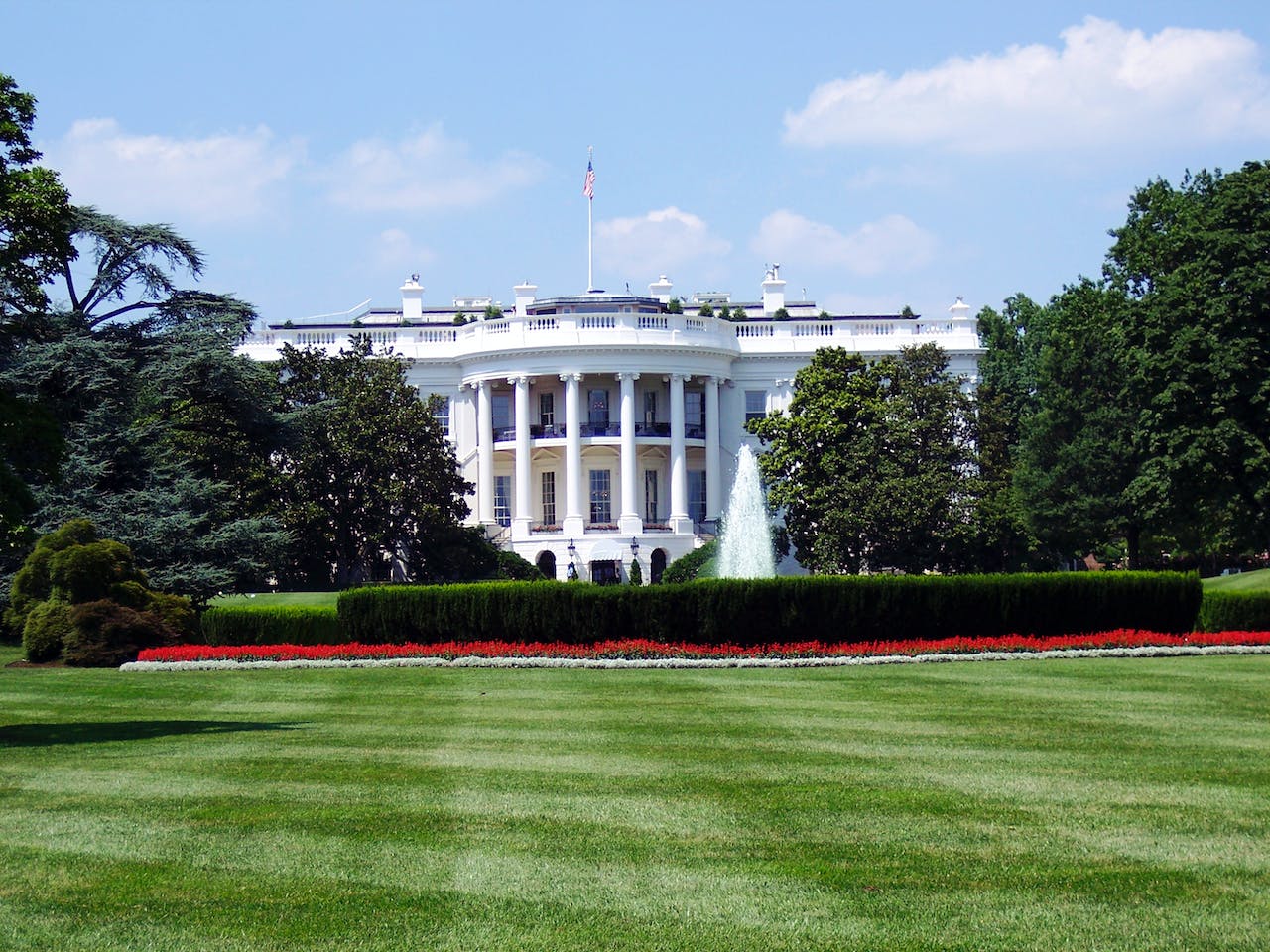
There were also concerns among White House political advisers that the committee put the interests of the scientific community ahead of the president’s. (Pexels Photo)
Presidents need science advice. From climate change and pandemics to the governance of AI and the country’s nuclear arsenal, science sits at the center of a range of foreign and domestic policy challenges that reach the president’s desk.
Thankfully for the president – and the nation – the Office of Science and Technology Policy, known as OSTP, is just across the White House South Lawn in the Executive Office of the President. Led by the president’s science adviser, OSTP serves as a one-stop shop for everything science and innovation inside the White House.
The Office of Science and Technology Policy is also responsible for coordinating the government’s large, decentralized research and development policy system. With dozens of participating agencies, offices and departments – and 10 with individual R&D budgets of over a billion dollars annually – OSTP works to break down silos across the government and oversees the health of the nation’s vast R&D ecosystem.
As a research scholar studying the U.S. science advisory system, I am a close observer of OSTP and the president’s science agenda. President-elect Donald Trump recently selected Michael Kratsios, the chief technology officer from his previous administration, as his next science adviser and director of OSTP.
Here’s a look back at OSTP’s history, where the science adviser has made a difference, and how the office might be organized inside the Trump White House.
The Cold War origins of the science adviser
Like many good stories about U.S. science policy, OSTP’s begins with Sputnik. Just days after the Soviet Union took a commanding lead in the space race with the launch of Sputnik I and II in 1957, President Dwight Eisenhower upgraded the World War II-era Science Advisory Committee to be the President’s Science Advisory Committee. The one-word change signaled an elevated role of scientists inside the White House.
The President’s Science Advisory Committee was hugely influential during the Eisenhower and Kennedy administrations. It helped create NASA. It led the government’s response to Rachel Carson’s investigation of the dangers of widespread pesticide use, “Silent Spring,” which launched the modern environmental movement. And it was the driving force behind the dramatic growth in federal R&D spending in the 1960s.
President John F. Kennedy created the Office of Science and Technology, a predecessor to OSTP, to staff Committee activities and respond to increasing requests from the executive office about how best to fund federal science programs.
The President’s Science Advisory Committee’s influence waned in the late 1960s, burdened by the administrative duties of managing the growing U.S. R&D system and a diminishing role in national security. There were also concerns among White House political advisers that the committee put the interests of the scientific community ahead of the president’s. Some viewed the committee as a “science lobby,” driving public funds to support higher education.
The tensions between science and politics, fueled in part by the Vietnam War, erupted under President Nixon. After several committee members spoke out publicly against several of his flagship defense programs, Nixon abolished both the President’s Science Advisory Committee and the Office of Science and Technology in 1973.
The move provoked Congress to act. With support from President Gerald Ford, it passed the National Science and Technology Policy, Organization, and Priorities Act in 1976, which created the Office of Science and Technology Policy as an independent agency inside the White House and cemented the role of the science adviser into law. Nearly half a century later, this act remains the nation’s only attempt to establish a comprehensive national science policy.
The act designed the original blueprint for OSTP, much of which remains intact today. OSTP is led by a presidentially nominated, Senate-confirmed director who serves as science adviser, up to four Senate-confirmed associate directors and two policy councils: the President’s Council of Advisors on Science and Technology and the National Science and Technology Council. These bodies are organized to work in tandem: PCAST advises; NSTC acts.
With an annual operating budget of US$8 million, OSTP is a tiny agency by U.S. government standards. It employs just two to three dozen full-time employees. Remaining staff serve on detail from elsewhere in the executive branch.
Who has the president’s ear?
The Office of Science and Technology Policy is charged by Congress to “serve as a source of scientific and technological analysis and judgment for the president” and coordinate the nearly $200 billion-a-year U.S. federal R&D effort.
The office has been criticized, especially from within the science policy community, as being a minor player inside the White House. It has no real budget authority, and the stature of the science adviser is marked by how often the president takes his or her advice.
However, much of what the science adviser does happens outside public view. One of the position’s most important jobs has no footprint: The science adviser kills bad ideas. The science adviser is often the only voice in the White House fighting to keep science funding from being cut from the president’s annual budget request to Congress.
Nevertheless, the science adviser’s influence has shown up on many policies, often closely related to the administration’s priorities. President George H.W. Bush’s science adviser, Allan Bromley, developed the country’s first national technology policy, laying the foundations for the U.S. government’s current approach to innovation.
President Bill Clinton’s advisers, John Gibbons and Neal Lane, championed early electric vehicles and nanotechnology.
President George W. Bush’s science adviser, Jack Marburger, spurred the creation of the “science of science policy” as a research discipline, leading to new knowledge about how science works and benefits the public.
John Holdren, President Barack Obama’s science adviser, shifted federal energy and climate policy.
Biden’s scientists, Eric Lander, Alondra Nelson, Arati Prabhakar and Francis Collins, shepherded landmark policies on semiconductors, public access to federally funded research and AI.
Science advice in the Trump White House
Until now, all science advisers have been trained scientists. Prior to serving as U.S. chief technology officer during Trump’s first term, Michael Kratsios had executive-level experience in venture capital and training in political science.
He’s an unconventional pick, but hardly controversial. Even without an advanced science, technology, engineering or math degree, Kratsios’ selection has been publicly very well received by STEM advocacy organizations, a sign of practicality in light of Trump’s erratic first-term record on science and well-documented disregard of scientific consensus.
Titles matter, especially in Washington. If confirmed by the Senate, Kratsios will serve as OSTP director as well as assistant to the president for science and technology, a title that indicates direct access to the president as a senior White House aide. With Silicon Valley’s outsize influence in the Trump transition, Kratsios and OSTP appear empowered to reshape America’s vision for science and innovation.
This story is part of a series of profiles of Cabinet and high-level administration positions.
This story has been updated to correct a typo in the size of OSTP’s budget.
Kenneth Evans, Scholar in Science and Technology Policy, Baker Institute for Public Policy, Rice University
This article is republished from The Conversation under a Creative Commons license. Read the original article.




















