By Armando Alvares Garcia Júnior, UNIR – Universidad Internacional de La Rioja ; The Conversation
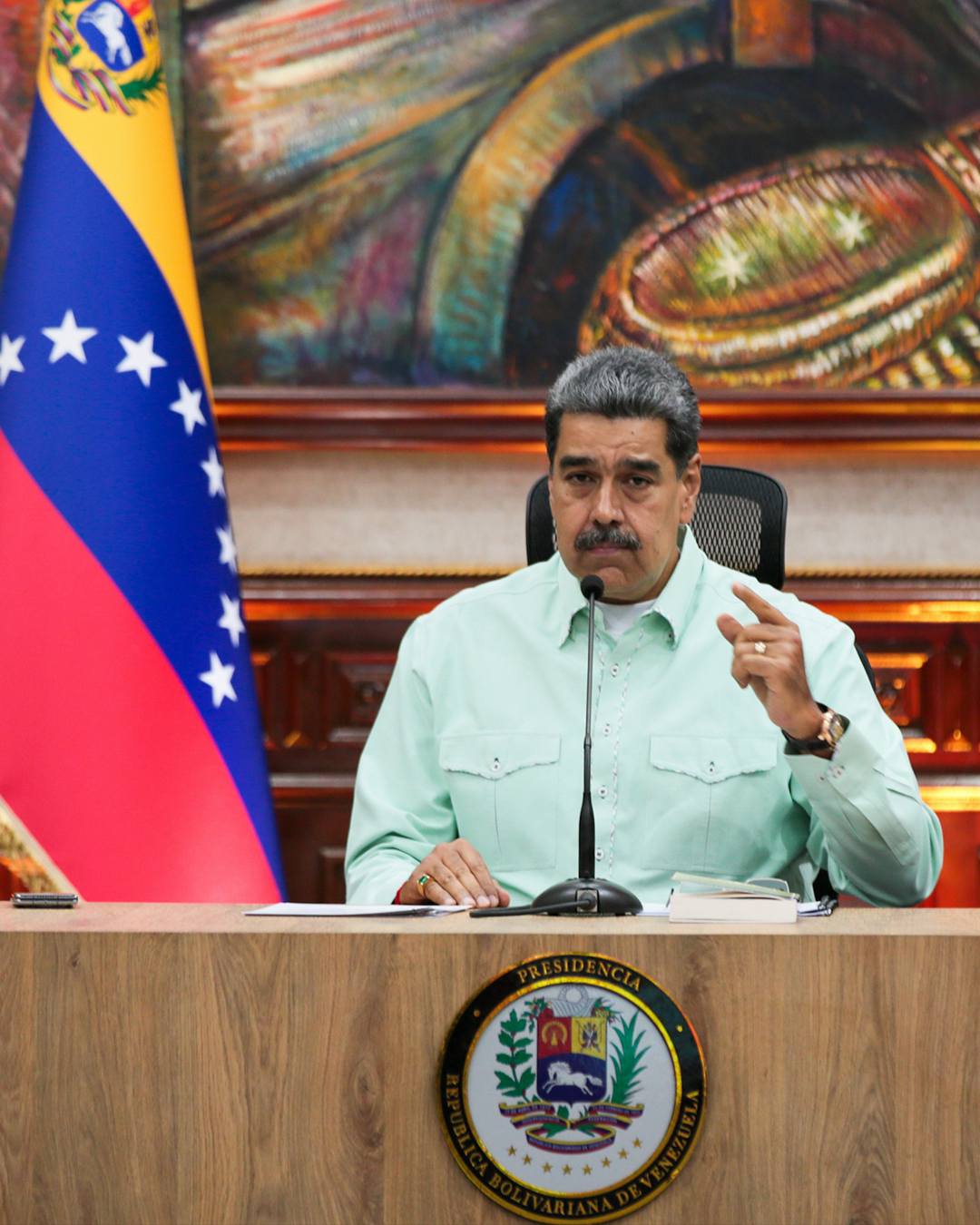
Maduro claims that the constitutional reform aims to consolidate popular sovereignty. (File Photo: Nicolás Maduro/Facebook)
President Nicolás Maduro of Venezuela’s inauguration for a third consecutive term comes amid escalating internal and international tensions.
Maduro has been accused of using new constitutional reform as a tool to consolidate his power amid loss of legitimacy and episodes of repression. This scenario unfolds in a country that has been facing political, economic, and social collapse for years.
Maduro claims that the constitutional reform aims to consolidate popular sovereignty. However, critics argue that its true purpose is to strengthen “Chavismo”, the ideology associated with the president between 1999 and 2013 Hugo Chávez.
Since 2017, when he called a constituent assembly under the pretext of pacifying the country, these initiatives have been used to undermine opposition forces and strengthen the government’s repressive apparatus.
The recent proposal includes controversial laws, such as the Simón Bolívar Law, which stipulates severe punishments for political dissidents, limits the activities of NGOs, and facilitates the repression of civil movements. Moreover, reforms to electoral laws aim to further restrict the already limited space for opposition activity.
These measures take place in the context of growing isolation for Chavismo, which is facing its worst political crisis since Maduro assumed power in 2013. The government’s legitimacy has been deeply undermined by allegations of fraud in the July 2024 presidential elections, in which opposition candidate Edmundo González Urrutia claims victory, supported by voting records that back his assertion.
The refusal of the National Electoral Council to disclose detailed results has heightened suspicions of irregularities. Consequently, the constitutional reform appears to be a maneuver aimed at strengthening the regime’s governability amidst a legitimacy crisis.
In addition to its political impact, the constitutional reform is expected to intensify repression. Following protests against the election results, more than 2,000 people were arrested, including minors. Allegations of torture, arbitrary detentions, and persecution continue to add to the extensive record of human rights violations attributed to the Chavista government.
The detention of minors has drawn international condemnation, but the government’s token gestures, such as releasing some political prisoners, are viewed as strategies to alleviate external pressure. Opposition figures like María Corina Machado and González himself face relentless persecution, with the latter forced into exile.
Alliances with China and Russia
The international community is closely monitoring developments. Organizations such as the UN, the Inter-American Commission on Human Rights, and the International Criminal Court (ICC) have denounced the regime’s repressive practices, labeling them acts of state terrorism and launching investigations into crimes against humanity. However,concrete actions to curb Venezuela’s authoritarian advance remain limited, as Chavismo benefits from the lack of consensus among global powers.
Venezuela’s strategic alliances with powers like Russia and China are crucial for sustaining Nicolás Maduro’s regime. Recently, Vice President Delcy Rodríguez visited Beijing to attract investments and strengthen commercial ties, highlighting efforts to secure economic support. Simultaneously, Venezuela’s ties with Moscow provide military and political backing, reinforcing Russia’s presence in Latin America.
While these partnerships offer Venezuela partial protection from international sanctions, they also escalate global tensions by reflecting Russia and China’s geopolitical expansion strategies. Moscow uses its presence in Venezuela to challenge U.S. hegemony in Latin America, mirroring actions in regions like Ukraine to expand its sphere of influence in Eastern Europe.
Meanwhile, China enhances its strategic role by investing in Venezuelan infrastructure and natural resources, replicating its economic and diplomatic expansion initiatives seen in Africa and Southeast Asia, cementing its position as a rising global power. This complex dynamic contributes to escalating international disputes, heightening rivalry among major powers, and affecting global and regional stability.
Attacks from the opposition, caution from the neighbours
The opposition is working to reverse the situation. Edmundo González announced his intention to return to Venezuela to claim his victory, a move that would directly confront the regime. María Corina Machado has called for nationwide protests on the eve of Maduro’s inauguration, aiming to increase internal pressure and international visibility of Venezuela’s crisis. However, the opposition faces significant challenges in unifying its base and overcoming the obstacles posed by state repression.
Regionally, countries like Colombia, Brazil, and Chile have adopted cautious positions. While publicly condemning Maduro’s authoritarian practices, these nations maintain open diplomatic channels, balancing criticism of the regime with the need for regional stability. The European Union and the United States remain vigilant, with some powers considering harsher sanctions while others opt for a more diplomatic approach.
Domestically, the impact of the constitutional reform goes beyond immediate political implications. It reflects a continuous pattern of power centralization and erosion of democratic institutions in Venezuela. With the economy still in crisis and millions of Venezuelans living in extreme poverty, repression and authoritarianism exacerbate social inequalities and perpetuate a cycle of instability.
Venezuela’s future depends on several factors: the opposition’s ability to rally internal and external support, the international community’s willingness to take concrete measures, and Chavismo’s resilience in the face of growing pressure. The parliamentary and regional elections scheduled for 2025 could serve as a turning point, but only if conducted under transparent and fair conditions — something that seems unlikely in the current context.
The year 2025 looms as a pivotal moment for Venezuela and political stability in Latin America. Maduro’s proposed constitutional reform, along with developments surrounding his inauguration, highlights the intense power struggle in the country as well as broader challenges to democracy, human rights, and geopolitical balance in the region. In this context, the role of international observers and local actors will be decisive in determining whether Venezuela continues down the path of authoritarianism or finds a solution to its prolonged crisis.
Armando Alvares Garcia Júnior, PDI. Derecho Internacional Público y Relaciones Internacionales (Universidad Internacional de La Rioja), UNIR – Universidad Internacional de La Rioja
This article is republished from The Conversation under a Creative Commons license. Read the original article.