

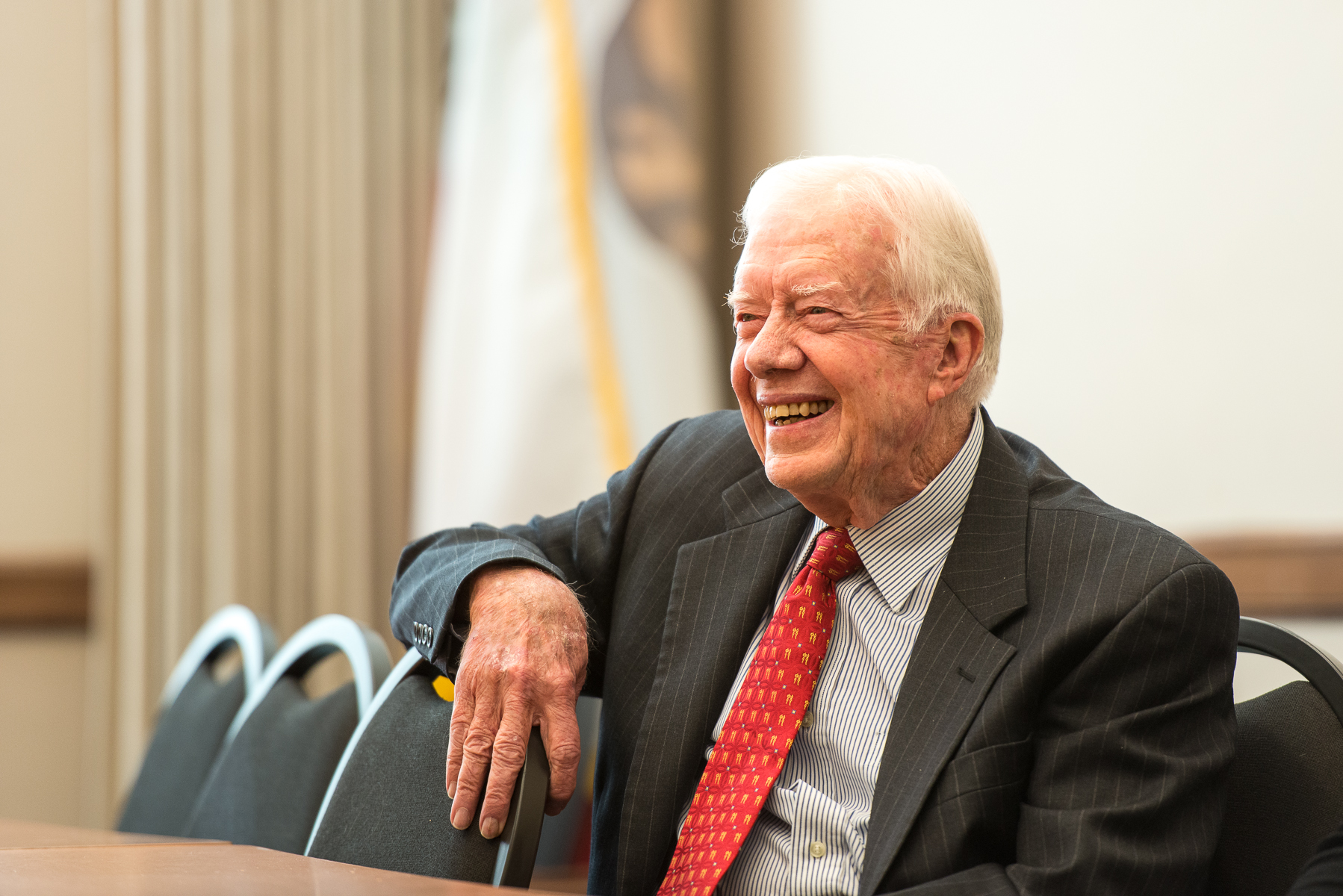
FILE: Jimmy Carter in 2013. (Photo By Commonwealth Club/Wikimedia Commons, CC BY 2.0)
By Gabrielle Bardall, L’Université d’Ottawa/University of Ottawa, The Conversation
Jimmy Carter, the longest-living former president of the United States, has died at 100 years old at his home in Georgia, after nearly two years of receiving hospice care.
As we look back on his life’s contributions, we can see how the values he embodied in his international career are reflected in his end-of-life decisions. These decisions offer lessons for all Americans and Canadians.
Carter and his wife Rosalynn, who died in November 2023, each chose hospice care at the end of their lives.
Both hospice care and palliative care focus on patient comfort and quality of life for people with serious illnesses, but those receiving hospice care are no longer seeking treatment to cure their condition. Palliative care patients may or may not also be pursuing treatment for their illness.
Living our values
Canada faces a significant gap regarding palliative care. Eighty-five per cent of Canadians support federal standards on palliative care and up to 89 per cent of Canadians who die could benefit from it.
However, only 15 per cent of Canadians receive publicly funded palliative home care in their last year of life. Only 15 per cent have early access to palliative care in the community.
Looking at what the Carters experienced during the former president’s final months can help Canadians better understand the importance of closing this gap.
It is a moment to reflect on how the values we embody throughout our lives are equally important when it comes to how we choose to define our end-of-life decisions.
Carter in Canada
Carter has been hailed as a hero in Canada for his role in helping to contain the world’s first nuclear accident: the 1952 reactor meltdown in Chalk River, Ont. As a young naval officer, Carter was part of a team of Americans who were asked to help manage the response. He and others used a replica reactor to practice disassembling parts of the real reactor in shifts of just 90 seconds to try to limit radiation exposure.
Carter and his wife Rosalynn are also celebrated by Canadians as key allies of Habitat for Humanity. Habitat has built more than 3,800 homes for hard-working, low-income Canadians in every province and territory for nearly 40 years.
Wage peace, fight disease, build hope
After leaving the White House in 1979, Carter dedicated his life to building a more peaceful and healthy planet. The Carter Center’s three-fold mission is to “Wage Peace. Fight Disease. Build Hope.”
Just as these three goals have transformed the lives of millions around the world, they have equal importance when applied to the context of personal end-of-life choices.
The Carters are widely praised for their courage, from tackling deadly and overlooked tropical diseases to confronting dictators.
The conversations that are a part of hospice care are also courageous and can ultimately bring inner peace.
These include choices like preferences for medical interventions, cultural or religious views on death, the family’s involvement in caregiving, financial considerations, and conversations with children or grandchildren. This is often a time when unresolved issues in relationships can be addressed.
Healing family relationships is often a great source of satisfaction for people nearing end of life. Seeking assistance to have these brave conversations can bring peace. It can also be a time to deepen and savour existing relationships and, just as Carter’s family did, leave a legacy of memories through time spent together.
End-of-life decisions
Palliative care is centred on alleviating the challenges posed by life-threatening illnesses for both patients and their families, particularly when the emphasis shifts from seeking a cure or disease treatment. The focus lies on addressing the holistic well-being of the individual and their family, encompassing physical, emotional, social and spiritual support.
These are critically important issues in Canada, where Canadians are living longer but not always living better as rates of chronic conditions, degenerative diseases and cancer continue to increase.
Fighting for quality of life is not a solo battle. Choosing palliative care includes the family as part of the unit of care and encourages courageous conversations about what matters most to both the patient and family.
Deciding on the preferred location for receiving care holds particular significance. It stands out as one of the most important discussions families must engage in, frequently revealing unexpected differences in preferences among family members.
Patients who fear becoming burdens to their families are often surprised by the eagerness of their loved ones to offer this kind of support through their final days.
In other cases, this conversation reveals the necessity of seeking other care options. Hashing this out early means patients and families can make plans that work for all involved.
Care and hope
Hope does not end when entering hospice care. Indeed, hope has an important place in end-of-life planning. Palliative care can be a very hopeful time for both the patient and family as they focus on immediate goals and wishes.
Just as the Carters wove these threads together in their global efforts to foster better, more peaceful lives, spirituality and religion also play an important role in hope and finding meaning of death. Patients and families may redefine hope through the end-of-life process.
Throughout various stages, individuals might discover that the concept of hope takes on diverse meanings. It could manifest as a persistent desire for a cure or survival until a specific milestone, such as a wedding or birth. Alternatively, hope may be centred around a death that aligns with the patient’s wishes and preferences.
Canada’s path to accessible palliative care
Carter was a supporter of Canada’s health-care system and actively promoted the idea of implementing a comparable approach in the United States throughout his life.
In Canada, funding and policies surrounding palliative care services vary by province and include home care programs, hospices, drug/benefit programs and other services. Some programs, such as Compassionate Care Benefit, are national in scope.
Just as Carter did, educating ourselves about available choices and summoning the courage to confront end-of-life considerations may guide us toward receiving care that preserves hope and dignity until the very end of our lives.
Rachelle Rebman RN, BSN, MPH, CHPCN(C) co-authored this article. Rebman has provided end-of-life and oncology care for nearly two decades, including offering community-based palliative care on Nova Scotia’s South Shore for eight years, and now in Victoria, B.C.
Gabrielle Bardall, Visiting Professor, Graduate School of Public and International Affairs (GSPIA), L’Université d’Ottawa/University of Ottawa
This article is republished from The Conversation under a Creative Commons license. Read the original article.




















