Connect with us

Canada News

Officials monitoring avian flu in mammals in the Canadian Arctic

Published

on

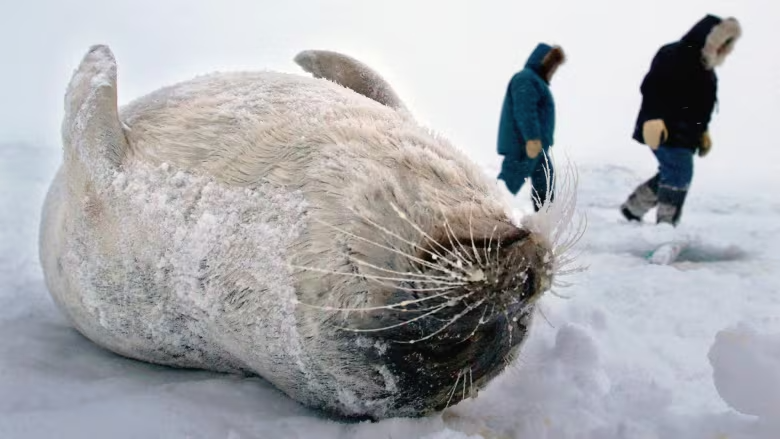
A seal is among the mammals being tested for avian flu in the north. (The Canadian Press via RCI)

By Samuel Wat, RCI, CBC News

Nunavut government says it relies on info from local hunters

Wildlife officials tracking the spread of bird flu are looking to do more tests on other animal species.

Nunavut registered its first case of avian flu this year in a northern fulmar found near Resolute Bay on Oct. 3.

That case is connected to a strain circulating in Greenland, according to Jon Neely, operations co-ordinator of Nunavut’s wildlife division.

It’s one of several cases among birds in the North since the outbreak began in 2022, though Neely doesn’t believe the virus is widespread.
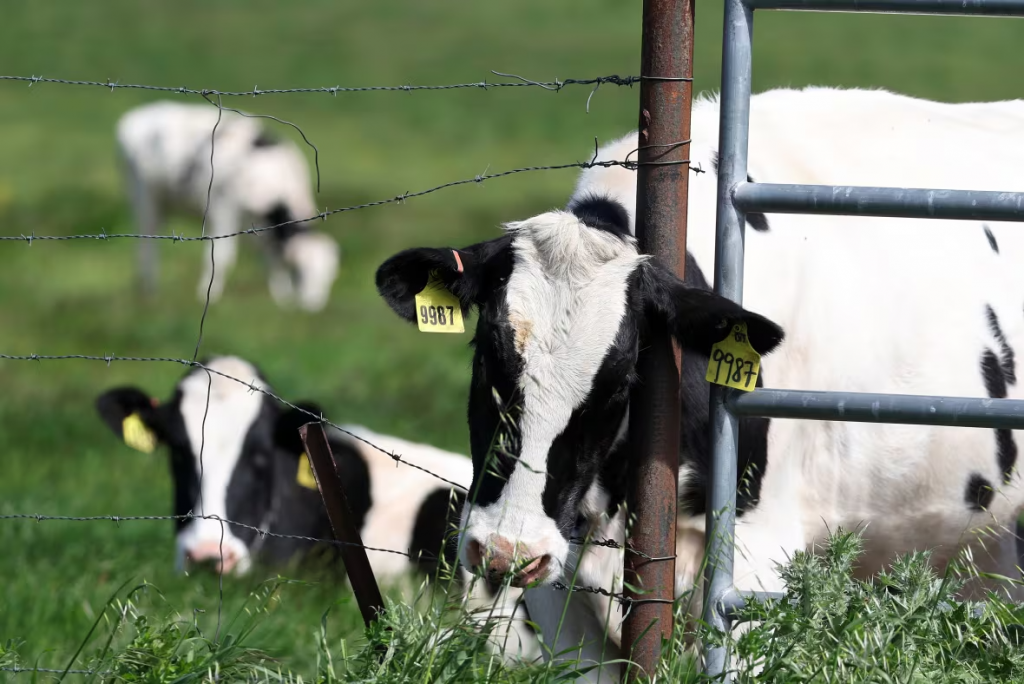
Cows graze in a field at a dairy farm on April 26, 2024 in Petaluma, California. The U.S. Department of Agriculture is ordering dairy producers to test cows that produce milk for infections from highly pathogenic avian influenza (HPAI H5N1) before the animals are transported to a different state following the discovery of the virus in samples of pasteurized milk taken by the Food and Drug Administration. (Justin Sullivan/Getty Images)

In recent months, more reports are emerging around the world of the virus in mammals, including species found in the Arctic.

Brian Stevens, a wildlife pathologist for the Canadian Wildlife Health Cooperative, said one of the biggest changes in the avian flu landscape is the spread among cattle in the U.S.

“There have been a lot more human contacts and human infections related to those dairy cattle infections,” he said.

“That’s when these influenza viruses become more dangerous because, especially in humans, you start to get mixing of our influenza viruses with the avian influenza virus.”

Canada had its first domestically acquired case of avian flu in a human earlier this month. The Public Health Agency of Canada said that case is linked to an ongoing outbreak in poultry in British Columbia.

Jon Neely is the operations wildlife coordinator for Nunavut’s Environment Department. (Submitted by the Government of Nunavut)

That outbreak, PHAC said, is not linked to the cattle outbreak south of the border.

Across the country, the virus has spread to 12 species of wild mammals and at least 100 species of wild birds since the outbreak began in 2022, according to Environment and Climate Change Canada.

In Nunavut, five lemmings were tested this year. They came back negative. Neely said test results from one seal is still pending.

More testing among Arctic species

Stevens would like to examine more species from the Arctic — but that comes with logistical challenges.

They have to be sent to the shared Nunavut and Ontario laboratory, based in the University of Guelph, before being sent to the National Centre for Foreign Animal Disease for confirmation.
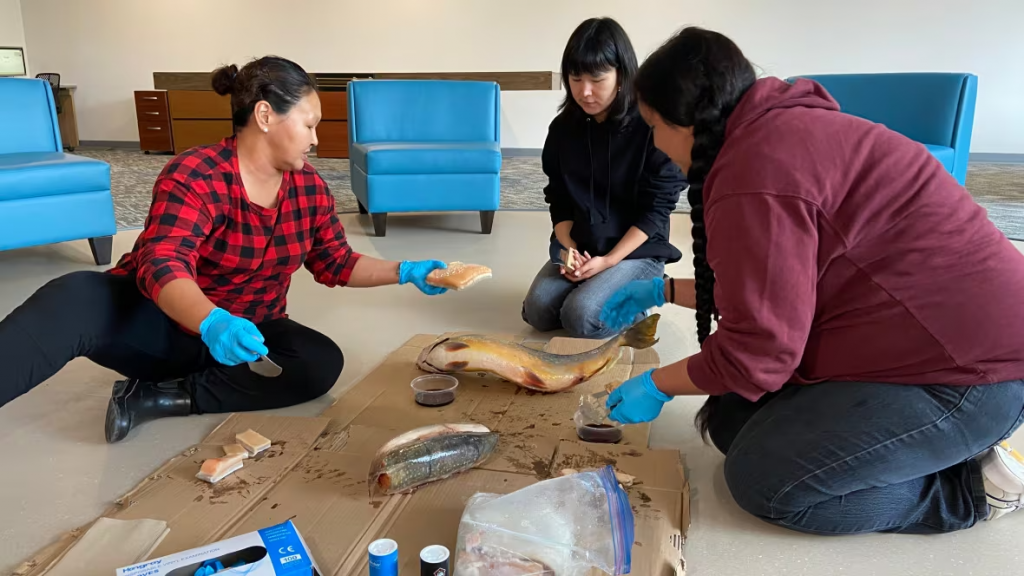
Officials say there isn’t evidence suggesting a risk of the virus being passed onto humans from eating infected poultry — if it’s cooked. But if eating country food raw, they urge people to refrain from eating sick or dead animals. (Mikaela Delos Santos/CBC)

Then there’s the difficulty of transporting samples of large animals from remote communities, and ensuring locals are trained to do that safely. That’s something Stevens wants to work on.

“Then we’re not putting hunters who aren’t used to dealing with these diseases on the front lines and potentially putting them at risk,” he said.


Continue Reading
Click to comment

Leave a Reply

Your email address will not be published. Required fields are marked *

Maria in Vancouver

Headline2 days ago

The Sobering Reality of Growing Old

Growing old brings a sobering reality: time is finite.  You watch your body slow down, see your parents age, and...

Lifestyle3 weeks ago

Dr. David Suzuki’s Legacy: A Celebration at 90

Celebrating Dr. David Suzuki’s 90th birthday on Friday, May 22  was a true privilege and a great pleasure! My husband,...

Lifestyle4 weeks ago

What I Know Now About Motherhood

Did you know that a mother’s cells can live in her child’s body for their entire lives? This fascinating phenomenon...

Headline2 months ago

Age with Audacity

At 25, I imagined life at 50 would mean I’d be past my prime and grumpy.  Little did I know,...

Lifestyle2 months ago

Spring Clean Your Body, Mind and Home

Spring has sprung! This season is perfect for spring cleaning, but why stop at our homes?  We can also rejuvenate...

Lifestyle3 months ago

Hear Us Roar

There is absolutely nothing wrong with a woman who wants her happily ever after. I certainly did. After 21 years...

Lifestyle3 months ago

The Real Rich

Margaret Atwood aptly captured this dynamic with the phrase, “Old money whispers, new money shouts.”  Let me elaborate on this...

Headline4 months ago

Love in the Afternoon of Life

Love in later life—the 50s, 60s, 70s, and beyond—is a thriving, fulfilling reality. It offers companionship, improved well-being, and joy,...

Headline4 months ago

Your Most Important Relationship is With Yourself

Valentine’s Day shouldn’t be celebrated only for one day. Love should be celebrated everyday. Valentine’s Day, when expanded beyond romance,...

Headline5 months ago

The 2016 Trend Made Me Reflect On My Past & Present

Like many others, I couldn’t resist joining the 2016 throwback trend.  It was all over social media, with everyone sharing...