Headline
Scientists uncover new info to address malaria

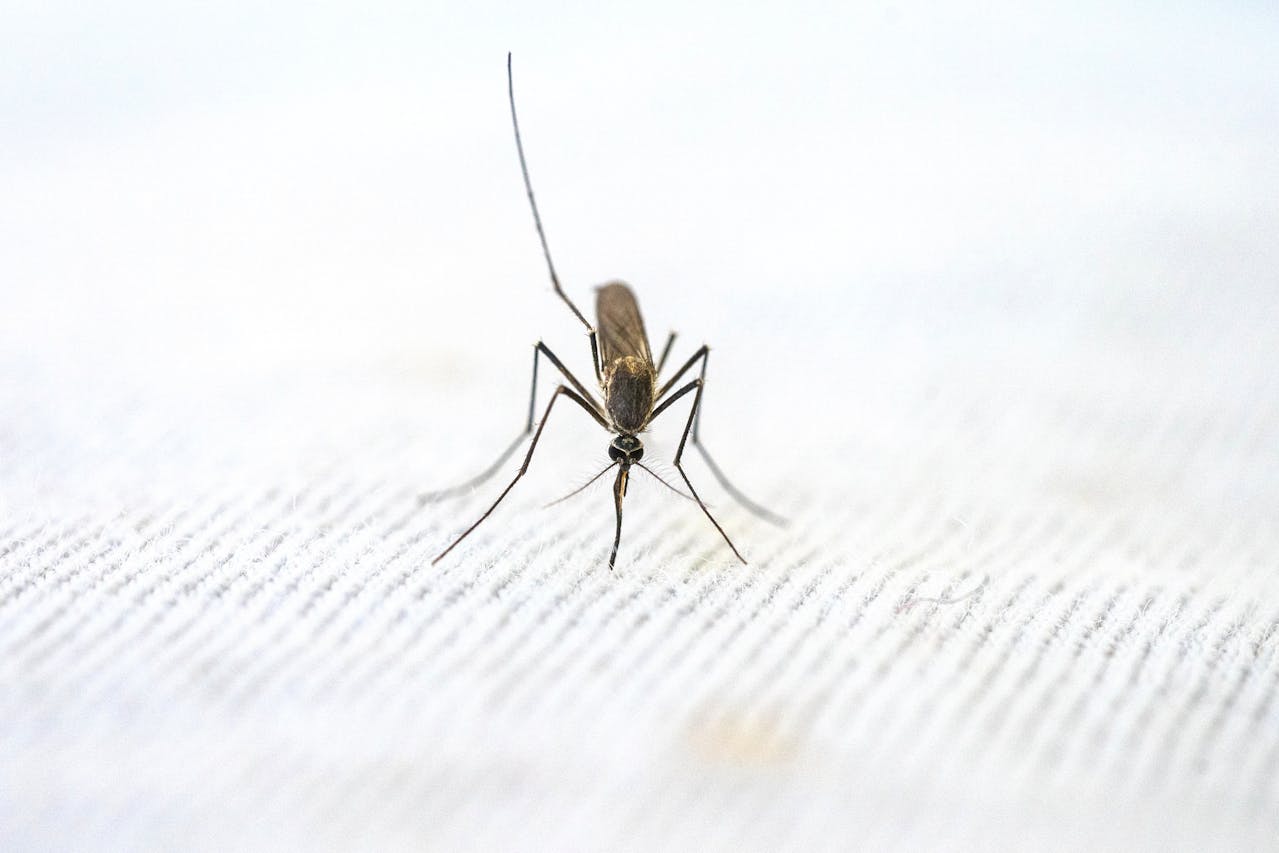
Malaria is transmitted by the Anopheles mosquito, carrying a single-celled parasite from the Plasmodium family. (Pexels Photo)
By TPS, Philippine News Agency
JERUSALEM – An international team of scientists has provided an unprecedented look into the unique crystals formed by the malaria parasite, opening doors to potentially more effective treatments against a disease that continues to claim over half a million lives annually.
Malaria is transmitted by the Anopheles mosquito, carrying a single-celled parasite from the Plasmodium family.
When a mosquito bites a person, the parasite enters the body, travels to the liver and multiplies.
Eventually, it invades red blood cells and begins to consume hemoglobin, the oxygen-carrying protein.
However, digesting hemoglobin releases a toxic molecule called heme, which threatens the parasite’s survival.
To protect itself, the parasite ingeniously converts heme into dark crystals that neutralize its toxicity.
While scientists have known about these crystals for over a century, their exact structure and development process have remained elusive — until now.
The research team was led by Professors Leslie Lizarowitz and Michael Albaum from the Weizmann Institute of Science, and involved the collaboration of 17 scientists in Israel, the Czech Republic, US, Britain and Austria.
For Lizarowitz, a pioneer in crystal research, this mission is deeply personal.
Born and raised in South Africa, Lizarowitz’s first encounter with malaria came as a child through his father’s stories of African expeditions. His father would often return with vivid tales of the wildlife he encountered.
But he also came back bearing the side effects of quinine, an old malaria drug that caused skin rashes and ringing in the ears.
Years later, Lizarowitz found a scientific link between his research in crystallography and the malaria parasite, specifically in how the parasite builds crystals that aid its survival inside the human body.
Lizarowitz, who had long been fascinated by the symmetry of these malaria crystals, eventually collaborated with Albaum, an expert in advanced imaging, to tackle this mystery.
Albaum’s research on the parasite’s unique cell division, where the parasite reproduces in a highly unusual manner within red blood cells, aligned naturally with Lizarowitz’s work.
Together, they set out to uncover the structural intricacies of the crystals formed by malaria parasites, aiming to find weak points that could be targeted by drugs.
Their study, involved the use of cryogenic scanning transmission electron tomography (CSTET), an advanced imaging technology developed at the Weizmann Institute.
However, as the team probed deeper, they encountered challenges that their tools couldn’t overcome.
To push the boundaries of their research, they sent the crystals to the University of Oxford and the Diamond Light Source, the UK’s national synchrotron facility.
By employing electron-based crystallography, the British team produced highly detailed images that allowed for a level of structural analysis previously thought impossible.
The study — recently published in the peer-reviewed ACS Central Science journal — revealed that malaria crystals have a unique surface resembling a butcher’s knife.
The side that mimics the blade is smooth and sharp, while the handle side appears rough and uneven, a seemingly chaotic arrangement at the atomic level.
This irregularity, as the researchers discovered, stems from the way heme molecules pair up during crystal formation.
Unlike synthetic crystals produced in laboratories, these natural malaria crystals exhibit a chiral arrangement — a mirror-image symmetry that prevents perfect alignment.
Understanding this structrural quirk could be key to developing new drugs that disrupt the crystals’ formation, thus neutralizing the parasite.
Most anti-malarial drugs currently work by targeting the parasite’s crystal-building process, yet many have lost their effectiveness as the parasite evolves resistance.
The study’s findings suggest that focusing on the biological structure of the natural crystals, rather than synthetic approximations, could yield more durable drug designs.
This approach would consider the precise molecular interactions between the crystals and potential drugs, improving the likelihood of effective treatment.
And so the “international star team” of researchers, as Albaum described it, brought together experts in crystallography, advanced imaging, and molecular biology to achieve a sophisticated 3D model of the malaria crystal structure at an atomic level.
Malaria remains a global health challenge, with the World Health Organization reporting approximately 250 million cases and 600,000 deaths in 2022.
By illuminating how the malaria parasite constructs its protective crystals, scientists may soon outsmart the parasite at its own game.
The findings could also influence research on other diseases where pathogens use crystal defense mechanisms.