

By Bruce Campbell, York University, Canada, The Conversation
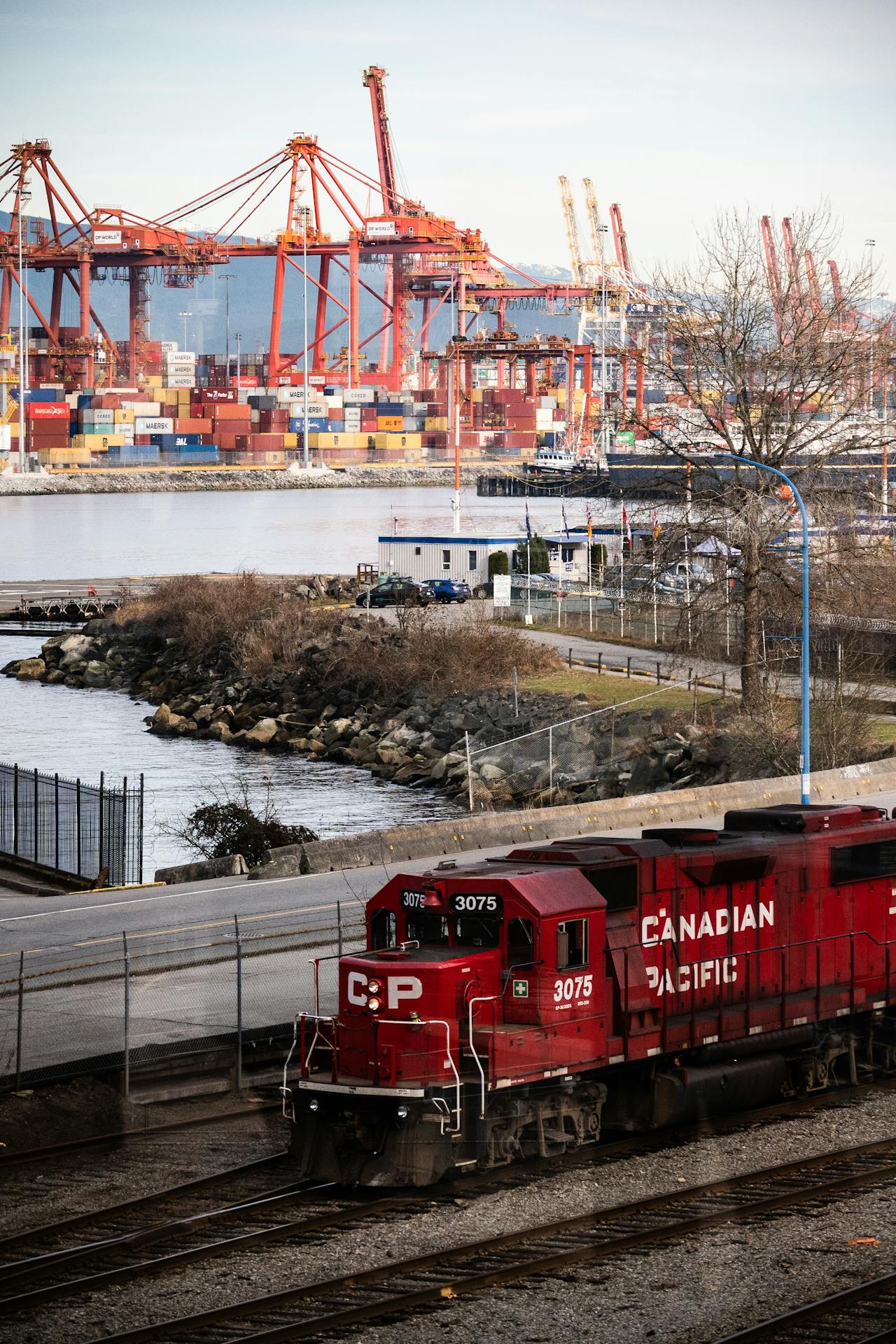
On Aug. 24, Canada’s federal labour board ordered the Canadian National (CN) and Canadian Pacific Kansas City (CPK) railways, along with over 9,000 workers, to return to work and enter binding arbitration to produce a new contract. The Canada Industrial Relations Board (CIRB) acted on the government’s referral when making the decision.
However, CIRB has not designated railways as an “essential service,” a status that would give legal standing for the government to force staff back to work.
As a result, the Teamsters union has filed appeals with the Federal Court of Appeal, challenging the government’s referrals and CIRB’s binding arbitration order, arguing they violate workers’ rights to collectively bargain and strike.
Bruce Curran, a labour specialist at the University of Manitoba’s law faculty, warned that:
“Ordering the workers back to work may in fact present Charter problems with respect to the workers’ constitutionally protected right to strike and right to collectively bargain, such that the [board] may have some legal concerns.”
Typically, the chosen arbitrator is mutually agreed upon by both parties in a dispute. Case management conferences among the parties are currently underway.
A decision is expected soon, given the seriousness of the dispute, but if no agreement is reached, the arbitration board will impose a contract.
Safety oversight
A major issue in the ongoing negotiations is fatigue safety. According to the union, the railway companies are seeking to weaken protections around rest periods, shift length and scheduling.
The companies are also targeting work-rest provisions. Teamsters say CN wants to implement relocation provisions, requiring workers to move long distances to fill labour shortages.
Over the past decade, working conditions have become more dangerous due to staff cuts and the implementation of the precision scheduled railroading model, which has resulted in longer and heavier trains.
The precision scheduled railroading was pioneered in Canada by Hunter Harrison, the CEO of Canadian Pacific Railway (CPKC’s predecessor) at the time of the Lac-Mégantic disaster in 2013. As a result, the volume of dangerous goods transported by rail rose by 70 per cent between 2011 and 2019.
Railway safety oversight systems, known as safety management systems, were introduced by Transport Canada in 2001. The Auditor General noted in its 2021 report on railway safety that Transport Canada is still not effectively assessing whether safety management systems improve safety by reducing the risk of accidents.
The report recommended that railway companies mandate science-based fatigue management practices for workers. Companies have long resisted installing such practices, with Transport Canada being largely deferential to their demands. Fatigue was deemed a contributing factor to the Lac-Mégantic disaster.
Safety management systems remain on the Transportation Safety Board’s watchlist. On the board’s website, it states:
“The TSB has determined that railway companies’ safety management systems are not yet effectively identifying hazards and mitigating risks in rail transportation.”
Fatigue management regulations
In May 2023, the Commons Standing Committee on Transport, Infrastructure and Communities issued a report on railway safety. The report made several recommendations, including:
- that Transport Canada strengthen fatigue management rules for operators based on the latest science to protect workers and reduce the risk of disasters in communities across the country;
- that Transport Canada develop legislative and/or regulatory structures to ensure predictable scheduling for rail workers that reflect best practices for fatigue management;
- and that Transport Canada establish adequate standards for away-from-home rest facilities used by rail employees to ensure proper rest between shifts.
I appeared before the committee’s review of Bill C-33, the Strengthening the Port System and Railway Safety in Canada Act, in late October 2023. I supported the bill’s recommendations on rail safety and assessed Transport Canada’s proposed legislation to amend the Railway Safety Act and the Transportation of Dangerous Goods Act.
However, past practice suggests it’s unlikely that Transport Canada will implement the necessary safety regulations anytime soon.
Regulatory capture
The power relationship between Transport Canada and the railway corporations clearly fits within the bounds of regulatory capture theory. Under regulatory capture, corporations have the ability to shape policy, legislation and, ultimately, regulations that govern their operations.
Corporations regularly block or delay new regulations and exert pressure to remove or dilute existing regulations, which they frame as “red tape” that allegedly makes them less competitive or is detrimental to job and wealth creation.
It’s important to note that most civil servants at Transport Canada are conscientious and work to uphold the public interest. The capture relationship generally applies at the leadership level.
Corporate-government interactions are largely shielded from public view. Political agendas are set in private meetings with cabinet ministers, committee chairs and senior bureaucrats, among other lobbying activities. When compared to international legislation, Canada’s access-to-information laws and whistleblower protections rank at or near the weakest.
While the odds of overcoming the status quo are challenging, there are ways the corporate-government power relationship in Canada can be rebalanced, as discussed in my book, Corporate Rules. These measures would minimize vulnerabilities to corporate capture and make regulations more resistant to capture.
Additionally, some experts have convincingly argued that allowing vital national infrastructure like railways to be owned by powerful corporations, rather than the government, is contrary to the public interest. Instead, Canada should consider nationalizing its railways.
Regulatory capture
The power relationship between Transport Canada and the railway corporations clearly fits within the bounds of regulatory capture theory. Under regulatory capture, corporations have the ability to shape policy, legislation and, ultimately, regulations that govern their operations.
Corporations regularly block or delay new regulations and exert pressure to remove or dilute existing regulations, which they frame as “red tape” that allegedly makes them less competitive or is detrimental to job and wealth creation.
It’s important to note that most civil servants at Transport Canada are conscientious and work to uphold the public interest. The capture relationship generally applies at the leadership level.
Corporate-government interactions are largely shielded from public view. Political agendas are set in private meetings with cabinet ministers, committee chairs and senior bureaucrats, among other lobbying activities. When compared to international legislation, Canada’s access-to-information laws and whistleblower protections rank at or near the weakest.
While the odds of overcoming the status quo are challenging, there are ways the corporate-government power relationship in Canada can be rebalanced, as discussed in my book, Corporate Rules. These measures would minimize vulnerabilities to corporate capture and make regulations more resistant to capture.
Additionally, some experts have convincingly argued that allowing vital national infrastructure like railways to be owned by powerful corporations, rather than the government, is contrary to the public interest. Instead, Canada should consider nationalizing its railways.
Bruce Campbell, Adjunct Professor, Faculty of Environmental and Urban Change, York University, Canada
This article is republished from The Conversation under a Creative Commons license. Read the original article.




















